

When it comes to pickleball court surfacing in Maine, it’s the changing seasons that put your investment to the real test. Wet spring, heavy summer use, and the freeze-thaw cycles of winter can all affect how your outdoor court performs over time.
That’s why for facility owners, it's important to choose the best pickleball court surface to ensure the court not only handles Maine’s local conditions but supports player movement and safety too.
This is essential for both a new court build or upgrading an existing facility. In this Pine State Courts’ guide, we’ll discuss the major factors that you should consider when comparing surfaces for pickleball court construction.
What Should Maine Facilities Consider before Choosing a Pickleball Surface?
Before comparing pickleball court surfacing materials, you should assess the site, local weather conditions, and how you will use the court. Let’s take a look at how these factors influence which surface system is appropriate for Maine and how your court performs over time.
Maine's Freeze-Thaw Conditions
Maine's winters can be demanding on outdoor athletic courts. When water enters small cracks or reaches vulnerable areas beneath the pavement, freezing and thawing can contribute to cracking, surface movement, and deterioration.
You need a properly designed base with suitable surface protection to ensure that the court can handle this frost-related movement and perform well for years.
Drainage and Moisture Exposure
Water management is another important consideration when building a pickleball court in Maine. Rain, melting snow, and water running off nearby slopes can leave the playing area wet or contribute to problems beneath the surface.
Your pickleball court should therefore have appropriate grading and drainage to move water away from the playing area and prevent persistent pooling.
Expected Court Usage
A surface that works for occasional recreational play may not be the right option for a busy public facility. For high-use facilities, you should choose a surface that offers consistent ball response, durability, and reliable traction.
Facilities with lighter usage have the flexibility to consider alternative surfaces or multi-purpose installations.
Player Experience
The pickleball court surface affects everything from how the ball bounces and players move to how the court feels under foot. These differences become particularly noticeable during long playing sessions or when a facility accommodates a wide range of ages and abilities.
While no surface can eliminate the physical demands of pickleball, you can add cushioning for low impact on joints and consider the needs of your regular players. Try to find a balance between comfort, traction, and predictable ball response when choosing the best pickleball court surface.
You can check our Pickleball Court Construction Guide for parks and sports facilities for deeper insights into site preparation, court surfacing, and other finishing requirements.
Pickleball Court Surface Options for Maine Facilities
While comparing options for pickleball court surfacing, it is important to distinguish the base from the playing surface. Asphalt and concrete provide the underlying base and acrylic coatings or modular tiles determine much of your finished court's playing characteristics.
The table below includes playing characteristics and benefits of each of these surfaces and their specific considerations for Maine.
.jpg)
For an indoor pickleball court, you can choose cushioned acrylic over a flat concrete slab to protect player joints. If you are building a multi-sport gym/ converting an imperfect floor, you can go for other surfacing options like modular athletic tiles or traditional hardwood sports floors.
If you’re planning to add a residential court to your property in Scarborough, Maine, you can check our Pickleball Court Installation Guide to be better prepared for this project.
Which Pickleball Surface Is Right for Your Facility?
The most suitable surface for your facility depends on how it operates, who uses the court, and what you can realistically allocate to maintain the court over its service life.
For Schools
Schools often need surfaces that can accommodate regular physical education classes, extracurricular activities, and recreational play. Factors like durability, reliable traction, and the ability to support multiple activities may be more important for such courts than choosing premium playing features.
An acrylic-coated court can be a practical choice when the facility has a suitable asphalt or concrete base. Indoor facilities can also use hardwood floors with line markings for basketball or other sports along with pickleball.
For Parks and Recreation Facilities
Municipal parks and recreation departments must balance the court’s construction costs with public access, heavy use, safety, and ongoing maintenance. Acrylic over asphalt may suit a facility working within a defined capital budget, provided that the base is properly constructed and maintained.
Concrete-based systems may also be appropriate where long-term performance is a priority and the project budget supports the additional investment needed for it.
For Pickleball Clubs
Pickleball clubs often place greater emphasis on consistent ball response, playing comfort, and the experience of members who use the courts frequently. Standard acrylic can provide a familiar hard-court playing experience, while cushioned acrylic may appeal to facilities seeking additional underfoot comfort.
Modular tiles can also be appropriate for certain installations, depending on the product's playing characteristics and the club's requirements.
For HOAs and Residential Communities
Homeowners' associations and residential communities typically need courts that are durable, attractive, and straightforward to maintain. The right choice depends on the number of residents expected to use the facility, the space available, condition of the site, and whether the court will serve other recreational purposes.
A conventional acrylic court may be appropriate for a dedicated outdoor facility while modular tiles may be worth considering for multi-use spaces for its easy maintenance.
How Maine's Seasons Can Influence Your Surface Choice
Besides, selecting the surface for Maine's climate, seasonal maintenance and inspections is also important. It helps facility managers to identify any developing problems before they become more disruptive or expensive to address.
Spring
Spring is an important time to inspect your outdoor courts after winter. Snow and ice, moisture exposure, and repeated freeze-thaw cycles may leave cracks, uneven areas, loose components, or drainage problems that were less apparent during colder weather.
Inspect the court for damage or better yet arrange a professional assessment and get the required repair/ resurfacing done rather than relying on patching.
Summer
Summer generally provides the main playing season for outdoor pickleball facilities in Maine. Frequent use, sunlight, and periods of heavy rain can influence the condition of your court.
Ensure proper court maintenance by regular cleaning, checking drainage routes, line markings, and making sure the playing surface is free from cracks. Summer also provides suitable conditions for repair and pickleball court resurfacing projects.
Fall
Falling leaves, wet weather, and dropping temperatures make autumn a useful time to prepare outdoor courts for winter. Keep the playing surface and drainage areas clear of leaves and debris and inspect cracks, joints, coating wear, and other defects that may need attention before winter.
Discuss any necessary repairs with a pickleball court professional while conditions remain suitable for the proposed work.
Winter
For many outdoor facilities in Maine, winter is primarily a period for protecting the court and planning future maintenance rather than regular play. Avoid using any unapproved de-icing chemicals, metal tools, or equipment that could damage the coating or modular panels.
You can also use this time to review your maintenance records, obtain resurfacing estimates, and plan improvements for the next playing season.
You can check our guide to Seasonal Tips for Building a Pickleball Court in Portland, Maine to better plan your project.
New Court or Existing Court: Does It Change Your Surface Decision?
Choosing between building a new pickleball court or converting an existing court completely changes your surfacing decisions, budget, and material choices.
New Pickleball Court
Building a new pickleball court gives you complete freedom to select the surfacing materials based on your level of play, budget, and facility requirements. Although it comes with higher upfront costs, it brings value over its life with durability and high quality performance.
Existing Pickleball Court
If you’re converting an existing court, make sure to get the base assessed, if it has deep structural cracks, ponding, or shifting, a new top coat will fail quickly. If the base is sound, pick a surface compatible with the existing foundation (such as acrylic coatings over asphalt or concrete, or modular tiles).
When Should You Talk to a Pickleball Court Professional?
It is worth consulting a pickleball court professional before committing to a surface no matter if you’re planning a new build or upgrading an existing court. This professional guidance can help you evaluate the existing conditions, compare suitable surface systems, and understand how much work is required to prepare the base.
It can also help you account for Maine's climate, expected court usage, maintenance capacity, and long-term budget. Be clear about how the court will be used, the level of play you want to support, and any seasonal operating requirements with your contractor. This will make sure all your requirements are accounted for before the work begins.
You can also check our guide to learn how you can choose the right pickleball court contractor for your court installation project.
Final Thoughts
The right pickleball court surface for a Maine facility is one that meets your playing requirements while accounting for local weather, site conditions, and ongoing maintenance.
Acrylic over asphalt/ concrete can provide professional playing characteristics, cushioned acrylic offers excellent underfoot comfort, and modular tiles can offer flexibility and replaceable components. But no pickleball court surfacing option can remove the need for sound construction and drainage.
At Pine State Courts, with our expertise in pickleball court construction, maintenance, repair, and resurfacing for the Maine region, you get a court that makes sense for your facility today and remains practical to maintain over the years. Contact us to discuss your project requirements.
Frequently Asked Questions
1. What is the best pickleball court surface for Maine?
Acrylic-coated asphalt or post-tension concrete base is generally considered the best pickleball court surface for Maine as it is designed to withstand harsh freeze-thaw cycles and long winters of the region.
2. Is acrylic surfacing suitable for Maine pickleball courts?
Yes, acrylic coating applied over a suitable concrete or asphalt base is suitable for Maine pickleball courts for its durability, weather resistance, and excellent performance.
3. Is asphalt or concrete better for a pickleball court in Maine?
Both asphalt and concrete base are generally used for pickleball courts in Maine. Concrete (specifically post-tensioned concrete) is preferred for its long-term durability and climate resistance, and asphalt offers an advantage in its lower upfront cost and gentler shock absorption.
4. What pickleball surface is best for a high-traffic facility?
For a high-traffic facility, post-tensioned concrete with an acrylic/ cushioned acrylic coating is generally considered the best option. Many facilities also prefer modular tiles for their easy maintenance by replacing individual tiles.
5. Does facility type affect pickleball court surface selection?
Yes, facility type has a crucial role in pickleball court surface selection as the goals of a facility and its material needs change with indoor vs outdoor environments, dedicated vs multi-use spaces, and commercial vs residential courts.
6. How does Maine's climate affect pickleball court surfaces?
Maine’s weather consists of severe freeze-thaw cycles, heavy moisture, and temperature extremes that accelerate surface wear and structural damage on a pickleball court.
DOWNLOAD OUR FREE GUIDE
Ready to build your dream court?
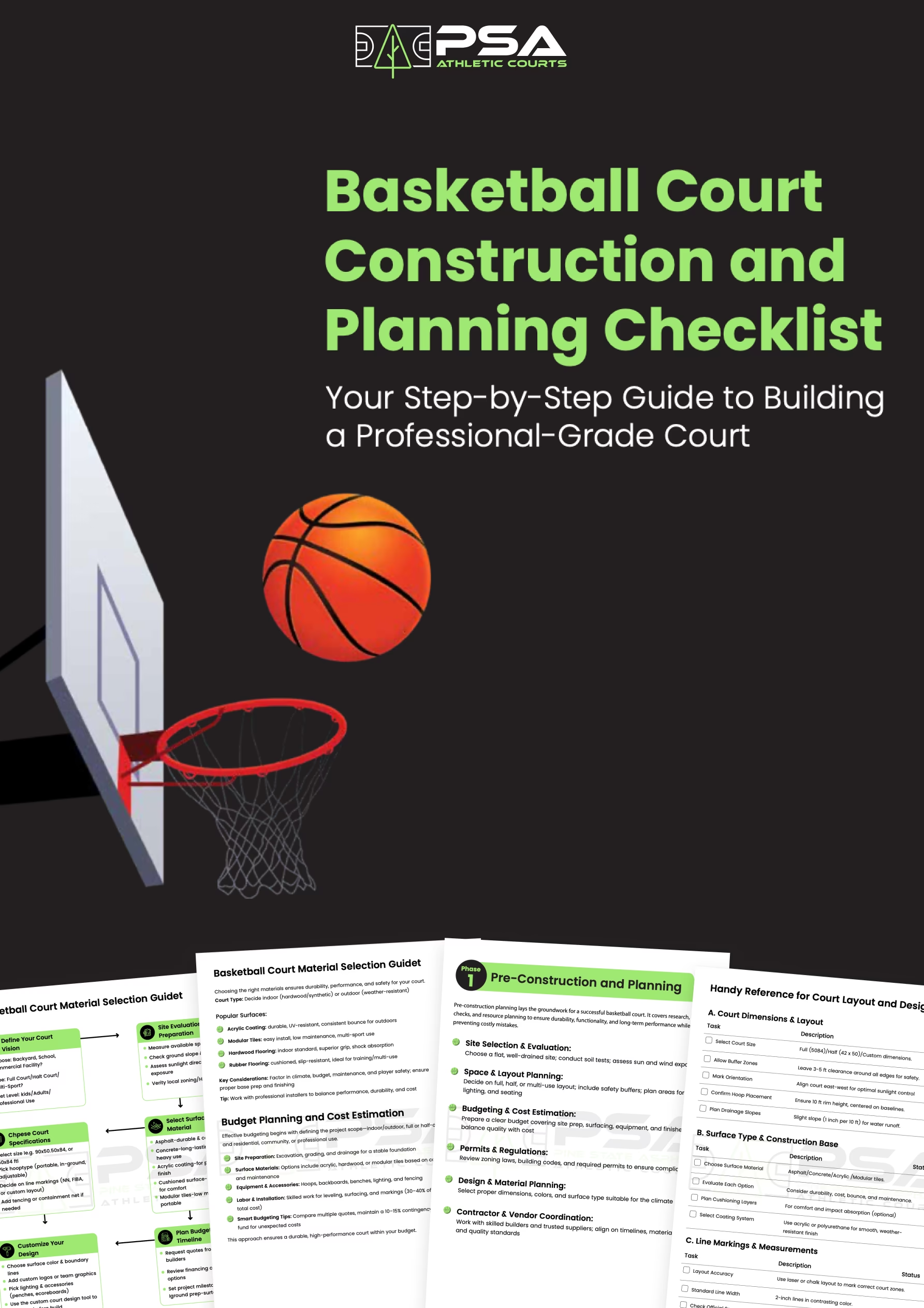
Download our FREE Basketball Court Construction & Planning Checklist and get the step-by-step roadmap to building a professional-grade court—from budget planning to final touches.
No guesswork, just results.