

For facility owners in Maine, building an indoor padel court needs a lot of careful consideration. You are not just fitting a court into an empty building but deciding how this space will support regular play, accommodate players, and still maintain its performance over the years.
This makes the planning stage of this project especially important. You need to carefully plan even the smallest details for padel court construction including floor conditions, ceiling clearance, lighting, ventilation, court spacing, and access.
This guide by Pine State Courts will discuss the nine things that you must know and prepare for before you commit to padel court installation for your indoor facility in Maine.
1. Maine’s Climate Makes Indoor Padel Courts a Practical Choice
Outdoor courts often face the brunt of the state's harsh winters, heavy precipitation, and humid summers limiting year-round play. Indoor Padel courts offer reliable play in Maine through their climate-controlled indoor environments.
These indoor facilities eliminate the need for snow removal or waiting out rain and wind ensuring consistent gameplay and a safe playing environment.
2. Choose the Right Space before You Build a Padel Court
The indoor court itself is only a small part of the space you need to plan. You should also look at the entire footprint, including circulation areas, entrances, spectator space, equipment storage and access for construction.
To build a standard padel court, you need a playing area of approximately 65.6 feet by 32.8 feet. Besides this, you need additional clearance around the court for safe access and maintenance and consider the ceiling height too.
3. Plan the Indoor Padel Court Layout Carefully
Court positioning can affect circulation, viewing areas, lighting, maintenance access, and the placement of doors or other building services. If you are installing multiple courts, you also need to plan for consistent spacing and access between the two courts.
It is also worth considering how the layout will work if your facility grows. You should talk about this with your padel court designer and plan for additional courts or other amenities at the beginning stage itself.
For a closer look at dimensions and space requirements, see this guide on How Big a Padel Court Is.
4. Select the Right Materials for Padel Court Installation
Indoor padel courts combine several components like the playing surface, glass panels, metal framework, and the artificial turf. All these materials need to work together for the court to work well.
You should select a playing surface that provides suitable traction and ball response while remaining durable under frequent use. Glass and structural components also need to be appropriate for a sports environment where players and balls regularly come into contact with the enclosure.
5. Consider Lighting when Planning Indoor Court Construction
Good lighting is essential to provide consistent coverage across the playing area. The right fixtures also need to be positioned carefully so that they don’t interfere with the player's view or create problematic reflections on the glass.
Facility owners should consider existing electrical infrastructure, ceiling-mounted equipment, and structural elements as they may all influence the fixture placement.
6. Prepare the Floor before Padel Court Installation
The surface of your padel court needs to be sufficiently level, stable, and suitable for the court system being installed. You should also address existing cracks, uneven areas, moisture problems or damaged surfaces before padel court installation.
This is particularly important when you’re converting an older warehouse, gymnasium or other commercial space. Your building may look suitable at first glance and still have flooring issues that can affect the installation.
7. Think about Ventilation and Indoor Court Conditions
An indoor padel facility can become busy quickly, particularly during leagues, lessons and peak recreational hours. And with multiple players exercising in this enclosed space, it can increase heat, humidity, and the need for fresh air.
You should therefore consider ventilation alongside heating and cooling. The goal is to maintain a comfortable environment without creating strong air movement that interferes with play.
8. Understand the Padel Court Construction Process
A typical padel court installation project may involve various steps including site assessment and measurements, design and layout planning, floor preparation, structural assembly, installation of glass and turf, and final inspection.
The building itself can affect this sequence, other factors like limited access, existing tenants, ceiling-mounted equipment or other construction work may require additional coordination. So, it is worth discussing the complete construction sequence with your contractor before the work begins.
For more details, you can check our Padel Court Construction Guide.
9. Work with an Experienced Indoor Padel Court Builder
By now it’s clear that Indoor padel construction involves more than just assembling the court. Your builder needs to understand how the court will interact with the existing building and the practical requirements of your sports facility.
The experience of a padel court builder can be especially valuable for this project to identify potential issues with access, floor conditions, ceiling clearance, lighting, ventilation, and the court layout. They will not only help you with padel court installation but build a padel court that lasts for years.
Indoor Padel Court Construction Checklist for Facility Owners
The table below includes a checklist that facility owners should review before starting padel court construction.

Getting all these details right, from the very beginning ensures that you are right on track and there are no surprises once the construction starts.
Build an Indoor Padel Court With the Right Planning
An indoor padel court can be a valuable addition to your sports facility in Maine, particularly when winter weather limits outdoor court use. But the success of this project depends on more than just the court itself.
The building, floor, lighting, HVAC system, layout, and construction process all need to work together. Addressing these factors before padel court installation can help you avoid costly changes and create a court that’s practical for both the players and your facility.
At Pine State Courts, we are experienced at building professional padel courts that stand the test of time and Maine’s weather conditions. We also offer ongoing services for court maintenance, repair, and resurfacing.
If you are evaluating a building or planning a new indoor padel facility, Contact Pine State Courts to discuss your project and the requirements for your space.
Frequently Asked Questions
1. How much space is needed to build an indoor padel court?
To build a padel court you need a space that’s 82 feet long and 49 feet wide. This includes the playing field and additional clearance around the court. The ceiling height should also be a minimum 19.8 feet.
2. What type of flooring is used for an indoor padel court?
You can use artificial grass (synthetic turf) to build an indoor padel court or you can go with polypropylene tiles, or cushioned athletic flooring.
3. What type of maintenance does an indoor padel court require?
An indoor padel court requires regular cleaning, turf and sand management, structural inspections, and hardware checks to ensure that court maintains proper bounce quality, safety, and longevity.
4. Can an existing indoor sports facility be converted into a padel court?
Yes, you can convert an existing indoor sports into a padel court but ensure that it meets specific structural, height, and floor requirements.
5. Why are indoor padel courts a good option for Maine facilities?
Indoor padel courts are a good option for Maine facilities as the snowy harsh winters, heavy precipitation, and humid summers limit outdoor court use. With indoor courts you get a year round play.
6. How long does indoor padel court construction take?
The entire project of indoor padel court construction from the initial site planning to the final opening can take almost 2 to 3 months to complete.
DOWNLOAD OUR FREE GUIDE
Ready to build your dream court?
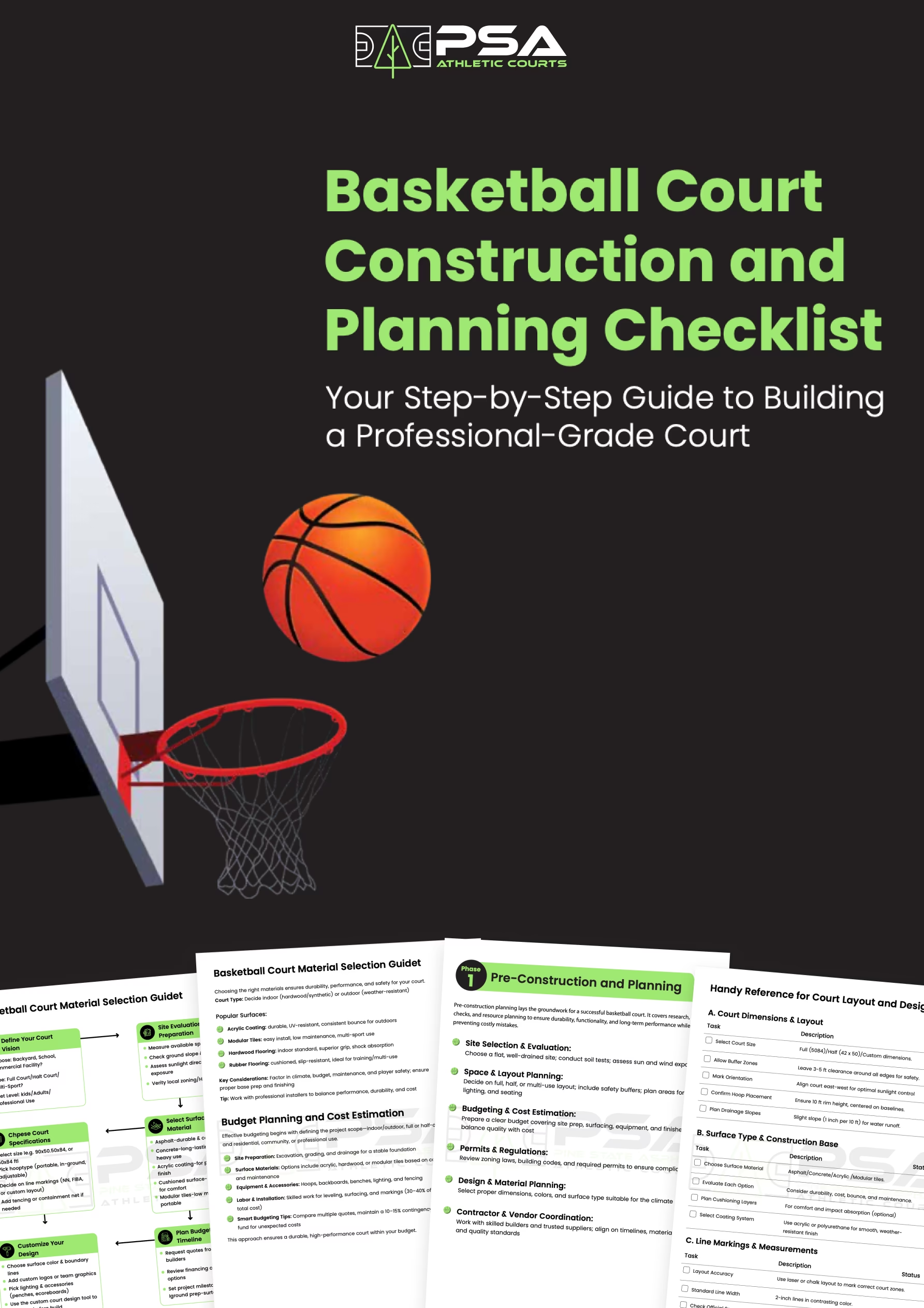
Download our FREE Basketball Court Construction & Planning Checklist and get the step-by-step roadmap to building a professional-grade court—from budget planning to final touches.
No guesswork, just results.