
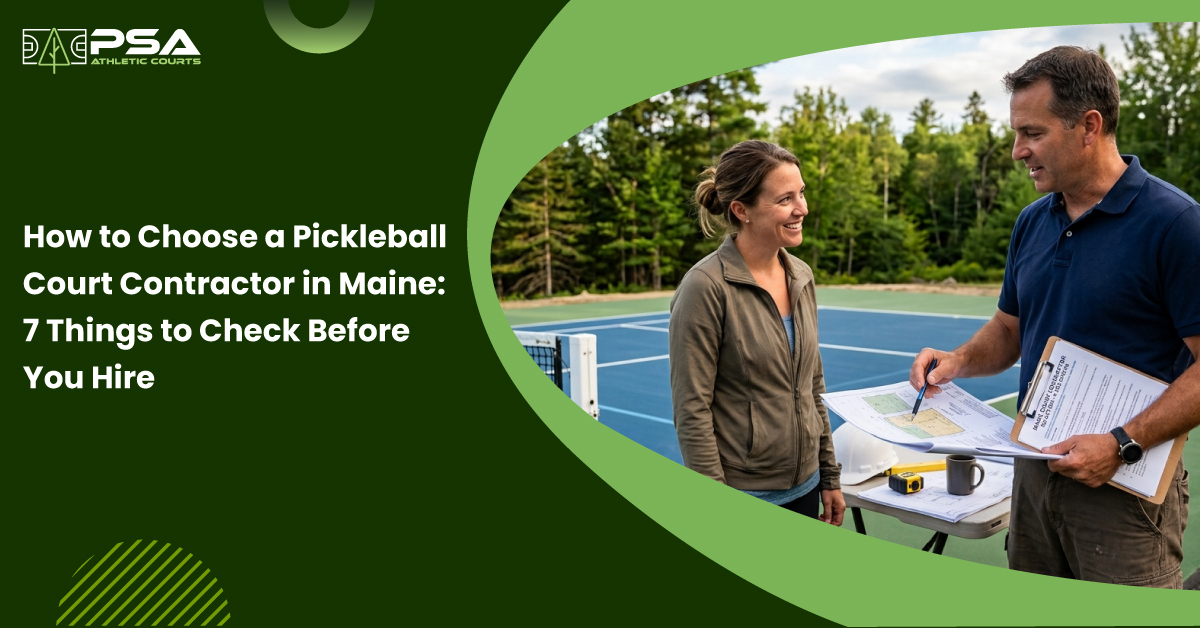
When it comes to building a professional pickleball court, the contractor you choose can have a major impact on how well your court performs over time. While a low quote may look attractive at first, it does not tell you whether your contractor has planned for proper drainage, base preparation, surfacing, or Maine's seasonal conditions.
That’s why when selecting the right pickleball court contractor, look for somebody who discusses in detail what your site needs, how the court will be constructed, and what is included in the estimate. Besides this there are still many more important factors that you must consider.
In this guide by Pine State Courts, we’ll discuss the seven important factors that you must check while comparing contractors for a new pickleball court in Maine.
1. Check Their Pickleball Court Installation Experience
Pickleball courts have particular requirements for their dimensions, layout, surfacing, drainage, and playing conditions. That’s why it’s important to look for a contractor who has the experience of building pickleball courts and is not just into general paving or construction.
Ask your potential contractors:
- How many pickleball courts they have built over the years.
- If they can show you their recent projects.
- If they’ve worked on similar properties or site conditions as yours.
- If they can provide references from their previous customers.
Discuss everything in advance. A contractor who’s familiar with pickleball court construction should also be able to explain why they are recommending a particular base, surface, or drainage approach for your property.
2. Review Their Court Construction Process
A reliable contractor should be able to walk you through the entire court construction project from initial site evaluation to final court striping. The court construction process includes:
Site Evaluation and Planning
The contractor will assess your available space, grading, drainage, soil conditions, site access, and court orientation before planning construction. This helps you identify any potential problems before they affect your project.
Base Preparation and Drainage
Ask how the contractor will prepare the base and manage water around the court. This is especially important in Maine, where moisture and freeze-thaw cycles can contribute to cracking, heaving, and other pavement problems.
Surface Installation and Court Striping
Your pickleball court designer should also explain their proposed pickleball court surface system, how the underlying surface will be prepared, and how the pickleball lines will be applied. Proper preparation is just as important as the final coating.
3. Ask about Materials, Court Surfaces, and Construction Quality
Don't choose a contractor based only on the name or price of the surface system. Ask what materials they are planning to use and why they are suitable for your court.
Discuss other important factors like:
- Base and pavement materials
- Acrylic or other court surfacing systems
- Surface preparation
- Crack treatment
- Line-marking materials
- Expected maintenance
For building outdoor pickleball courts in Maine properly constructed asphalt or concrete bases with 100% acrylic coatings are suitable for professional athletic court surfaces. They are preferred for their durability and good traction. Discuss with your contractor how other options will fare in Maine’s climate.
4. Understand What Is Included in the Pickleball Court Installation
Make sure you know exactly what the contractor's price covers before comparing estimates. Some contractors may include grading, drainage, fencing, and a net system while some others may price these items separately.
So, ask them for a detailed written scope of their court construction services and any additional features such as fencing or lighting. Also, ask them if they’ll handle the local zoning approvals and land use permits. This makes it much easier to compare the proposals on an equal basis and avoid unexpected costs later.
5. Compare Pickleball Court Installation Cost and Project Estimates
The cost of pickleball court installation is an important part of this decision, but the lowest estimate may not necessarily be the best value for you. A significant price difference may reflect differences in site preparation, drainage, materials, or what is actually included in the project.
What Can Affect Pickleball Court Installation Cost?
The cost of your pickleball court construction can vary based on a lot of factors including your court’s location, site requirements, and the kind of court you want to build (professional vs recreational).
Here’s a list of some important factors that contribute to this cost:
- Site preparation and excavation requirements.
- Drainage requirements.
- Number of courts you want to build.
- The surface system you choose to build the court with.
- Adding accessories like fencing, lighting, and spectator seats.
- Removing an existing surface for court construction.
What Should a Contractor's Estimate Include?
A detailed estimate from your contractor should explain the scope of their work, your chosen materials, labour costs, site preparation, and additional features that you want to add to the court.
It’s also important to discuss the expected timeline, payment terms, and any potential extra charges. If something is unclear, have your contractor explain it before you sign.
6. Check References, Portfolio, and Project Quality
A contractor's completed projects can tell you a lot more about their workmanship than a sales presentation. Ask to see examples of pickleball courts that they have built and, if possible, speak with their previous customers.
When you’re at the site, look at the consistency of the court surface, accuracy of the court lines, quality of the surrounding finish, and condition of some older projects. You can also ask previous customers whether the project stayed on schedule, matched the original estimate, and how the contractor handled any issues.
If you’re building a residential pickleball court in Scarborough, Maine, you can also check out our court construction guide for more details on planning this project and its benefits.
7. Confirm Warranty, Maintenance, and Post-Installation Support
Your contractor's responsibilities shouldn't just end as they hand over the finished court. Before signing your contract, understand what the workmanship and surface warranties cover, how long they last, and which types of damage or maintenance are excluded.
It's also worth asking whether the contractor provides maintenance, repairs, or pickleball court resurfacing services later. Having a contractor who can support the court after its installation can make your long-term ownership much easier.
Why Maine Property Owners Should Work with an Experienced Pickleball Court Contractor
When it comes to building a pickleball court in Maine, it is important to ensure that your court resists harsh freeze-thaw cycles, meets local zoning and noise ordinances, and utilizes proper regional construction timelines. And this is where working with a local Maine contractor is beneficial.
A local contractor can evaluate your specific site and account for its drainage, soil, grading, and seasonal conditions to build a court that lasts for years. Here’s how a local pickleball court builder helps:
- Experienced pickleball court builders use proper sub-bases, post-tensioned concrete, and vapor barriers to ensure surface integrity.
- Local contractors know the narrow weather window is from late May through September, for proper acrylic surfacing and asphalt curing.
- They easily navigate local municipal codes, wetland rules, and setback requirements, preventing costly teardowns or fines.
- As Maine receives substantial rain and snowmelt. A local contractor ensures proper grading and slope management to prevent standing water, surface stripping, and premature cracking.
- These contractors pick the best surfacing systems including multi-layer acrylic systems that offer consistent ball bounce, slip resistance, and UV protection against extreme seasonal weather.
At Pine State Courts, we offer not only pickleball court construction but court maintenance, repair, and resurfacing services too. With our local expertise in Maine, we build durable courts that perform well for years. Get in touch with our team to discuss your next pickleball court project.
Final Checklist: Choosing the Right Pickleball Court Contractor
To wrap up our discussion, here’s a simple checklist that can help you pick the right pickleball court contractor when you’re comparing your options.
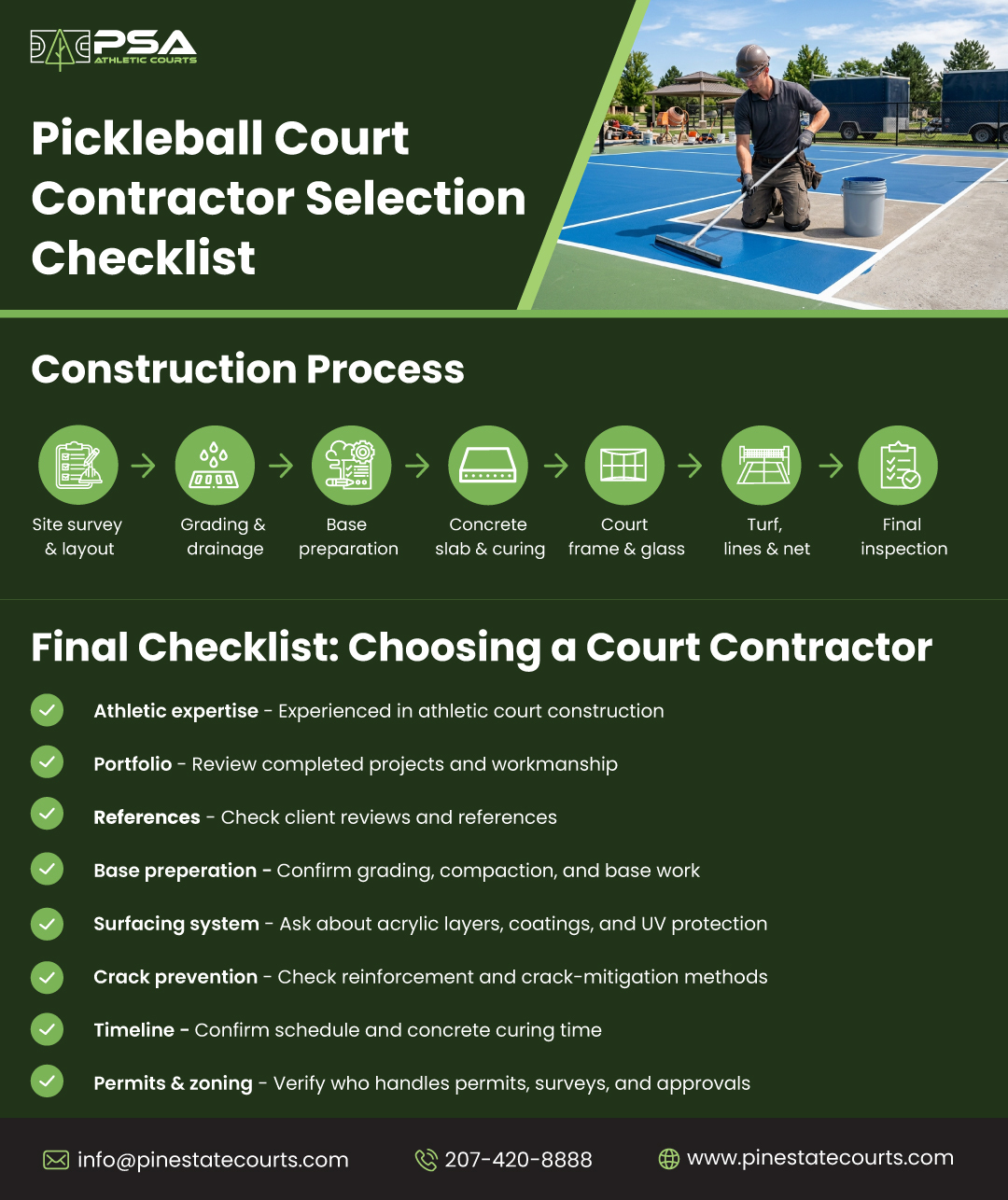
- Athletic Specialization - Confirm that they specialize in construction of athletic courts and not just general concrete or paving.
- Portfolio Review - Request photos of their completed courts or visit past project sites in your local area to inspect their workmanship.
- References - Ask for client references or reviews from their previous builds.
- Base Preparation - Verify if they include grading, compaction, and base work in their quote or it’s priced separately.
- Court Surfacing System - Get the exact details of the acrylic layers they add, coating brands, and UV-stabilizer specs.
- Crack Prevention - Ask what crack-mitigation methods they use for pickleball courts in Maine such as post-tension cables or rebar reinforcement.
- Project Timeline - Obtain a realistic schedule that also accounts for the curing times of concrete.
- Permits and Zoning - Confirm whether the contractor handles local zoning approvals, land-use permits, and site surveys.
Getting these details from your contractors along with the quote can help you make the right decision for your project.
Takeaway
Choosing a contractor for your pickleball court isn’t just about comparing the pickleball court installation costs. You should look at other important factors like the contractor's experience, construction process, approach to drainage and base preparation, materials, project scope, references, and their post-installation support.
For Maine property owners, asking the right questions before construction begins is especially important to avoid costly surprises and get a durable court that performs reliably for the long-term.
Contact Pine State Courts to discuss how our pickleball court construction, maintenance, repair, and pickleball court resurfacing services can help your facility get the maximum value from your investment.
Frequently Asked Questions
1. Why is local experience important when choosing a pickleball court contractor in Maine?
Local experience is important when you’re choosing a pickleball court contractor in Maine because of the state's severe freeze-thaw cycles, unique climate constraints, and local zoning requirements.
2. Does a pickleball court contractor handle site preparation and installation?
Yes, a pickleball court contractor handles the complete construction project which also includes site preparation and installation.
3. Should I hire a contractor who offers pickleball court maintenance after installation?
Yes, you should hire a contractor who offers pickleball court maintenance after installation. As they know the exact base, drainage, and materials used to build the court which would help ensure that your court remains in its best shape for years.
4.Can a pickleball court contractor help with fencing and lighting?
Yes, a pickleball court contractor can help you with the fencing and lighting of your court as it’s a part of their turnkey services.
5. What should be included in a pickleball court installation contract?
Your pickleball court installation contract should include the details of your project including its scope, the materials you’ve chosen, your project timelines, payment schedule, and warranties.
6. Can a pickleball court contractor help me choose the right court surface?
Yes, an experienced and qualified pickleball court contractor can help you choose the right court surface based on your site’s conditions, your budget, and playing preferences. A local contractor is even better as they can build the court to withstand the extreme weather in your area.
DOWNLOAD OUR FREE GUIDE
Ready to build your dream court?
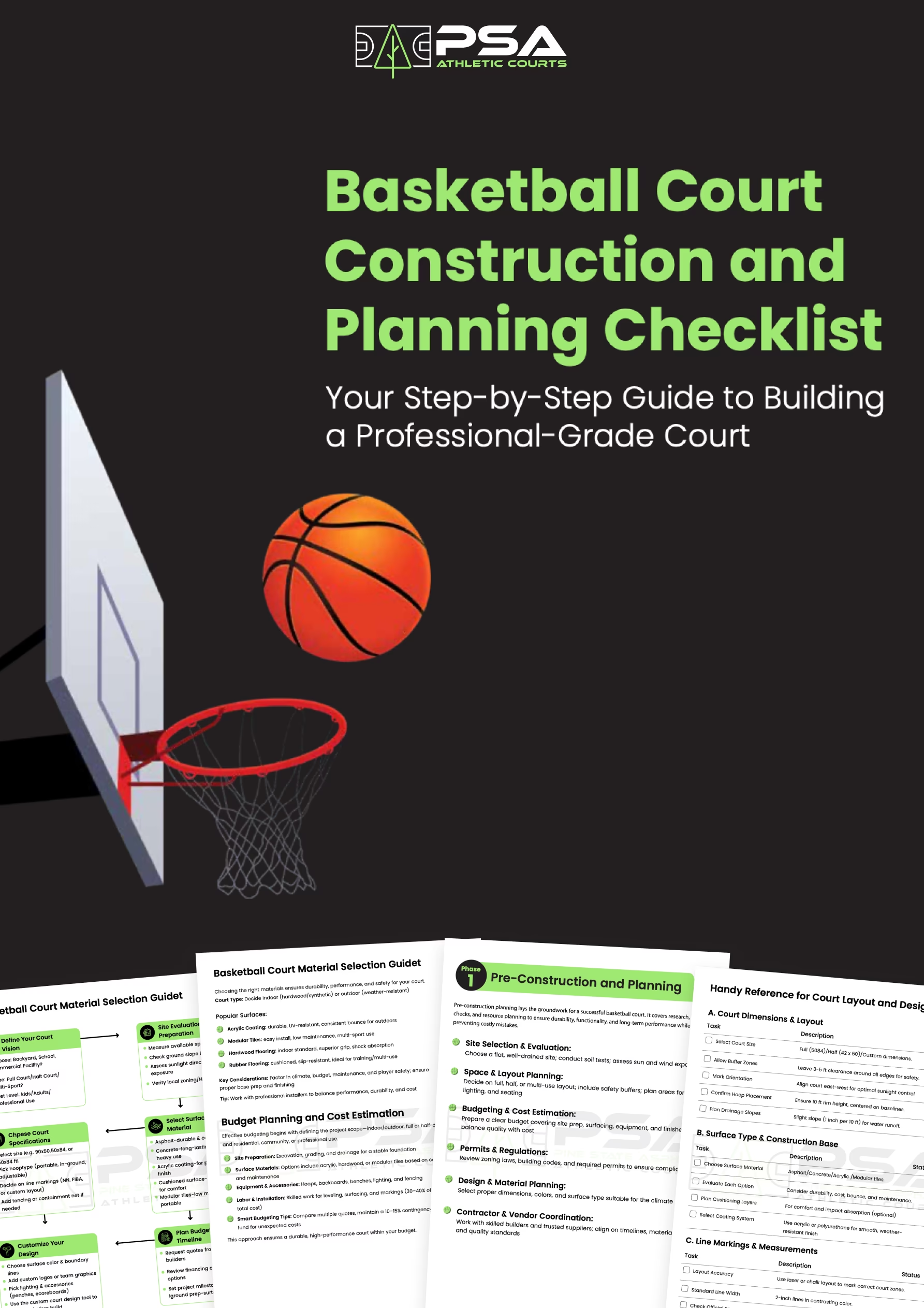
Download our FREE Basketball Court Construction & Planning Checklist and get the step-by-step roadmap to building a professional-grade court—from budget planning to final touches.
No guesswork, just results.