
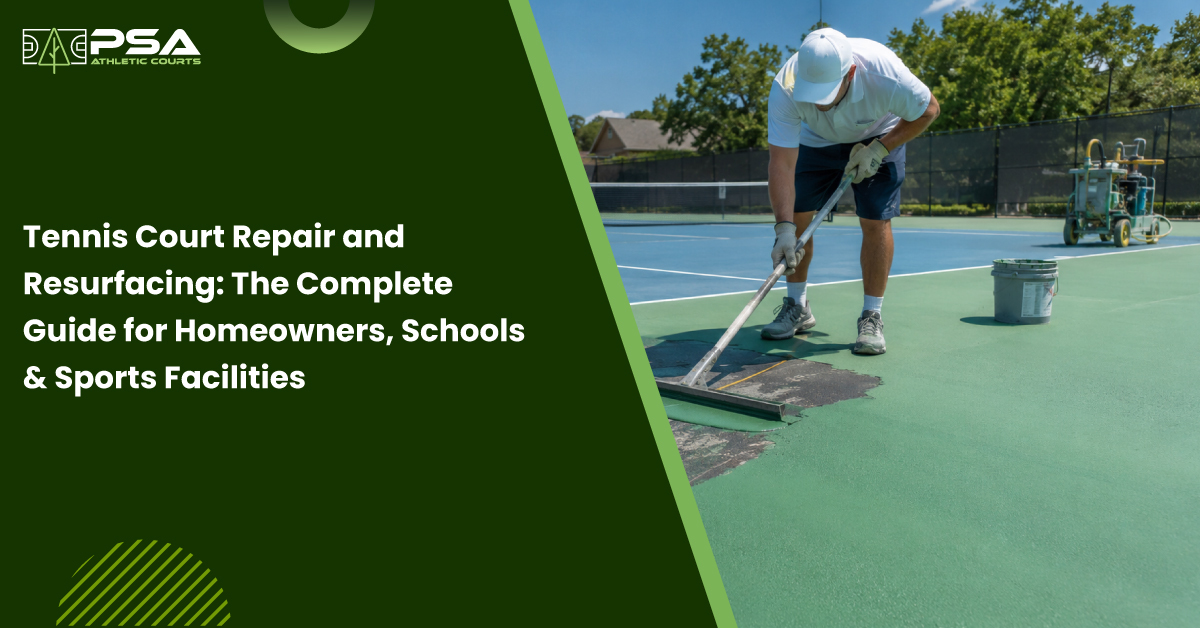
A tennis court takes a lot of wear over the course of its life. Constant foot traffic, changing weather, moisture, and play can gradually leave their mark with small cracks, faded lines, and uneven surfaces.
For homeowners, schools, and sports facilities, knowing when to repair or resurface their court can make a huge difference in improving the performance and lifespan of a tennis court.
But how do you know whether your court needs a simple repair, a complete resurfacing, or more extensive work underneath the surface? And what should you consider before starting the project?
In this Pine State Courts’ guide, we'll walk you through the common signs of tennis court damage, the difference between repair and resurfacing and what each process involves. We’ll also help you decide which (repair vs resurfacing) is the right solution for your home, school, or sports facility.
What Is Tennis Court Repair and Resurfacing?
Tennis court repair and resurfacing are two different approaches to restore a worn out or damaged court. While both can improve the existing condition and playability of your court surface, the right option depends on the type and extent of damage.
Tennis Court Repair Explained
Tennis court repair focuses on addressing specific areas of the court that’s been damaged, instead of completely replacing the entire playing surface. This may include repairing cracks, filling minor surface imperfections, addressing drainage-related problems, or correcting isolated areas that’ve been deteriorated.
Repairing your tennis court is a practical option when it is in a good condition and its underlying structure is also sound. In many other cases, repair alone is not enough to address the court damage. Resurfacing becomes the better long-term option for such courts.
Tennis Court Resurfacing Explained
Tennis court resurfacing involves restoring the court surface by repairing its base layer (generally asphalt or concrete) and applying new layers of surfacing material. This process not only addresses surface damage but improves traction, court appearance, and provides an even playing surface.
Proper preparation is an important part of this process. Problems like cracks, low areas, and drainage issues are evaluated first and addressed before applying the new surfacing materials.
Signs Your Tennis Court Needs Repair or Resurfacing
Not every tennis court that looks worn out needs immediate resurfacing. However, visible changes in the surface can indicate that it’s time your court gets professional attention.
Common signs for tennis court resurfacing or repair include:
- Cracks in the playing surface - Small cracks can expand as moisture and temperature changes affect the court.
- Fading or peeling of the surface coating - Significant colour fading or surface deterioration can affect both the appearance and playability of the court.
- Standing water - Puddles that remain after rain indicate low areas, drainage problems, or changes in the court's slope.
- Uneven areas - Changes in the court surface can create inconsistent ball bounce and risk of tripping or slipping.
- Faded court lines - Poorly defined lines can make the court difficult to use and affect gameplay.
The sooner you identify these issues, the easier it may be to determine whether targeted repairs are enough or your tennis court requires resurfacing.
Common Tennis Court Problems and Their Solutions
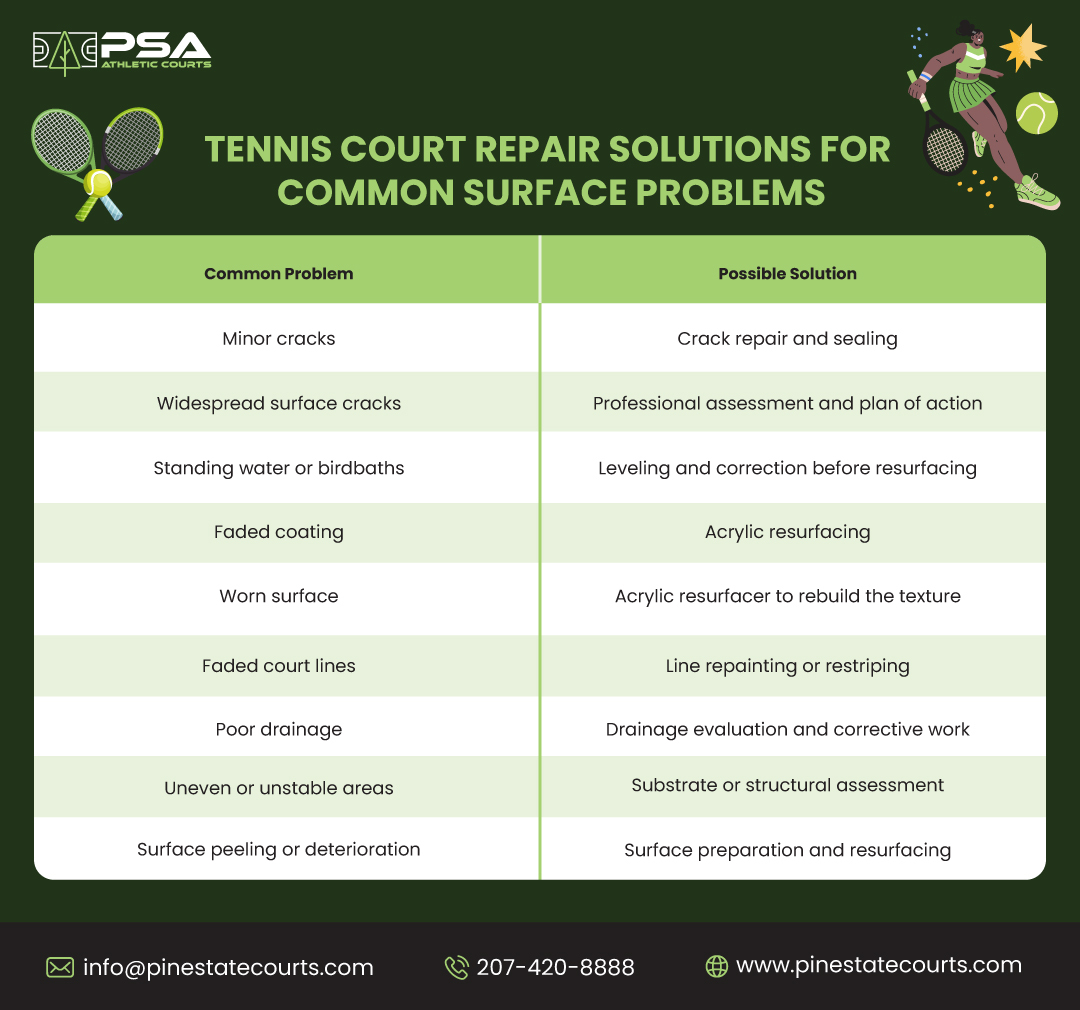
Your tennis court can develop a number of different problems depending on its surface, age, construction, drainage, climate, and maintenance history.
We’ve tabulated a list of some common tennis court problems and their possible solutions for your easy reference:
If you have an indoor tennis court, you can check our resurfacing guide for indoor courts to learn how it’s different than outdoor courts.
Tennis Court Repair vs Tennis Court Resurfacing: Which One Do You Need?
Choosing between resurfacing and repair is where most homeowners, schools, and facility owners get confused. The right decision comes down to the overall condition of your court.
Here’s a simple cheatsheet for you decide your needs:
Choose Repair If:
You should go with tennis court repair if:
- Damage is limited to only a few areas.
- The majority of the playing surface remains in good condition.
- Cracks on the court surface are relatively minor and manageable.
- The court still provides consistent play.
- The surface coating is generally intact.
- There are no significant underlying drainage or structural problems.
In these situations, targeted repairs may help extend the life of your court without the cost and downtime associated with a complete resurfacing project.
Choose Resurfacing If:
Tennis court resurfacing makes more sense when:
- The court surface is worn.
- Cracking is becoming widespread.
- The acrylic coating has deteriorated.
- The court has lost its original texture and appearance.
- Court lines have faded heavily.
- Surface repairs have become more frequent.
- The court needs an overall upgrade in its performance and appearance.
If you're still unsure which option is appropriate, court inspection from a professional tennis court designer can help you determine the condition of your court and suggest what procedure you need.
Step-by-Step Tennis Court Resurfacing Process
The tennis court resurfacing process involves a number of steps from evaluating your court’s condition, fixing cracks and drainage issues to applying acrylic resurfacer and painting line markings. Let’s take a look at all these steps in more detail:
Step 1 - Professional Court Inspection
The first step is assessing your court’s existing condition. A professional inspection will evaluate it for cracks, low areas, surface deterioration, drainage concerns, and other conditions that could affect your resurfacing project.
Step 2 - Cleaning the Surface
Your court needs to be thoroughly cleaned before repairs and coatings are applied as dirt, leaves, organic growth, and any loose material can interfere with adhesion. Proper cleaning creates a cleaner surface for the next stages of your resurfacing project.
Step 3 - Crack Repair
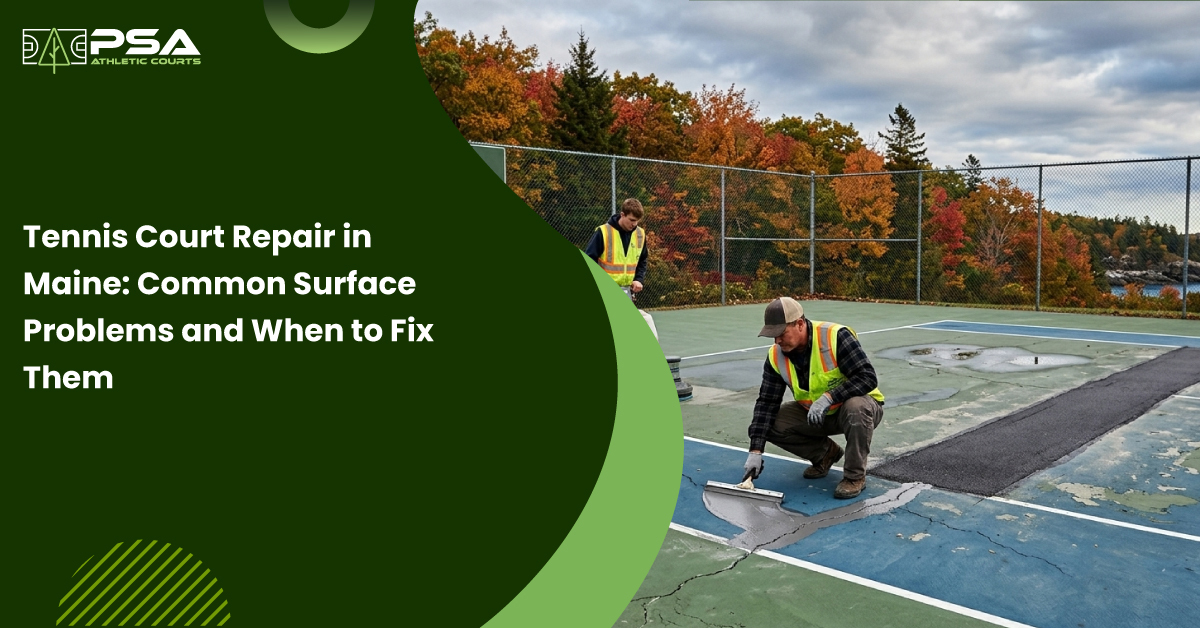
Cracks are repaired next. The appropriate method for it depends on the type, size, and cause of the cracking. Also, while crack repair can address the existing damage, recurring structural movement may require a more detailed evaluation.
Step 4 - Leveling Birdbaths
Birdbaths are shallow areas where water collects after rain instead of draining away from the court. These low spots can affect gameplay and contribute to surface deterioration. Before resurfacing, they should be evaluated and corrected using an appropriate leveling system.
Step 5 - Applying Acrylic Resurfacer
Once the underlying surface of your court has been properly prepared, acrylic court surfacing materials can be applied. The number and type of layers depend on the existing surface, court requirements, and the surfacing system that you’ve selected, resulting in a consistent and durable playing surface.
Step 6 - Court Coloring
The playing areas are finished with the court colours you’ve selected. It is wise to understand that this colour selection isn’t just an aesthetic decision. Different areas of your court need to remain clearly distinguishable so the players can easily read the boundaries during play.
Step 7 - Line Striping
Once your court surface has been prepared and coloured, accurate tennis court lines are applied. Proper measurements and line placement are essential because even small inconsistencies can affect how the court is used.
Step 8 - Final Inspection & Cure Time
The finished court is finally inspected to make sure that the surface, lines, and overall installation meet your project's requirements. The court should also be allowed adequate curing time before resuming play. The exact time will depend on your surfacing system and the weather conditions.
Types of Tennis Court Surfaces and Their Repair Considerations
The type of surface your court has affects both the repair process and the type of resurfacing system required.
We’ve listed some common types of court surface and their corresponding repair considerations below:
Acrylic Hard Courts
- You should apply a fresh acrylic topcoat every 4 to 8 years to protect the base from UV and moisture damage.
- You can alter the court speed during repairs by altering the ratio of silica sand mixed into the acrylic paint. Adding more sand increases friction and slows down the ball.
- Use 100% acrylic, breathable coatings so that underlying moisture vapor can escape without blistering the paint layer.
Asphalt Courts
- As asphalt naturally shrinks and expands with temperature changes, use flexible fabric repair systems for active cracks so they don’t immediately tear through the new paint.
- Depressions on the court that hold water deeper than a nickel after 1 hour of drying must be leveled using an acrylic leveling binder before resurfacing.
Concrete Courts
- Concrete suffers from hydrostatic pressure (groundwater pushing upward). While repairing use a specialized vapor barrier primer to prevent the paint from peeling.
- Make sure the expansion joints are clear of debris and sealed with polyurethane sealants to stop the water from degrading the slab.
Cushioned Tennis Courts
- Heavy wear can cause the internal shock-absorbing rubber layers to detach from the base. Cut out the damaged section and rebuild the rubber profile to fix this.
- Avoid using pressure washers with high PSI during cleaning, as excessive force can gouge or tear the soft cushion layers.
Clay Courts
- Clay requires daily watering, rolling, and brushing to keep the loose aggregate compacted and playable. Scrape off the dead material, add fresh aggregate, and re-nail the plastic line tapes every spring.
- In cold climates like that of Maine, clay courts must be completely winterized and closed as freezing water destroys the compaction of the material.
You can also seek help from experienced tennis court builders at Pine State Courts for the maintenance, repair, and resurfacing of your tennis courts.
Factors that Affect Tennis Court Resurfacing Cost
Beyond the extent of court damage and other existing conditions, the cost of resurfacing vs tennis courts is also a major deciding factor.
The total cost of your resurfacing project depends on several factors like:
- Court condition - Extensive cracks, low areas, or substrate problems can increase your preparation and repair requirements.
- Court size - Larger areas require more materials and labour, increasing your overall costs.
- Surface type - Your resurfacing cost varies on the basis of your court surfaces and its preparation and surfacing system requirements.
- Surfacing system - Material selection and the number of layers can affect your resurfacing costs.
- Colour and line requirements - Custom colours or additional markings increase your overall costs.
- Accessibility - Site access can influence equipment, labour, and project logistics.
- Drainage requirements - Existing drainage problems may require additional work before resurfacing.
PRO-TIP: Instead of choosing a tennis court resurfacing contractor purely on the basis of who offers the lowest estimate, look at what’s included in their preparation, repair, surfacing, and finishing stages. This detailed assessment can help you make the right pick.
Benefits of Professional Tennis Court Repair and Resurfacing
Investing in professional tennis court repair and resurfacing can provide several benefits beyond simply making your court look newer.
Here’s a list of benefits you gain from this project:
- Restore the playability of your court - You get a more consistent playing experience while addressing the worn or uneven areas on your court.
- Improve player safety - Addressing issues like cracks, loose material, and uneven surfaces makes the court more comfortable and safer to use.
- Extend the court’s life - Regular maintenance and timely repairs prevent minor problems from becoming more extensive surface damage.
- Improve court appearance - Fresh surfacing and clearly defined lines can give your old court a significant visual improvement.
- Reduce long-term costs - Addressing problems before they become extensive can help you avoid larger repair or reconstruction projects later.
- Maintain the usability of your facility - For schools and sports facilities, keeping courts in usable condition helps minimize disruptions to practices, lessons, competitions, and recreational programs.
You can explore more about tennis court resurfacing benefits and useful tips for it in our detailed guide.
Tennis Court Maintenance Tips to Extend the Surface Life
Repairing or resurfacing your court is not the end of its maintenance. Regular care is important to protect your investment and spot problems early.
Here’s a simple breakdown of your weekly, monthly, seasonal, and annual maintenance plan:
Weekly Maintenance
- Remove leaves, dirt, branches, and other debris from the court.
- Use a tennis court roller squeegee to push away stagnant water puddles after heavy rain
- Check for changes such as new cracks, standing water, or damaged areas.
Monthly Maintenance
- Wash away surface dust and pollen accumulation using a garden hose and a mild, non-abrasive detergent.
- Take a closer look at the court surface, fencing, drainage areas, and court accessories.
- If you notice a small crack or other developing issue, have it evaluated.
Seasonal Maintenance
- At the beginning and end of the playing season, inspect the surface for cracking, drainage issues, surface wear, and vegetation growth.
- Power wash the surface to remove embedded mold, mildew, and deep stains.
- Keep surrounding areas clear so that water can drain properly away from the court.
Annual Professional Inspection
- Fill in any new micro-cracks you find on the court with an acrylic liquid patch compound to prevent water from entering the base over winter.
- Clear perimeter drainage ditches, French drains, and catch basins to ensure rainwater flows away from the court base.
- Remove nets, windbreaks, and post hole covers in freezing climates to protect equipment from snow load damage.
Why Choose Pine State Courts for Tennis Court Repair and Resurfacing?
Building a tennis court is a significant investment for your home, school, athletic program, or sports facility. And consistent maintenance, repair, and resurfacing is a sure way to extend the life of this court and ensure long term ROI.
At Pine State Courts, we understand the importance of successful court restoration be it through tennis court repair or resurfacing. That’s why our projects start with an evaluation of your existing court to identify what it actually needs and then addressing it with our expertise and strong attention to detail.
Whether your project calls for targeted repairs, resurfacing, or a more extensive solution, our goal is to create a court that’s safe, playable, and built to perform for years to come. Contact Pine State Courts to discuss your tennis court repair or resurfacing project.
Frequently Asked Questions
1. How do I know if my tennis court needs resurfacing?
If your court is over 4 years old and has water pooling issues and extensive surface damage that minor repairs can not fix then you need tennis court resurfacing.
2. What is the best surfacing material for a tennis court?
The best surfacing material for a tennis court depends on factors like its usage, the extent of foot traffic it will receive, and your playability requirements. Acrylic hard courts are a great option for professional play while modular polypropylene tiles suit recreational play.
3. What is the life expectancy of a tennis court?
The structural base of a tennis court can remain sound for over 20 years with regular care while the top surface requires resurfacing every 4 to 8 years depending on its use.
4. How long does the resurfacing process take?
The resurfacing process can take around a week to 10 days to complete depending on the extent of damage, weather conditions, and curing time of the acrylic layers you add to the surface.
5. When is the best season to resurface a tennis court?
The best season to resurface a tennis court is spring or early fall as it allows enough time for the project to complete without the weather taking a turn for the worse. Avoid extreme weather and winter while planning your project.
DOWNLOAD OUR FREE GUIDE
Ready to build your dream court?
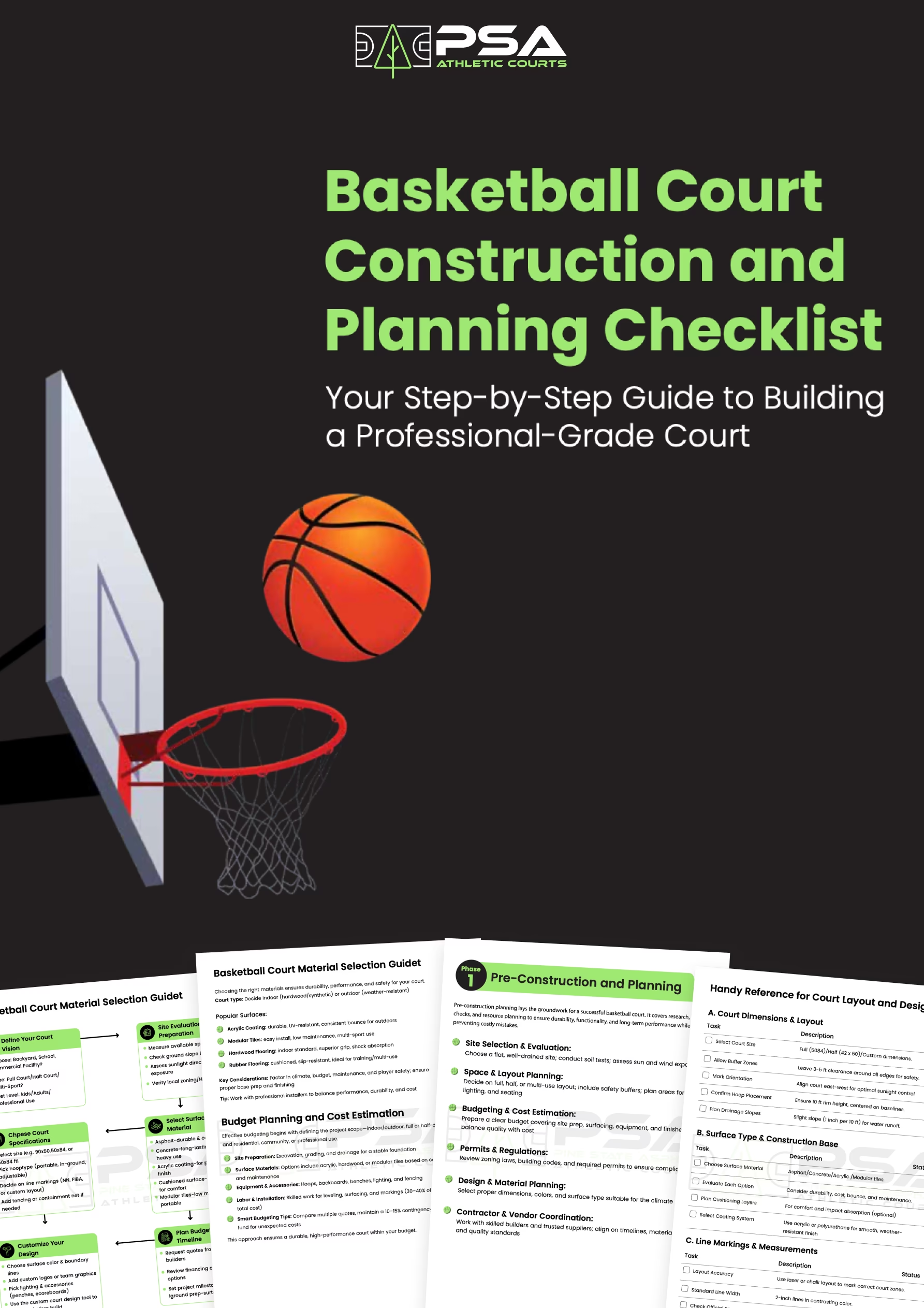
Download our FREE Basketball Court Construction & Planning Checklist and get the step-by-step roadmap to building a professional-grade court—from budget planning to final touches.
No guesswork, just results.