
If you manage or own a tennis court, you’ve probably noticed the early warning signs - a few cracks here and there, color fading on the court, or maybe a small puddle that takes a little longer to dry than it used to.
At first, these signs don't feel urgent as the court’s still playable but this is exactly where you should consider tennis court repair and resurfacing. These minor surface wear can turn into structural damage, safety hazards, and repair costs that are 2-5x higher than if you’d resurfaced earlier.
So, while waiting often feels like the safer choice due to budget concerns or uncertainty about the severity, the reality is quite the opposite. But don’t worry!
This guide by Pine State Courts will help you spot these warning signs early, so you can act before small problems become major ones. We’ll also help you answer queries like “the best tennis court resurfacing near me”.
Quick Court Inspection Checklist
Before we dive into the details of resurfacing your tennis court, let’s run through a quick 2-minute checklist to assess your court’s resurfacing requirements:
- Are cracks starting to spread or multiply?
- Does water sit on the surface after rain?
- Is the court looking dull, worn, or uneven in color?
- Have players mentioned inconsistent or “off” ball bounce?
- Does the surface feel slippery or less grippy than before?
- Are there visible signs of peeling or surface damage?
- Has it been several years since your last resurfacing?
If you checked 2 or more, your court likely needs professional attention soon. The longer you wait, the more expensive court repair becomes.
7 Signs Tennis Court Resurfacing Can’t be Delayed
If you checked two or more boxes above, there’s a good chance your court is already showing early signs of deterioration.
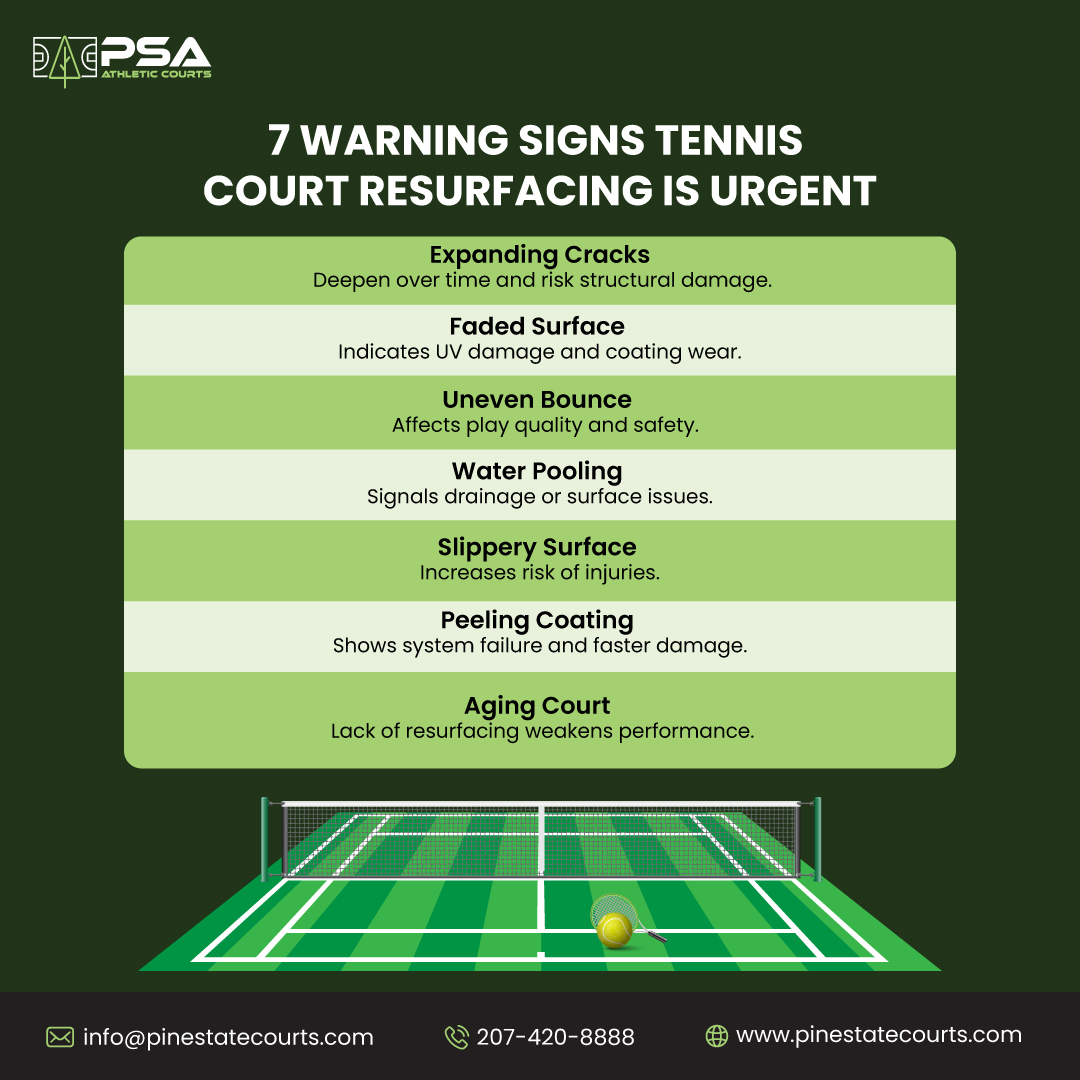
What most court owners don’t realize is that these issues don’t stay minor for long. Small surface problems can quickly turn into deeper structural damage, leading to more complex and expensive repairs for you.
So, how do you protect your investment? The key here is knowing what these warning signs actually mean and when they’ve crossed the line from “manageable” to “urgent.”
Let’s go through the 7 signs that indicate your tennis court resurfacing can’t be delayed any further and why acting “now” can save you significant time and cost.
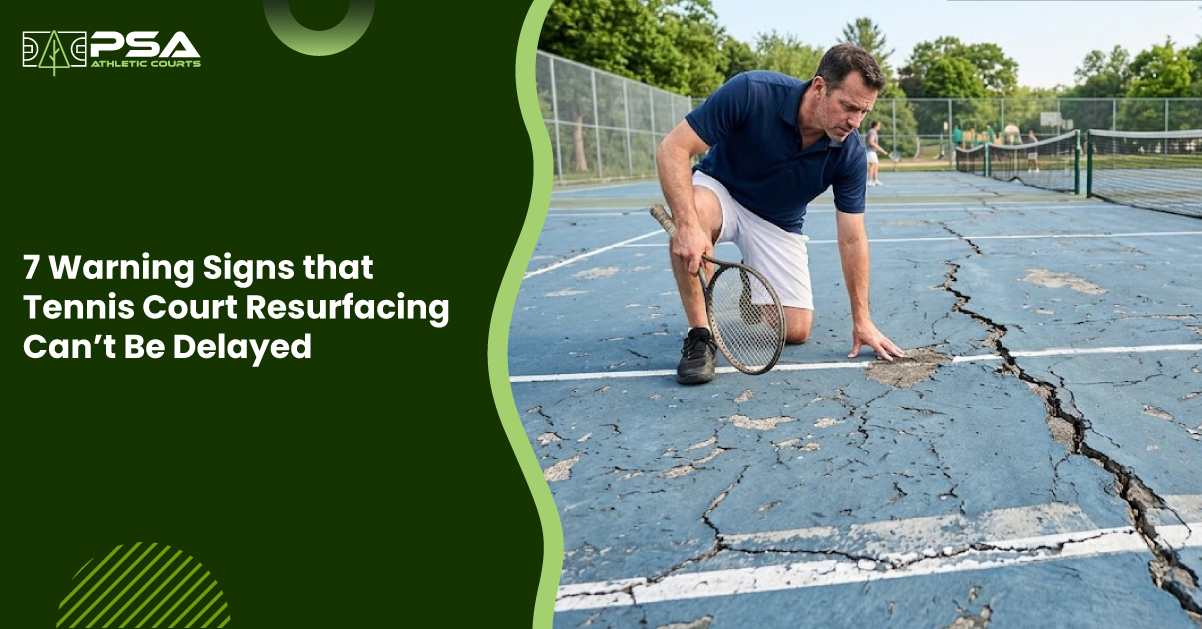
1. Surface Cracks are Expanding Every Season
Cracks are never just surface-level. With every season, freeze-thaw cycles (especially in climates like Maine) cause these cracks to expand and deepen until they begin affecting the court’s foundation.
If delayed, what starts as a minor tennis court repair can quickly turn into structural damage requiring full reconstruction, so postponing resurfacing will only multiply your costs.
2. Your Court Looks Worn and Faded
Expert tennis court designers suggest faded courts don’t just affect how your court looks but also indicate UV damage, surface wear, and loss of protective coating. This means your outdoor tennis court is no longer protected from external elements.
Once this protection is gone, your court starts to deteriorate faster. Fixing this issue early on will prevent the damage from escalating further.
Explore Indoor vs Outdoor Tennis Court Resurfacing Materials for expert insights on selecting the ideal resurfacing solution.
3. Players Notice Inconsistent Ball Bounce
Players often notice problems before the owners do. If the players are complaining about the ball bouncing unpredictably, it feels “dead” in certain areas, or changes speed across the court, it's a sign that your surface is uneven or deteriorating.
This inconsistency affects the game’s quality, player’s safety, and your facility’s reputation.
4. Water Stays on the Court After Rain
Standing water is often a sign of structural problems in the court. It usually indicates that low spots have formed on your court, compromising its drainage and the integrity of your court surface.
Water is one of the fastest ways to destroy a court and ignoring this issue can only lead to faster cracking, surface breakdown, and higher repair costs.
5. The Court Surface Feels Slippery
If your players often complain about a slippery court, it becomes a liability issue for your facility. This slipperiness could be due to your worn out coatings, buildup of algae/mold, or loss of texture.
Such a surface increases the risk of injury significantly. Getting resurfacing done here won’t just help with maintenance but it is an effective risk management for schools and facilities.
Dive into Tennis Court Maintenance to understand essential care practices that protect your court surface.
6. Coating Layers Are Peeling
Peeling doesn’t just mean your court surface looks bad it means the surface system is failing. Once these coatings start separating the protection of your court is gone - moisture penetrates deeper, damage accelerates quickly.
At this stage, patchwork fixes won’t last for long and that’s why resurfacing is just what you need to restore your court and protect it from further damage.
7. Your Court Hasn’t Been Resurfaced in Years
Even if everything looks okay on the surface level, time alone causes your court to break down, leading to surface fatigue and reduced performance of your tennis court.
Most courts need resurfacing every 4 to 8 years depending on its usage levels and climatic conditions. Waiting beyond that window silently deteriorates your court.
How Professional Tennis Court Resurfacing Contractors Fix These Issues
With extreme freeze thaw cycles, professional resurfacing in Maine doesn’t just require adding a layer of acrylic resurfacer. It needs an overall fix, improved performance, and looks of your court.
At Pine State Courts, our tennis court resurfacing experts undertake the following processes to restore your court:
- Cleaning & preparing the surface for resurfacing
- Crack repair & structural patching
- Leveling the surface of your court
- Application of acrylic coating system
- Line striping & finishing
The result is a court that performs like new, improves safety of the players, and extends the lifespan of your court.
Short on budget? Don’t worry! We offer a flexible monthly payment option through our partnership with Hearth, we also support fundraising platforms like SNAP mobile, contact us to know more.
Benefits of Timely Tennis Court Resurfacing
Let’s take a look at the benefits you gain by resurfacing at the right time:
- Lowers your long-term costs by helping you avoid full rebuild.
- Ensures consistent and professional play quality.
- Improves the safety & traction.
- Improves your court’s appearance & your facility’s reputation.
- Ensures a longer lifespan of your tennis court.
Simply put, getting your court resurfacing done early saves you money and headaches.
Choosing the Right Tennis Court Resurfacing Contractors
When you search for queries like “the best tennis court resurfacing near me”, you’ll get a long list of contractors around you but remember not all contractors are equal. You need to check their services thoroughly and compare prices before you make a decision.
Here’s what you should look for in the right tennis court contractor:
- Experience of working with outdoor athletic courts.
- Knowledge of climate-specific challenges (especially freeze-thaw cycles of Maine).
- Proven track record of commercial projects.
- Use quality materials and thorough processes, not shortcuts.
- Clear communication about process and pricing.
The right contractor won’t just fix the court surface, they will protect your investment long-term.
Conclusion
Tennis court resurfacing isn’t just an aesthetic uplift of your court but an overall improvement in the quality of your court surface, its performance, and the safety of players. All this ultimately adds your facility’s reputation and its commercial value.
From surface wear, cracking, and peeling to drainage issues, ignoring these signs can cost you significantly later. Knowing the right time to resurface is therefore important so you not only protect the surface from damaging further but extend the court’s lifespan too.
Contact Pine State Courts for a site visit to assess your court’s condition and design a customized resurfacing plan for you. We also offer asphalt paving for your commercial and residential spaces.
Frequently Asked Questions
1. How often do tennis courts need to be resurfaced?
For hard courts made of asphalt or concrete, resurfacing is required every 4 to 8 years while clay courts require it every 2 to 3 years.
This timing also depends on factors like extent of usage, climate, and its maintenance. Public courts that receive consistent footfall require frequent resurfacing 5 years, well maintained private courts can last around 10 years.
2. How much does tennis court resurfacing cost?
The cost of tennis court resurfacing can vary significantly depending on several factors. These include the size of the court, the condition of the existing surface, the extent of crack or structural repairs needed, and the type of surface being applied (such as acrylic, cushioned, or clay). Additional elements like drainage issues, low spots, and customization options can also impact the overall scope of the project.
3. What is the cheapest way to resurface a tennis court?
The cheapest way to resurface a tennis court is to fix the patches locally and add the acrylic coating yourself so you save up on the labor costs.
4. How long does it take to resurface a tennis court?
Resurfacing a tennis court is usually a 3 to 7 days’ procedure but unfavorable weather may extend this time to 10 days.
5. How do I find reliable tennis court resurfacing contractors?
To find a reliable tennis court resurfacing contractor look for specialized expertise in building tennis courts and its resurfacing, check their project portfolios and local reviews to evaluate them further.
Contractors like Pine State Courts who are associated with organizations like American Sports Builder Association (ASBA) and Maine Interscholastic Athletic Administrators Association (MIAAA) are also great for such projects.
6. Can resurfacing improve the lifespan of a tennis court?
Yes, regular resurfacing every 4 to 8 years can improve the lifespan of a tennis court. By repairing cracks, fixing low lying spots, and protecting the surface from water damage, it prevents surface damage from reaching the court’s foundation.
DOWNLOAD OUR FREE GUIDE
Ready to build your dream court?
Download our FREE Basketball Court Construction & Planning Checklist and get the step-by-step roadmap to building a professional-grade court—from budget planning to final touches.
No guesswork, just results.