


When it comes to building a tennis court in the colder climate of Manchester, it’s important to factor in the freezing winters, snow, and repeated freeze-thaw cycles. As these adverse conditions quickly take a toll on your court’s surface and its foundation.
That’s why careful planning is important both for installing a new court and upgrading an existing one.
At Pine State Courts, we’ve worked with a wide range of clients in Manchester, from schools and clubs to private property owners. And based on this experience, we’ve compiled this list of our five expert tips to help you with building, surfacing, and maintenance of your tennis courts in Manchester.
So, let’s get started!
Understanding Tennis Court Requirements in Manchester
Before beginning with the tips, it’s important to understand how local conditions affect the construction and long-term performance of your tennis court.
Here’s a list of factors that you should consider:
Sloping and drainage
Poor sloping and drainage is especially harmful as water pooling impacts both playability and player safety.
Freeze-thaw cycles
Water trapped beneath the surface expands upon freezing, causing cracking and structural damage if your base and drainage are not designed properly.
Snow and ice exposure
Winter in Manchester requires durable court surfaces and proper planning for snow removal so it won’t damage the court.
Ground conditions and soil stability
Soil movement and frost heaving can also impact the long-term stability of your court’s base.
Seasonal usage patterns
Tennis courts usually see reduced use in winter which is why pre- and post-season maintenance is important.
Professional tennis court designers suggest that your court should handle temperature stress and structural movement, along with surface wear.
5 Expert Tips for Building, Surfacing and Maintenance of Manchester’s Tennis Courts
Now that you know what factors affect tennis courts in Manchester, let’s discuss how you can apply them in practice.
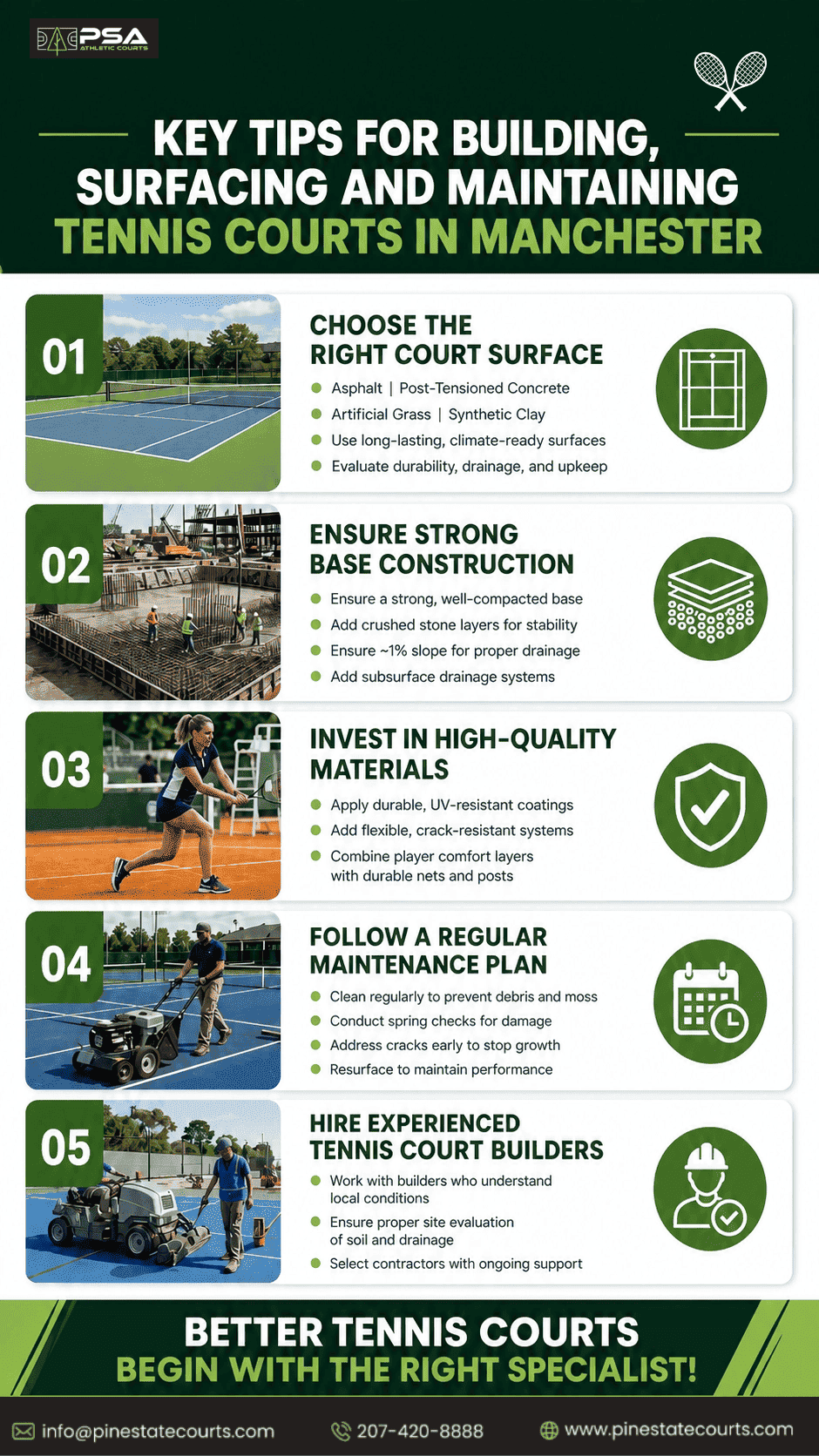
Tip #1: Choose the Right Tennis Court Surface
While building a tennis court, the surface you choose matters a lot, especially in colder climates like Manchester’s. The wrong choice here can lead to faster surface wear, cracking, and increased maintenance costs over time.
Some of the most commonly used tennis court surfaces in the US are:
- Asphalt / hard courts - They are one of the most widely used court surfaces that provide a consistent play but require proper base support to minimize cracking.
- Post-tensioned concrete - It is a premium option that's designed to reduce cracking caused by ground movement and consistent freeze-thaw cycles.
- Artificial grass - This surface offers good drainage and softer play but requires proper installation for colder climates.
- Synthetic / artificial clay - It provides a slower playing experience and improved comfort, but requires consistent tennis court maintenance, along with proper drainage.
If you’re still confused about which surface you should use, contact a local tennis court installer in Manchester, NH to make the right choice for your court.
Tip #2: Focus on Proper Base Construction
In addition to the court surface, base construction is especially important in areas prone to freezing and ground movement.
Here are some key components that you must consider while building in colder climates:
- A stable, well-compacted sub-base - It provides the structural foundation needed to prevent movement and uneven settling of the court surface over time.
- Layered aggregate foundation (crushed stone) - Crushed stones are typically installed in multiple layers (often 8-12 inches total) for both strength and proper drainage beneath the court.
- Consistent surface slope (~1%) -This uniform slope directs water off the court, reducing the risk of pooling and freeze-related damage.
- Subsurface drainage systems - French drains are essential in areas with poor soil drainage so water flows away from the base and prevents saturation.
- Frost-resistant materials - Using the right aggregates minimize the effects of consistent freeze-thaw cycles, this further reduces the risk of heaving and structural movement.
Tip #3: Invest in Quality Materials & Equipment
The materials you choose to build with also play a critical role in the performance and durability of your tennis court. Invest in quality materials instead of cutting costs here as it will only lead to costly repairs later.
Here’s what matters when it comes to the court materials:
- Surface coatings and finishes - Use higher-grade coatings to get better resistance to weather fluctuations, UV exposure, and day-to-day wear.
- Flexible crack-resistant systems - They are important to allow minor movement without causing surface failure.
- Shock-absorbing layers - In professional and high use courts these layers help to improve player comfort and reduce strain on joints.
- Net systems and posts - Durable and well-installed court equipment ensures there’s consistent tension and long-term reliability.
Check out the list of 10 tennis court maintenance equipment that aid in the upkeep of your court and boost its value.
Tip #4: Plan Regular Tennis Court Maintenance
In a climate like Manchester, where snow, debris, and seasonal freeze-thaw cycles are constant factors, regular upkeep is essential to prevent small issues from turning into costly repairs.
Your proactive maintenance plan should therefore include:
- Routine cleaning - Remove leaves, dirt, and debris regularly to prevent surface contamination and reduce the risk of moss or algae growth.
- Spring inspections - After the winter season, inspect your tennis court for cracks, surface separation, low spots, and drainage issues which might have been caused by the freeze-thaw cycle.
- Crack repair and surface patching - Address any small cracks early before they expand due to moisture and temperature changes.
- Periodic resurfacing - Resurfacing the tennis court every few years helps to restore its traction, improve playability, and protect the underlying foundation.
- Equipment maintenance - Check the nets, posts, and fencing regularly so everything remains safe and functional.
Wondering when is the right time to resurface? Check out our guide to learn the 7 signs your tennis court needs resurfacing.
Tip #5: Hire Professional Tennis Court Builders in Manchester
No matter how well you plan out your tennis court construction, the final result will ultimately depend on who builds it.
In a region like Manchester, NH where freeze-thaw cycles, drainage challenges, and seasonal wear all come into play, working with an experienced tennis court builder like Pine State Courts, who knows your region well is especially useful.
When you’re evaluating contractors, keep an eye out for the ones who:
- Assess site conditions thoroughly - This includes checking the soil stability, drainage patterns, and grading requirements. This indicates their expertise before the construction even begins.
- Design climate-appropriate base systems - As they know the local climate well, they’ll plan for frost movement, moisture, and long-term structural stress in advance.
- Recommend the right surface for your needs - They make suggestions based on your court usage, budget, and expected performance over the years.
- Use proven materials and construction methods - This ensures durability and consistency across all layers of the court.
- Provide guidance on long-term maintenance - This ongoing support helps to protect your investment far beyond the initial construction.
Cost Breakdown of Building a Tennis Court in Manchester
Building a tennis court in Manchester can be more involved than in other areas due to temperature swings, freeze-thaw cycles, and the need for proper drainage.
Every project is a little different. Final costs depend heavily on site conditions, base preparation, drainage design, material quality, and any additional features like fencing, lighting, or custom layouts.
Because of these variables, the best way to get an accurate number is to look at the specific site and goals for the project.
Struggling with a low budget? Don’t worry! You don’t need to pay us at once, we offer flexible monthly payments through Hearth and also support fundraising platforms like SNAP mobile. Contact us to know the details.
Common Mistakes to Avoid When Building a Tennis Court in Manchester
Many facility managers forget to factor in the freeze-thaw cycles of Manchester while starting their project and end up with a court that not only lacks performance but also requires frequent repairs.
Here’s a list of some common mistakes that you must avoid so you don’t end up with the same fate:
- Don’t ignore proper drainage design or sloping as it will lead to water buildup, cracking, and long-term surface damage.
- Proper base construction is crucial as weak foundations will result in uneven surfaces and premature failure of your court.
- Choose the court surface carefully as an incompatible surface will wear out faster in freeze-thaw conditions of Manchester.
- Don’t skip using frost-resistant materials as it will quickly lead to frost heaving and winter damage.
- Don’t compromise on the quality of your materials to save some money as it will only add to your long-term expenses for repair.
- Don't neglect maintenance planning as small issues quickly grow into costly repairs without regular upkeep.
With these tips and an experienced tennis court installer in Manchester, NH by your side, you’ll get a court that not only looks professional but performs like one too.
Conclusion
The freeze-thaw cycles, soil instability, and colder climate of Manchester make tennis court construction challenging but with proper planning for construction and maintenance, you can get a professional-grade court.
At Pine State Courts, we are experienced at handling the local climate and we ensure that your court is built to withstand the temperature fluctuations and freeze-thaw cycles. Contact us to get a customised blueprint of your tennis court.
Frequently Asked Questions
1. How often should a tennis court be resurfaced in Manchester?
A tennis court in Manchester should be resurfaced every 4 to 8 years. High-use courts in public areas generally require frequent resurfacing, every 4 to 5 years while private courts are used less frequently and can last up to 8 years.
2. What maintenance does a tennis court require in Manchester?
Tennis courts in Manchester require frequent maintenance like:
- Cleaning the surface regularly (removing debris + pressure washing).
- Synthetic grass and clay courts require regular brushing or clay infill.
- Regular inspections (especially in spring) to check cracking or surface wear.
- Fix any cracks as and when they arise.
3. Do I need planning permission to build a tennis court in Manchester, NH?
Yes, you’ll need a building permit and approvals for electrical work if you plan to add lighting. These planning permissions are necessary while building a tennis court in Manchester, NH.
4. How does Manchester’s weather affect tennis courts?
The freeze-thaw cycles, snow, and cold climate gradually take a toll on the tennis court’s surface and foundation. This is why proper planning during construction and maintenance post-construction are important to ensure the court remains playable for years.
5. Can a tennis court be used year-round in Manchester?
The outdoor tennis court in Manchester can’t be used year-round due to snow in winter. You can use indoor courts for year-round play.
6. What are the common problems with tennis courts in Manchester?
Common problems of cracking, surface wear, and water pooling arise in Manchester’s tennis courts due to the consistent freeze-thaw cycles.
DOWNLOAD OUR FREE GUIDE
Ready to build your dream court?
Download our FREE Basketball Court Construction & Planning Checklist and get the step-by-step roadmap to building a professional-grade court—from budget planning to final touches.
No guesswork, just results.