

Building a basketball court is more complex than laying a concrete base, painting line markings over it, and installing the hoop systems. It requires careful planning to ensure that the basketball court design meets professional standards and is built to withstand the external elements.
From choosing the right surface and court dimensions to base preparation and choosing the correct coatings, this guide by Pine State Courts will cover the seven proven steps of basketball court construction that will lend you a durable and top performing basketball court.
Step 1: Define the Purpose of Your Basketball Court (Indoor, Outdoor or Professional Use)
Before beginning any construction, it is important to define the purpose of your project. For a basketball court this simply involves determining what kind of court you want to build: indoor vs outdoor.
While both have their own merits, building an outdoor basketball court provides an easily accessible and lower-cost construction that fosters community bonding. An indoor basketball court, on the other hand, adds to the value of your facility by offering year-round play. It is especially beneficial to build an indoor basketball court in Augusta and other such locations in Maine that are prone to harsh freeze-thaw cycles and heavy annual rain.
Another important consideration is whether you plan to build a professional or a backyard basketball court as both have different requirements in terms of court dimensions and the quality of materials you’ll use.
Step 2: Choose the Perfect Location for Your Basketball Court
Next comes choosing the perfect location for your basketball court construction. This includes choosing a naturally flat surface with a gentle slope of around 1%. If you have an uneven surface or a soil that shifts often then you’ll need a lot of site preparation to meet the required standards.
The location should also be easily accessible and safe from any power lines or low hanging branches. Also, ensure that your site can fit the court that you are planning to build: NBA vs FIBA vs High School court, we’ll discuss the correct basketball court dimensions for each court in the next section.
No matter the location you choose, orient your court in the North-South direction to minimize the Sun glare.
Not sure if your location is perfect to build a basketball court? Book a site visit from Pine State Courts and get a complete breakdown of how we can build a professional and durable court on your site.
Step 3: Select the Right Basketball Court Dimensions (Full vs Half Court)
From NBA, FIBA to high school and backyard basketball courts, each one has its own specific dimensions that you must know of. Here’s an easy breakdown to help you decide your needs:

- An NBA basketball court is 94 x 50 feet.
- A FIBA court is 92 x 50 feet.
- The size of an NCAA / High school court is 84 x 50 feet.
- A half court’s dimensions are 50 x 42 feet.
- A backyard basketball court is 30 x 30 feet.
You can choose the right size of your basketball court based on the needs of your players, whether you want a professional court (NBA and FIBA) or you plan to build a high school or backyard court.
In addition to the playing field, it is also recommended to leave some space around the court for safe movement of players. Check out our guide on how big is basketball court size and layout to get a detailed breakdown of each courts’ space requirements.
Step 4: Build a Strong Foundation with Proper Base & Drainage
The foundation of your court decides its durability and performance. Make sure to clear the site from all vegetation and debris before beginning the excavation. Compact your sub-grade and ensure a slope of 1% for drainage, for soil with heavy retention - add French drains to the perimeter of your court.
For the base preparation, add a 4-6 inch layer of crushed stone or gravel and top it off with a concrete or an asphalt base. Both offer their own merits in terms of their durability, maintenance, and performance.
Asphalt basketball court construction is preferred for its low-cost installation that’s more forgiving on players’ joints. Concrete basketball court construction, on the other hand, is preferred for its durability, top-performance, and low maintenance.
Check out our guide for a detailed breakdown of the different surface options for your basketball court.
Step 5: Pick the Best Basketball Court Floor for Performance & Durability
After the base for concrete or asphalt basketball court construction has been laid down and cured next comes adding the basketball court floor. The floor you choose impacts the player’s performance and their playing experience.
Here’s a brief breakdown the different options you have when it comes to basketball court flooring:
- Maple Hardwood - It is a premium choice for building indoor basketball courts with great traction, longevity, and safety.
- Acrylic coated Asphalt/ Concrete - It is a durable, low-maintenance, and cost-effective surface option for building outdoor basketball courts.
- Modular Tiles - Best for building multi-athletic courts with easy maintenance and excellent drainage and shock absorption.
- Polyurethane - It is another great option for indoor basketball courts with high durability and great shock absorption.
Choosing the right basketball court floor among the four options depends upon your needs and budget. Contact Pine State Courts to help you make the right choice for your needs.
Step 6: Add the Essential Basketball Court Equipment & Accessories You Need
Once you’ve made the choice for the court flooring, the next step is deciding between portable and in-ground hoops systems for your court. Portable hoops are the right fit for a recreational,multi-athletic court or backyard court setting. Add durable high quality in-ground hoop systems to a professional basketball court.
You can also add other accessories like:
- LED lighting to extend the playtime to evening and night.
- Nets and ball returns to improve the playing experience and save time during practice.
- Pole padding to enhance the safety of the players.
- Adjustable rims prove to be useful if you host both young and seasoned players
Adding these accessories doesn’t just enhance the aesthetics of your court but also help improve the playing experience and comfort. This boosts the overall value of your sports facility.
Step 7: Add Court Markings, Coatings & other Finishing Touches That Matter
The final touches to the court is the acrylic coating that not only uplift the looks of your court but also provide good traction and protects your court against weather and regular-use wear. Add UV-resistant line markings accurately using a tape machine.
Discover 9 Modern Basketball Court Color Ideas That Transform the Look of Your Court
You can also add custom logos, team colors, or unique boundary designs that transform your court from being a standard court into a space that feels personal to the players. As these finishes come with an additional cost, it is wise to balance court aesthetics with function.
Smart Basketball Court Maintenance Tips for Long-Lasting Performance
It isn’t just the basketball court construction that matters but its upkeep and maintenance are important too. Without regular cleaning and basketball court resurfacing, your court ends facing the brunt of regular use and external elements.
Here are a few maintenance tips to ensure your court delivers long-lasting performance:
Indoor Hardwood Court Maintenance
- Clean your hardwood court regularly using a microfiber mop.
- Wipe up any spills immediately to prevent swelling and surface damage.
- Deeply clean your court surface weekly using a pH-neutral cleaner recommended by your manufacturer.
- Maintain consistent humidity in your indoor court to prevent warping.
- Schedule a professional inspection and recoating every 1-3 years when the floor becomes dull or slippery.
Outdoor Asphalt/Concrete Court Maintenance
- Sweep or use a leaf blower to clean your court surface weekly.
- Clean your court with a power washer (lightly) every 1-2 years to remove mildew.
- Inspect your court for cracks seasonally and fix them immediately to protect the court base.
- Schedule basketball court resurfacing every 4-8 years depending on its use.
Compare Acrylic vs Concrete Court Surfaces and Choose the Right Option for Your Project
How to Find the Best Basketball Court Contractor for Your Project
No matter how smart and efficient your construction planning is, it won’t be successful until you find the right basketball court builder to complete your basketball court construction project.
Most projects require a mix of skilled crews, including excavation teams, paving specialists, and sports surface installers, the right basketball court contractor will have an expert team of these.
Here’s how you can find the right contractor for your court construction project:
- Prioritize specialists who have proven experience of building professional basketball courts.
- Verify their expertise through portfolio reviews and client references.
- Check for certification like ASBA certification.
- Choose local builders who have experience of working in your area (they know the climate and soil quality better - build durable courts).
- Get detailed quotes from at least three builders and compare them.
Closing Thoughts
Basketball court construction is a significant investment for any property owner be it for a sports facility, community centre, or your backyard. From the site and base preparation to choosing the right surface, coatings, and accessories, every step of the process has its own role to play in the performance, durability, and quality of your court.
Getting the right basketball court builder on board from the very beginning ensures you make the right choices and get a top performing, durable court. At Pine State Courts, we offer solutions for building, resurfacing, and maintaining not just basketball but pickleball, tennis, and multi-athletic courts too. Contact us to start your next project.
Frequently Asked Questions
1. How long does it take to build a basketball court?
A basketball court construction project generally takes around 3 to 6 weeks to complete. The actual time depends on the required site preparation, curing time of your surface, and weather conditions.
2. Which flooring is best for a basketball court?
The best flooring for an indoor basketball court is Hardwood maple for its superior performance and durability. For an outdoor court asphalt or concrete court with acrylic coating is a cost-effective and durable choice, modular tiles are also preferred for their versatility and efficient drainage.
3. What can you use instead of concrete for a basketball court?
You can use asphalt instead of concrete for a basketball court which is a common choice for its durability and cost-effectiveness. Other options include gravel panels and compacted stone.
4. Is drainage important in basketball court construction?
Yes, drainage is very important in basketball court construction to ensure there are no water-pooling or logging issues that end up impacting the safety of players and damage the court’s base over time.
DOWNLOAD OUR FREE GUIDE
Ready to build your dream court?
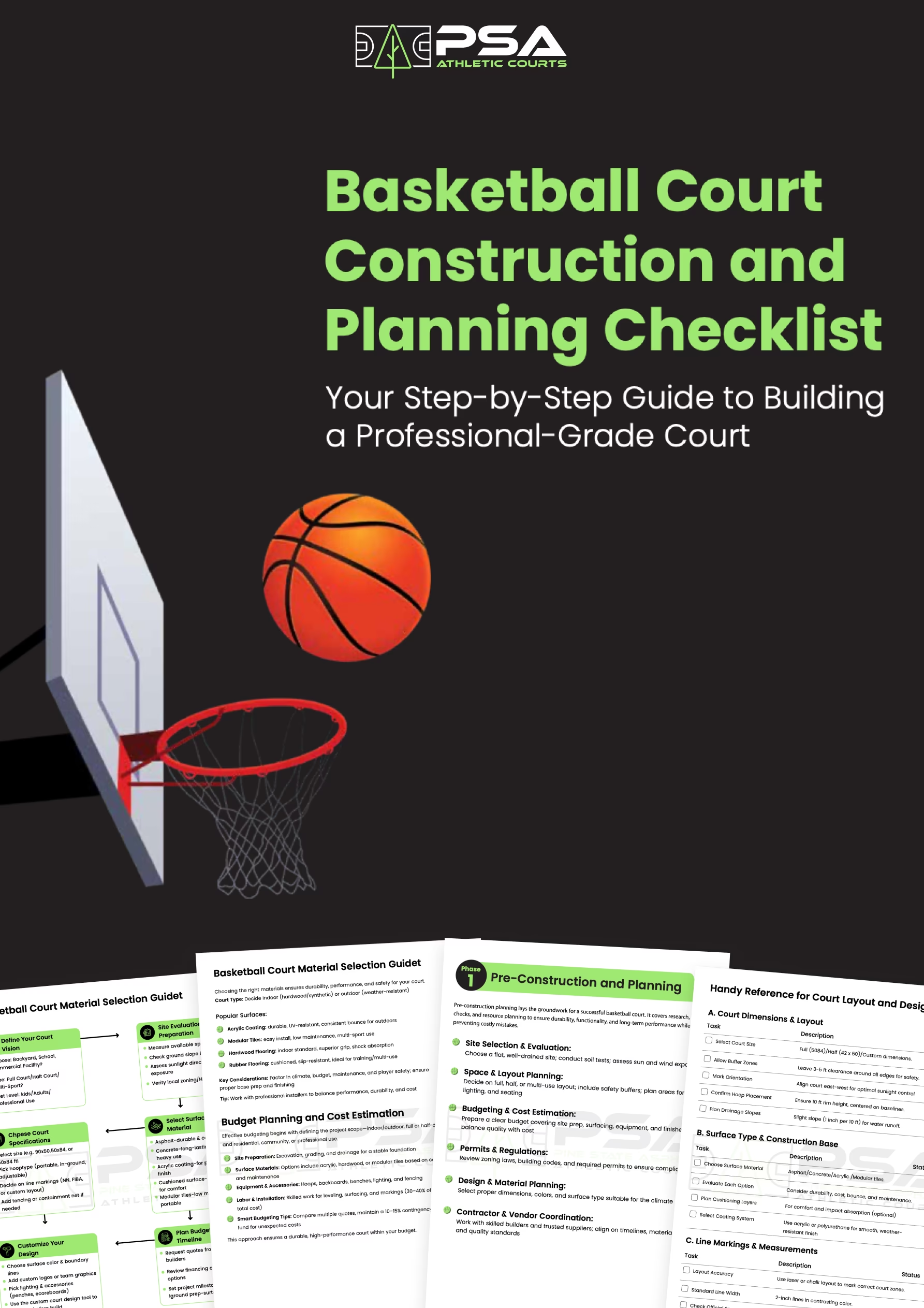
Download our FREE Basketball Court Construction & Planning Checklist and get the step-by-step roadmap to building a professional-grade court—from budget planning to final touches.
No guesswork, just results.