
.jpg)
Building a basketball court in your backyard is one of the best upgrades you can make to build an active outdoor space for your family. Whether your goal is casual shooting practice, a fun game with your family, or serious training of your kid, choosing the right court size can create all the difference.
Unlike professional or school courts that are built to regulatory sizes, residential courts are usually designed around the space you have in your yard and your intended use of the court.
From standard and compact half courts to shooting courts, you have plenty of options that will fit comfortably in your backyard. Not sure which court size should you use for your yard?
Don’t worry! This guide by Pine State Courts will discuss the three common backyard basketball court sizes. We’ll also discuss how much space you’ll need to build each and some expert tips to design a court that works well in a residential setting.
Standard Basketball Court Size (for Comparison)
Before we discuss a backyard court, let’s first discuss how big a standard basketball court is. This size will serve as the reference point for our further discussion.
A professional basketball court (NBA or NCAA) measures 94 feet long and 50 feet wide, while high school courts are a bit shorter, measuring around 84 feet by 50 feet. Both these professional courts have enough space for five-on-five gameplay, sidelines, and complete court markings.
However, such full courts require more than 4,700 square feet of playing space, which is much larger than the space people usually have in their backyards. This is why backyard courts are usually scaled down in size and designed specifically for recreational play, training, and family use.
Common Backyard Basketball Court Sizes
Most residential basketball courts fall into three practical categories that are smaller than the standard court.
.jpg)
These backyard court sizes are categorized depending on the available space and how the court will be used. They are:
Half Court (50 ft × 42 ft)
A half basketball court is one of the most widely built outdoor courts. Such half courts replicate one side of a full basketball court and generally measure around 47-50 feet long and about 42-50 feet wide.
This size allows:
- Proper spacing for free-throw lines.
- A realistic three-point arc.
- Small games like 1-on-1 or 3-on-3.
Homeowners with large yards often choose to build a half court as they provide an authentic playing experience without building a full court.
Compact Half Court (30 ft × 30 ft - 40 ft × 30 ft)
While half courts are the closest you can get to a standard court size, not every backyard space can accommodate this court. In such residential spaces, a practical solution is to build a compact half court.
These customized compact courts are commonly built in the following sizes:
- 30 ft × 30 ft
- 35 ft × 30 ft
- 40 ft × 30 ft
Such court layouts provide enough space for your shooting practice, free-throw drills, and casual games with family or friends. They are also easier to install and often require less site preparation, making them a popular choice among homeowners in the suburbs.
Expert basketball court designers can design such customized courts to maximize your yard’s space and build a durable, safe court.
Shooting Court (25 ft × 25 ft)
For even smaller properties that have a backyard space of around 1000-1200 square feet, a shooting court may be the best option. These courts typically measure around 25 ft × 25 ft with an additional 3 to 5 ft clearance around the court for safety of the players.
The shooting courts are best for:
- shooting drills,
- individual practice,
- and casual recreation.
While these courts are smaller than traditional courts, they still provide plenty of room to have fun and practice in your yard. These shooting courts are also a common sight in driveways or tight backyard spaces.
How Much Space Do You Actually Need?
When you are planning the layout of a basketball court in your backyard, it’s important to consider more than just the dimensions of your playing field. Safety and maximum utility of your space are two other factors that require additional clearance.
For example, a half court measuring about 47 × 50 feet typically needs a larger area to allow safe movement of players and ball retrieval. This additional space may also be needed to install fencing, seating areas, lighting, and landscaping, etc based on your design preferences.
So, homeowners should always plan for extra space to improve safety and comfort during play.
The table below shows the most common residential court sizes and the approximate yard space needed to build each.
.jpg)
To understand more check our official basketball court dimensions detailed guide and choose the ideal court layoutfor your property.
Backyard Sizes that Work Best
From the above chart it is quite clear that different yard sizes support different types of courts. Here’s a quick recap of which court size will fit in what yard:
Small Backyards
If you have a smaller residential lot, the basketball court that will work best here are:
- shooting courts (20-25 ft range)
- compact practice courts
These setups are ideal for families who want a simple recreational area without taking up their entire yard.
Medium Backyards
The medium-sized yards can often accommodate basketball court sizes like:
- 30 × 30 ft courts
- 35 × 30 ft courts
- 40 × 30 ft compact half courts
These backyard court layouts allow more realistic gameplay and additional court markings.
Large Backyards
Homes with larger properties have rather vast options that come close to the actual standard court. You can install the following court sizes in your large yard:
- full half courts
- multi-game courts
- larger recreational courts
These courts can support multiple players and allow community gatherings too.
Ready to build your court? Contact the experienced court builders at Pine State Courts to ensure your residential court has proper spacing, line markings, and surface durability.
Factors that Affect Backyard Court Size
Now that you know all about what the common sizes of a backyard basketball court are, let’s learn what influences the choice of this size. The factors that contribute to the ideal size of your residential court are:
- The layout of your yard : The shape and slope of your property can affect the placement of your court.
- Local zoning laws : Some neighborhoods require specific distances from property lines. Confirm this with your local authorities/ court builder before starting your project.
- Court usage: If you want to use the court for professional training, you require a larger space than casual recreational courts.
- Surface materials : The common materials used to build outdoor basketball courts include acrylic sports coatings, asphalt, and concrete. Each of these surfaces help provide proper traction and durability for outdoor play.
Check out our guide on materials that work best for outdoor basketball court construction to learn more about your options of surface materials.
Multi-Game Backyard Court Options
If you are catching up on the popularity of pickleball or your kids like two different games then the best option for you is to build a multi-game court in your backyard.
These multi-athletic courts have line markings of other sports in addition to the basketball court line markings. Here’s a few combinations of courts that are widely popular in the U.S.:
- basketball + pickleball
- basketball + volleyball
- basketball + badminton
These multi-game courts allow families to use the same space for multiple activities, making the court installation more versatile and enjoyable. Our expert court builders can customize your backyard space to build multi-athletic courts.
Design Tips for Residential Basketball Courts
Like we discussed earlier, a well-designed backyard court doesn’t just focus on getting the court dimensions right but also factors in safety, durability, and playability.
Here’s a few design tips for Pine State Courts that you should take into account before building a residential court:
- Use good quality surfaces : Using professional sports coatings ensures the court has a good grip and reduces your chances of slipping.
- Ensure proper drainage : Outdoor courts must drain water effectively to prevent it from seeping into the base and damaging the court over time.
- Add lighting : Adding court lighting ensures that you are safe to play well into the evening.
- Add fences : Fencing the court helps to prevent your balls from leaving the court area.
- Accurate court markings : Accurate line markings on the court improve your overall playing experience and make your court look professional.
When to Work With Professional Court Builders
With surface materials like modular tiles, you can build small shooting courts as DIY projects but constructing larger courts in your backyard often requires professional expertise.
Getting this professional court builder on board can help you with:
- site preparation
- grading and drainage
- sports surface installation
- court striping and markings
These professionals also ensure that your court meets the proper construction standards and performs well for years. It’s always better to invest in a trusted backyard basketball court builders then to undertake a costly rebuild later.
The experienced court designers at Pine State Courts can help turn your backyard into a high-quality recreational space that’s built for years of enjoyment or a professional space fit for a pro player.
Conclusion
Backyard basketball courts are popular as they can be customized to fit almost any residential space. From compact shooting courts to full half-court designs, there are many options available depending on the size of your yard and how you plan to use this space.
Understanding standard dimensions of a basketball court helps homeowners to choose a layout that balances space, safety, and playability. With proper planning and design, your backyard basketball court can become a long-lasting feature that encourages outdoor activity, family time, and community fun.
Contact Pine State Courts to build a space that’s always ready to host friendly games or competitive play in your yard.
Frequently Asked Questions
1. What is a good size for a backyard basketball court?
The good size for a backyard basketball court depends on how much space you have in your yard. Backyard courts are commonly built in 30'x 30’ size, while smaller courts are built in 20’x 24’ and 25’x 30’ sizes for shooting practice, and standard half-courts measure 47' x 50'.
2. Do I need a permit to build a basketball court in my backyard?
Yes, you do need permits to build a basketball court in your yard. These permits include the building permits, local zoning approval, and electrical permits for lighting, etc. You can confirm the exact requirements from your local authorities/ a local court builder.
3. What is the best surface for a backyard basketball court?
Asphalt surface with acrylic coatings is a durable option to build a backyard basketball court. Other materials like modular tiles on a concrete base are also gaining popularity these days.
4. Is asphalt better than concrete for a basketball court?
Both asphalt and concrete are widely used to build a basketball court. Asphalt is a budget-friendly option that’s easier to install and good for player's joints but requires frequent maintenance. Concrete on the other hand, is costly upfront, requires less maintenance, and offers a more consistent ball bounce but is hard on the player's joints. The best option out of the two depends on your needs and level of play.
5. How thick should concrete be for a backyard basketball court?
A concrete thickness of 4 inches (minimum) is required to build a basketball court while 5-6 inches’ thickness is recommended for courts in colder climates.
6. Can an NBA court fit inside an 18 yard box?
Yes, an NBA court measuring 94 x 54 feet can fit perfectly (with some extra space around the court) in a 18 yard box of soccer that measures 132 x 54 feet.
DOWNLOAD OUR FREE GUIDE
Ready to build your dream court?
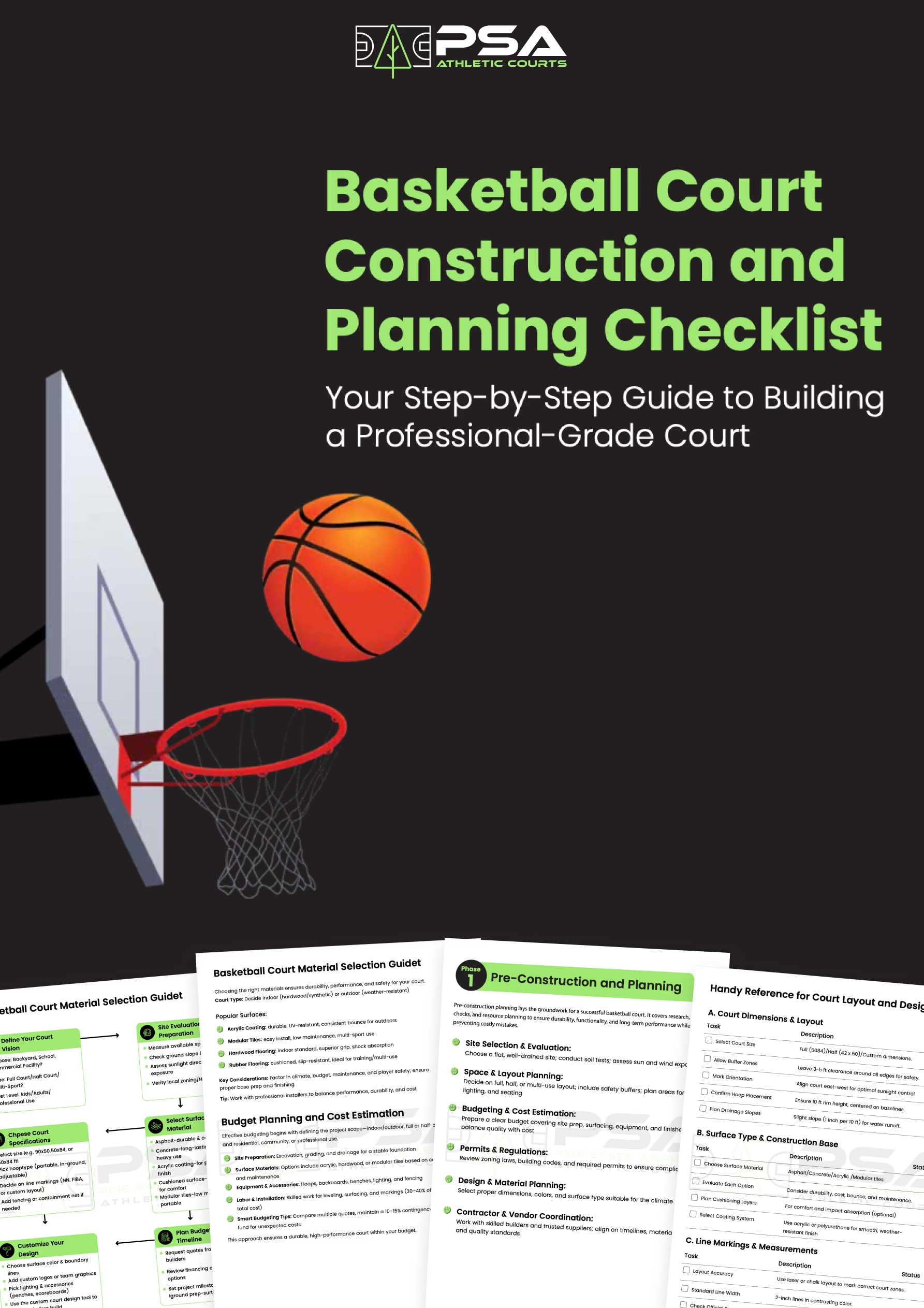
Download our FREE Basketball Court Construction & Planning Checklist and get the step-by-step roadmap to building a professional-grade court—from budget planning to final touches.
No guesswork, just results.