
Pickleball courts in the New England area including Worcester have to put up with a lot of seasonal fluctuations. From snow, freezing temperatures, and spring moisture to summer heat and repeated freeze-thaw cycles, the changing weather can gradually take a toll on your court surface.
While the damage may not be apparent at the first glance, if left untreated it can turn into major structural damage. This leaves court owners with an important decision, whether they should choose a simple repair, professional resurfacing, or a complete replacement of their court surface.
In this Pine State Courts' guide, we'll help you find the right answer depending on the type, extent, and underlying cause of your court damage. We’ll look at the warning signs to watch for and explain when pickleball court repair, resurfacing, or replacement makes the most sense for courts in Worcester, MA.
Why Pickleball Courts Deteriorate Over Time
Outdoor pickleball courts are exposed to constant wear from player movement, weather, moisture, and temperature changes. In Worcester, MA the seasonal changes can be especially hard on court surfaces.
Common causes of court deterioration include:
- Freeze-thaw cycles - Water can enter small cracks on the court surface which freeze, expand, and gradually widen as they contract again.
- Heavy use - Frequent games, practice sessions, and tournaments wear the coating and your playing surface.
- Rain and standing water - Poor drainage can accelerate surface and base deterioration.
- UV exposure - Sunlight gradually fades coatings, line markings, and weakens the surface materials.
- Age - Even a well-built court eventually needs maintenance and resurfacing as it ages.
While resurfacing your pickleball court, a stable base and proper drainage are particularly important. Without them, resurfacing alone may only provide a temporary fix.
You can also check our pickleball court construction guide to learn how to build a durable court for your community park or sports facility.
Common Signs Your Pickleball Court Needs Attention
Beyond routine cleaning, regular court inspections are important to assess the damage on your pickleball court. While some court problems are easy to spot, others become noticeable during play.
During your routine inspections, you should look out for:
- Cracks or expanding seams
- Faded or peeling surface coatings
- Worn or faded court lines
- Areas where water remains after rain
- Uneven surfaces or inconsistent ball bounce
- Slippery or excessively rough areas
Not every problem on the court means it needs to be resurfaced. The extent of the damage is what determines the right solution. Check our guide to learn the right time to resurface your pickleball court.
Pickleball Court Repair: When Minor Fixes are Enough
To restore the looks and performance of your court, you can choose between pickleball court repair and resurfacing. If the underlying court is still structurally sound, targeted repairs are often enough to restore its condition without requiring a full resurfacing project.
Some common signs that indicate your court needs repairs include:
Hairline Cracks
Small, isolated cracks can often be cleaned, filled, and sealed before they become larger problems. They should still be addressed promptly, particularly before winter.
Small Surface Chips
Minor chips or localized surface damage may be repaired without disturbing the entire court coating.
Faded Line Markings
If the surface itself remains in good condition, repainting faded lines may be all that you need to restore your court’s visibility and line clarity.
Localized Low Spots
Small areas that hold water may sometimes be corrected through localized repair. However, recurring or widespread standing water can indicate a larger grading or drainage problem.
When Pickleball Court Resurfacing Is the Right Solution
If the damage has reached multiple parts of the court, instead of patching them up with targeted repairs, pickleball court resurfacing is the right choice. It restores the performance of your entire court without rebuilding it.
Some common resurfacing signs that you should be on the look out for are:
Widespread Surface Wear
If wear and deterioration are visible across multiple areas of the court, resurfacing can restore the court to give you a more uniform playing surface.
Faded or Worn Acrylic Coating
If the acrylic coatings have become faded, thin, or worn over time, a new surfacing system can restore the court’s appearance and playing characteristics.
Poor Surface Texture
If the surface has become excessively smooth or inconsistent, resurfacing can help restore the texture needed for reliable traction and play.
Multiple Surface Cracks
When cracks are no longer isolated but spread across the court, resurfacing may be more practical than repairing each area individually, if the underlying base still remains sound.
Inconsistent Ball Bounce
Worn or deteriorated surface areas can affect how the ball responds, resurfacing helps here to create a more consistent playing surface.
Faded Court Lines and Colors
If the entire court surface has become worn and the lines and colors need refreshing, resurfacing provides an opportunity to restore both.
If you are planning to add another court to your facility, check out our guide for better insights into pickleball court surfacing tips and specifications.
When Court Replacement Makes More Sense
Besides court repair and resurfacing, when your court’s foundational base has suffered extensive damage, replacing the entire court surface becomes your only option.
Replacement or rebuilding your pickleball court may be required when it has:
- Extensive structural cracking.
- Significant movement or instability in the base.
- Severe drainage or grading problems.
- Widespread settlement or major low areas.
- Repeated surface failures despite previous repairs.
- A foundation that can no longer support a reliable playing surface.
In these situations, applying another surface coating may only hide the underlying problem temporarily. A professional evaluation from a pickleball court designer can help you determine whether the existing base can be saved or needs to be rebuilt.
Repair vs Resurfacing vs Replacement
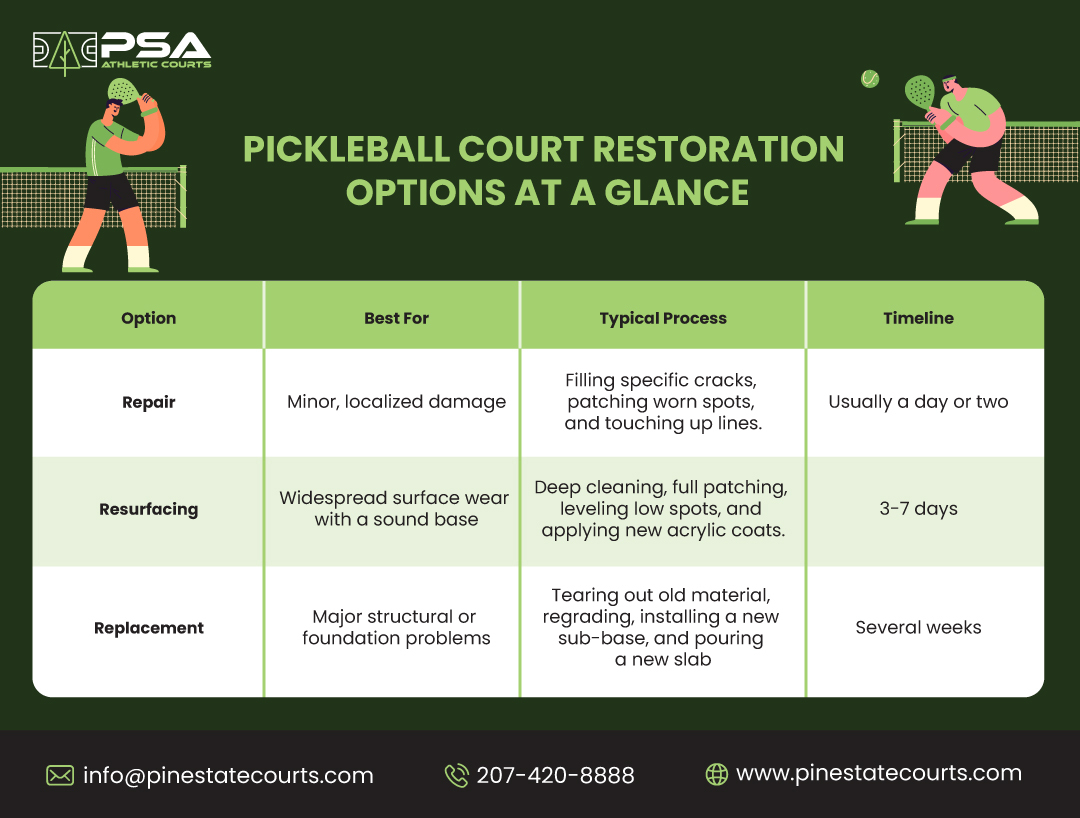
Each of these processes work to restore the aesthetics and performance of your court. The right solution for your pickleball court depends on its existing condition. It is also wise to get in touch with a pickleball court builder to discuss what the best option for your court is.
How the Worcester Climate Impacts Pickleball Courts
The climate of New England including Worcester, MA heavily affects the outdoor pickleball courts. The harsh freeze-thaw cycles, heavy rainfall, and seasonal temperature changes quietly degrade your acrylic and asphalt pickleball courts.
As water enters the existing cracks and freezes, it expands and can cause these cracks to widen over time as the seasons change. Spring moisture and heavy rainfall can also expose drainage problems that are less noticeable during drier periods.
That’s why it’s important to work with local pickleball court builders who understand Worcester’s climate and site conditions when constructing or resurfacing a court.
Professional court builders like Pine State Courts can help address everything from proper site preparation and drainage to surface repair and resurfacing, creating a court that’s better prepared for the local weather conditions.
Pickleball Court Maintenance Tips to Extend Surface Life
Pickleball court repair or resurfacing can’t do anything if it’s not paired with regular care and court maintenance. While maintenance can’t prevent every problem, it can help you identify issues before they become expensive repairs.
Here’s a few pickleball court maintenance tips to keep your court in shape:
- Keep the court surface clean by removing leaves, dirt, and other debris regularly.
- Check for standing water or areas that remain wet after rainfall. These indicate drainage issues or low spots.
- Inspect cracks early and get them evaluated before they widen further.
- Keep drainage areas clear so water can move away from the court.
- Monitor surface texture for unusually smooth, rough, or slippery areas on your court.
- Maintain line markings by repainting them as their visibility begins to decline.
- Schedule regular professional inspections to identify problems that you may miss during routine cleaning.
Proper pickleball court maintenance and timely resurfacing can help you extend the usable life of your outdoor court and protect your investment.
Why Choose Pine State Courts for Pickleball Court Resurfacing in Worcester, MA
Choosing between repair, resurfacing, and replacement can be confusing but the right decision starts with an understanding of what’s actually happening beneath the surface.
At Pine State Courts, we’ve worked with sports facilities, parks, schools, and residential court owners in the New England area including Worcester, MA. We offer complete services to design, build, maintain, resurface, and rebuild your pickleball courts.
We don’t offer generic services but tailor our work around your existing surface, drainage, base condition, usage, and long-term performance of your court. We conduct a professional assessment to help you determine the right next step before a manageable repair becomes a much larger project. Get in touch with our team to discuss the right approach for your court.
Frequently Asked Questions
1. How does Worcester's freeze-thaw cycle affect pickleball courts?
The freeze-thaw cycles of Worcester cause moisture to expand small cracks on the court. Over multiple cycles, these hairline fractures widen, shattering the acrylic surface coatings and heaving the sub-base. This ultimately damages the entire court surface.
2. What time of year is best for pickleball court resurfacing in Worcester, MA?
The best time for resurfacing your pickleball court in Worcester, MA is early spring through fall (i.e., from June through September). You should avoid resurfacing during winters and late fall.
3. Is resurfacing suitable for both asphalt and concrete pickleball courts?
Yes, resurfacing is suitable for both asphalt and concrete pickleball courts but each of these base materials have different requirements. Asphalt and concrete need specific preparation methods, primers, and repair techniques to ensure proper adhesion of the coating and its lasting performance.
4. How long does a pickleball court resurfacing project take?
A pickleball court resurfacing project usually takes 3 to 7 days with extra 24-48 hrs for curing depending on the materials you choose. The exact timeline also depends on your site conditions, its accessibility, and whether you add any customizations.
5. What is included in a pickleball court resurfacing service?
Pickleball court resurfacing includes services to restore the performance and visual appeal of your athletic court. It includes core services like cleaning the base, repairing structural flaws, applying high-performance acrylic layers, and repainting regulation lines.
DOWNLOAD OUR FREE GUIDE
Ready to build your dream court?
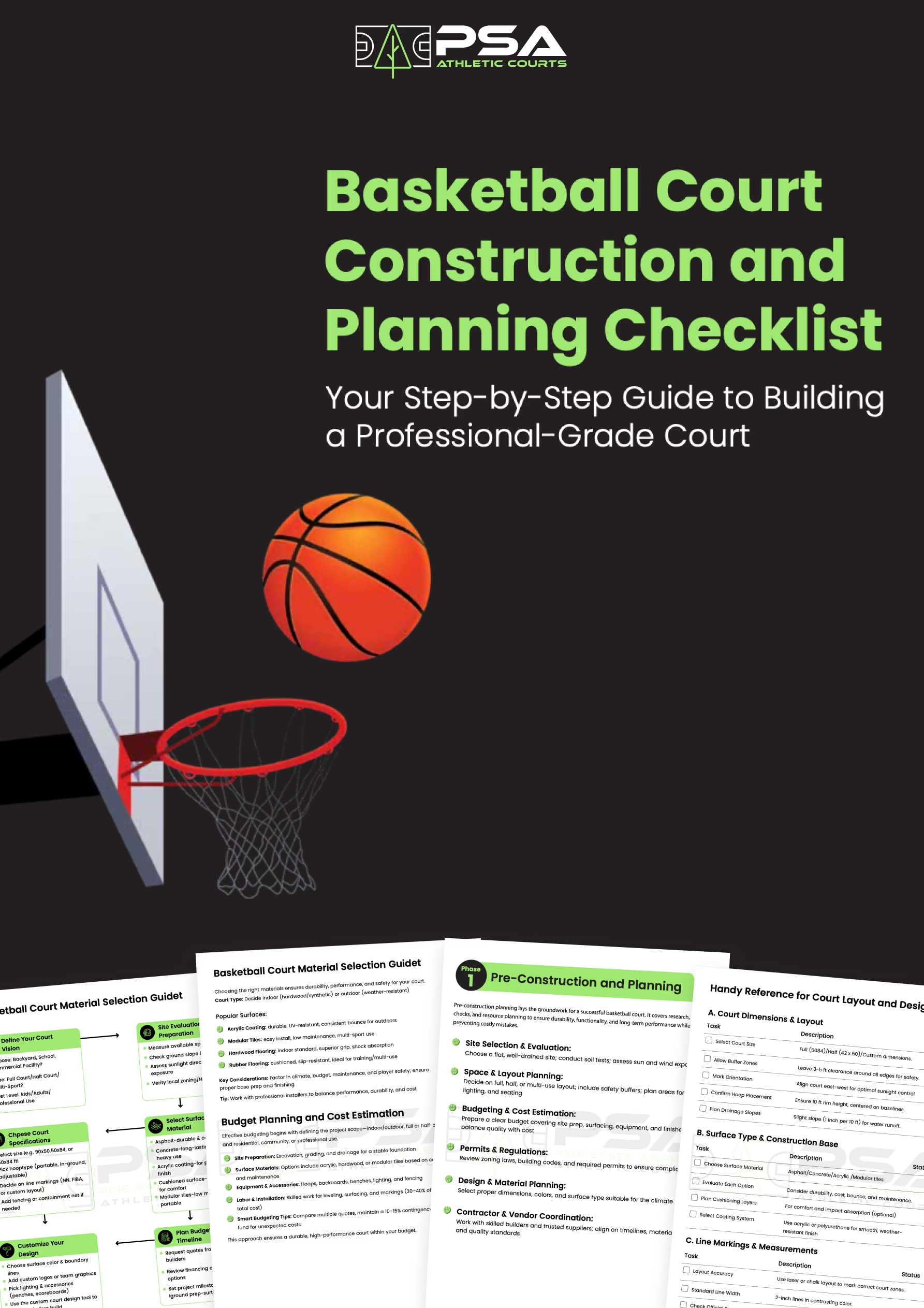
Download our FREE Basketball Court Construction & Planning Checklist and get the step-by-step roadmap to building a professional-grade court—from budget planning to final touches.
No guesswork, just results.