
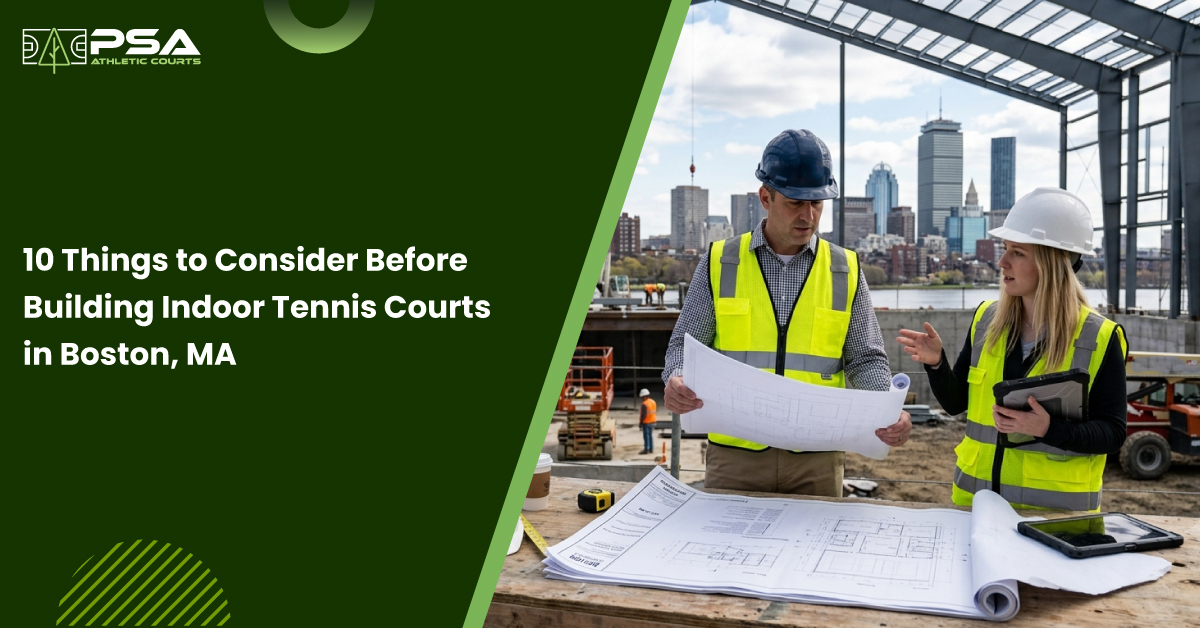
With the long winters, snow, freezing temperatures, and frequent rain of Boston building indoor courts isn’t just a luxury but a necessity. It allows players to train and compete throughout the year and communities to stay active.
Whether you're planning to build a private residential court, a school athletic facility, or a multi-court club, it is essential to know the necessary requirements for construction for lasting performance and long-term value
In this Pine State Courts’ guide, we will discuss some important considerations for building indoor tennis courts in Boston. These insights will help you create a facility that performs well in every season.
What Should You Consider Before Building an Indoor Tennis Court in Boston?
When building an indoor tennis court facility, you must consider several factors like site selection, court dimensions, flooring, lighting, ventilation, and permits. These play an important role in creating a safe, comfortable, and durable facility.
Let's look at the ten most important considerations for building indoor tennis courts in Boston.
1. Choose the Right Location for Your Indoor Tennis Court
Every successful tennis court project starts with the site. You'll need enough land not only for the playing area but also for the building footprint, parking, drainage, and utility connections. It also advised to leave room for future expansion.
When evaluating a property, you should consider factors like soil stability, drainage and grading, accessibility, and zoning requirements. For building a court for schools and clubs, convenient access and parking are vital while homeowners prioritize privacy and soundproofing the court.
2. Determine the Proper Court Size & Safety Clearance
Many people underestimate how much space their indoor tennis court will take up. While the playing area measures 78 ft × 36 ft for doubles and 78 ft × 27 ft for singles, the total recommended area is much larger so players can move safely beyond the baselines and sidelines.
The required safety clearance is 21 feet behind each baseline and 12 feet on the sides. This makes the total floor space needed to be 120 feet by 60 feet (7,200 sq ft). But don’t try to fit a court into a building that's too small as it will compromise your playability.
Get complete details of the tennis court size and layout to build a regulation sized court for your facility.
3. Select the Best Indoor Tennis Court Surface
The surface of your indoor tennis court facility affects everything from its performance, maintenance, and the player comfort. The right surface will depend on who will use the court (recreational vs professional use).
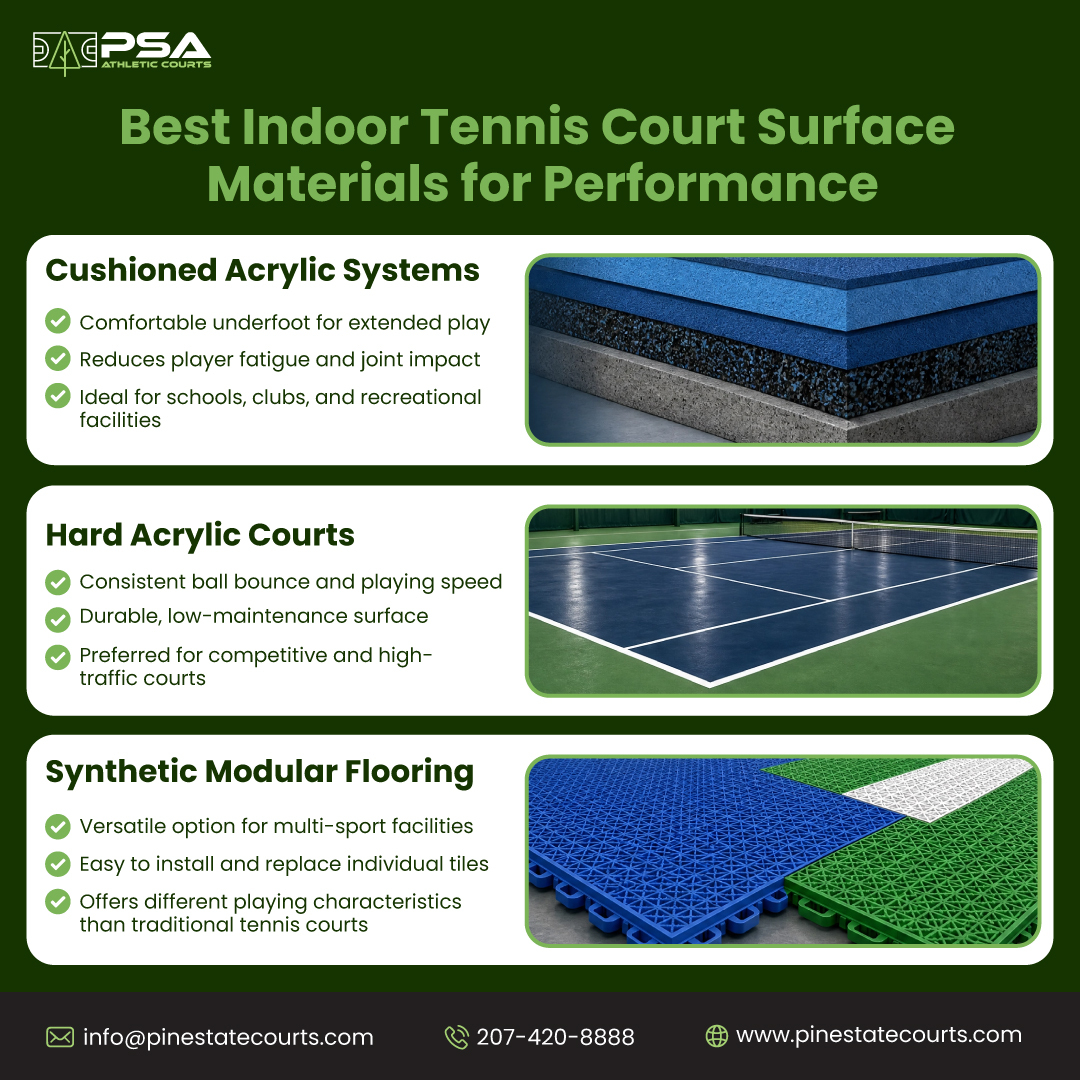
Common options for indoor courts include:
- Cushioned acrylic systems - It provides a comfortable underfoot and is a popular surface for clubs and schools.
- Hard acrylic courts - It is a durable and low maintenance surface with consistent ball bounce.
- Synthetic modular flooring – Provides a versatile surface for multi-purpose athletic spaces and quick installation, though its playing characteristics differ from traditional acrylic tennis courts.
A professional tennis court designer can recommend the right system based on your expected usage.
4. Plan the Right Ceiling Height & Lighting
The ceiling height of your indoor tennis court has a major impact on the gameplay and safety of players. A height of 30-40 feet is essential for competitive facilities so the players can hit high lobs.
Lighting is equally important for indoor court facilities. Adding modern LED lights provides a uniform illumination of the court, reduces glare and energy consumption. An anti-glare LED light of 500 lux intensity helps players to track the ball comfortably from every angle.
5. Invest in Proper HVAC & Indoor Climate Control
When building an indoor court in Boston, you must also consider the humid summers and freezing winters. The Boston weather requires a properly designed HVAC system to prevent condensation and moisture-related damage over time.
Adding dehumidifiers and HVAC systems will also improve player comfort by maintaining a comfortable temperature year-round, balance humidity, and improve air circulation.
6. Design for Boston's Climate & Energy Efficiency
The snow loads and freezing temperatures of the New England area also come with rising energy costs. That’s why it’s crucial to invest in high-performance insulation, energy-efficient roofing, and well-sealed building envelopes.
While adding these features can increase your upfront costs, they also reduce your long-term operating expenses and improve the player comfort.
Get expert insights on budget-friendly tennis court repair tips for school districts.
7. Understand Boston Building Codes & Permit Requirements
Indoor tennis facilities are major construction projects that typically require permits and plan reviews. The city of Boston requires construction projects to undergo building and zoning reviews before the work begins, and plans must generally be prepared by licensed professionals.
Depending on your project, you may need building permits, zoning approvals, ADA compliance, and structural plans including technical, electrical, plumbing, and HVAC plans. Working with a local tennis court builder helps to ensure that you meet local regulations and there are no costly delays.
8. Budget beyond Construction Costs
The court construction is only a part of the overall investment you need to make. You must also consider ongoing expenses like heating and cooling, court maintenance, replacing LED lights and equipment, cleaning, and tennis court resurfacing.
Commercial facilities also need to budget for staffing, memberships, programming, and marketing. Setting up such a realistic operating budget is essential that you are prepared in the long-term.
9. Add Amenities that Improve Player Experience
Today's indoor tennis facilities are expected to offer more than just the courts for playing. Modern facilities aim at providing a comfortable space and an unforgettable experience for both players and the audience.
You can add comfortable seating, viewing lounges, restrooms, locker rooms, and fitness/ warm-up areas for your players. These features will improve user satisfaction and create additional revenue opportunities for indoor facilities in schools and clubs.
10. Work with an Experienced Indoor Tennis Court Builder
No matter how sound your investment is, if it's not paired with an expert indoor tennis court construction, you’ll lose money in the long-term. An experienced tennis court builder combines his expertise in structural design, drainage, flooring, lighting, and building science to deliver a court that’s built to professional standards. They save both your time and money throughout the project.
At Pine State Courts, we've been building both indoor and outdoor tennis courts for over two decades in the New England area. With our expertise you get a court that’s ready to perform for years to come. Contact us to get a free quote on your project.
Avoid These Common Indoor Tennis Court Construction Mistakes
Even the most well-funded projects can run into problems if the construction planning is rushed. This is why it is important that you work with court builders with prior experience in building indoor tennis courts.
With Pine State Courts’ experience of more than two decades of building athletic courts, we’ve compiled a list of some common mistakes that you must avoid in your project:
- Choosing a building with insufficient ceiling height that affects both player shots and safety.
- Ignoring drainage and soil conditions as it can cause major damage to your court’s base.
- Installing poor-quality lighting that causes glares and restricts players.
- Underestimating your HVAC requirements can lead to moisture-related damage.
- Selecting the wrong playing surface affects both player performance and their safety.
- Forgetting to factor in long-term maintenance costs including indoor court resurfacing while budgeting.
- Starting construction before obtaining permits can cause major delays.
It is important to address these issues during planning as that’s far less expensive than correcting them after your construction is complete.
Check out our expert guide on 6 cost-effective indoor court resurfacing solutions to maintain a high-performing court.
Why Indoor Tennis Courts Are a Smart Investment in Boston
The heavy rainfall, snow, and constant freeze-thaw cycles of Boston restricts playing tennis year-round and creates a strong demand for indoor playing space. This indoor facility proves to be valuable not just for club owners, schools, and community centers but homeowners too.
For homeowners, an indoor court provides year-round recreation and enhances the appeal of a high-end property. For schools, it supports athletics year-round regardless of the weather outside while for clubs and facility owners, indoor courts generate revenue throughout the year through memberships, court rentals, lessons, and tournaments.
When combined with thoughtful planning and quality construction by an expert court builder, this indoor tennis facility can provide decades of reliable performance.
Conclusion
Building an indoor tennis court in Boston is a significant investment to make, but it also comes with benefits like year-round play, an exceptional player experience, and enhanced property value.
A successful construction project for tennis courts starts with selecting the right site, designing it for Boston's climate, choosing quality materials, and partnering with an experienced tennis court builder who understands every stage of the process.
Whether you're building a private residential court, a school athletic facility, or a commercial tennis club, expert builders at Pine State Courts ensure that your indoor court performs beautifully for years to come. Contact us to discuss your project.
Frequently Asked Questions
1. How much does it cost to build an indoor tennis court in Boston, MA?
The cost for building an indoor court in Boston, MA depends on several factors like the size of your court (singles vs doubles), the extent of site preparation needed, the materials you choose to build the court with. Adding custom colors, logos, amenities like spectator seating, locker rooms, and parking etc. also adds to your budget.
2. What ceiling height is recommended for an indoor tennis court?
For indoor tennis courts, minimum ceiling height of 30 ft above the net is recommended for safe play. If you’re planning to build a sloped roof, it should be at least 19 ft high over the baselines and 13 ft at the court run-back.
3. What is the best flooring for an indoor tennis court?
Cushioned acrylic or PVC sheet is generally considered the best flooring for an indoor tennis court. This surface offers a good grip, ball bounce, and also protects the player's joints
4. Do I need a permit to build an indoor tennis court in Boston?
Yes, most construction projects for building indoor tennis courts require building permits, zoning review, and compliance with local building regulations.
5. What features should I include in an indoor tennis facility?
In addition to the playing field (120 ft by 60 ft), consider adding anti-glare LED lighting, efficient HVAC systems, seating for spectators, reception areas, and accessible pathways to improve the overall experience of the players.
6. Is building an indoor tennis court a good investment in Boston?
Yes, the long winters and unpredictable weather of Boston creates a strong demand for indoor tennis courts. This makes indoor tennis facilities valuable for homeowners, schools, and commercial clubs.
7. Why should I hire a professional indoor tennis court builder?
You should hire a professional tennis court builder as they have the knowledge and experience of building safe, durable, and high-performing indoor courts. They take care of everything from choosing the right court surfaces, structural requirements, lighting, drainage and climate control to getting the local permits.
DOWNLOAD OUR FREE GUIDE
Ready to build your dream court?
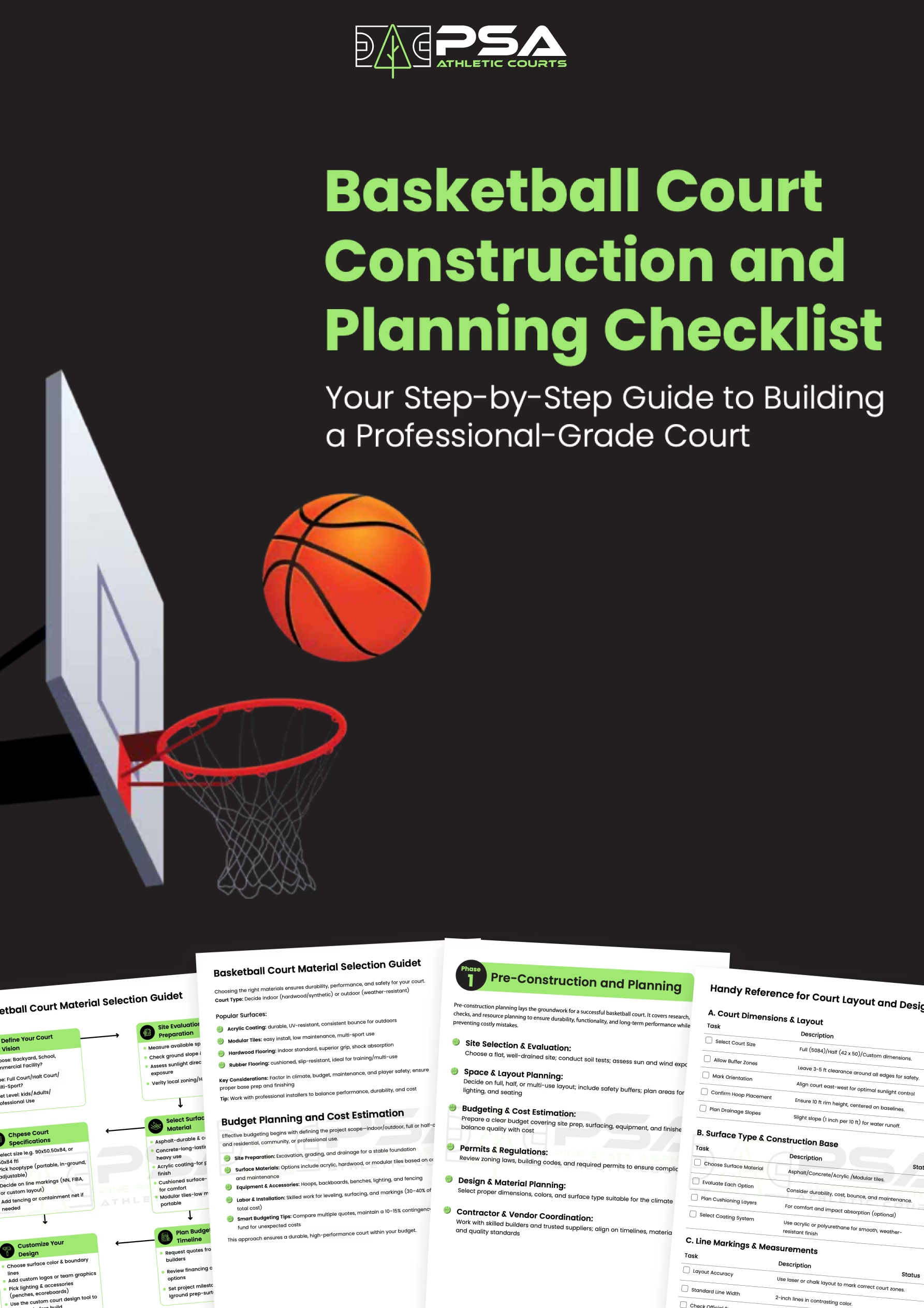
Download our FREE Basketball Court Construction & Planning Checklist and get the step-by-step roadmap to building a professional-grade court—from budget planning to final touches.
No guesswork, just results.