

In Southern Maine, the changing seasons are part of the charm, but they aren't always kind to athletes. From the first heavy frost in November to the lingering "mud season" in April, the window for outdoor play can feel frustratingly short. For homeowners in Windham, Scarborough, or Portland, the dream of a backyard court often hits a snowy wall for six months of the year.
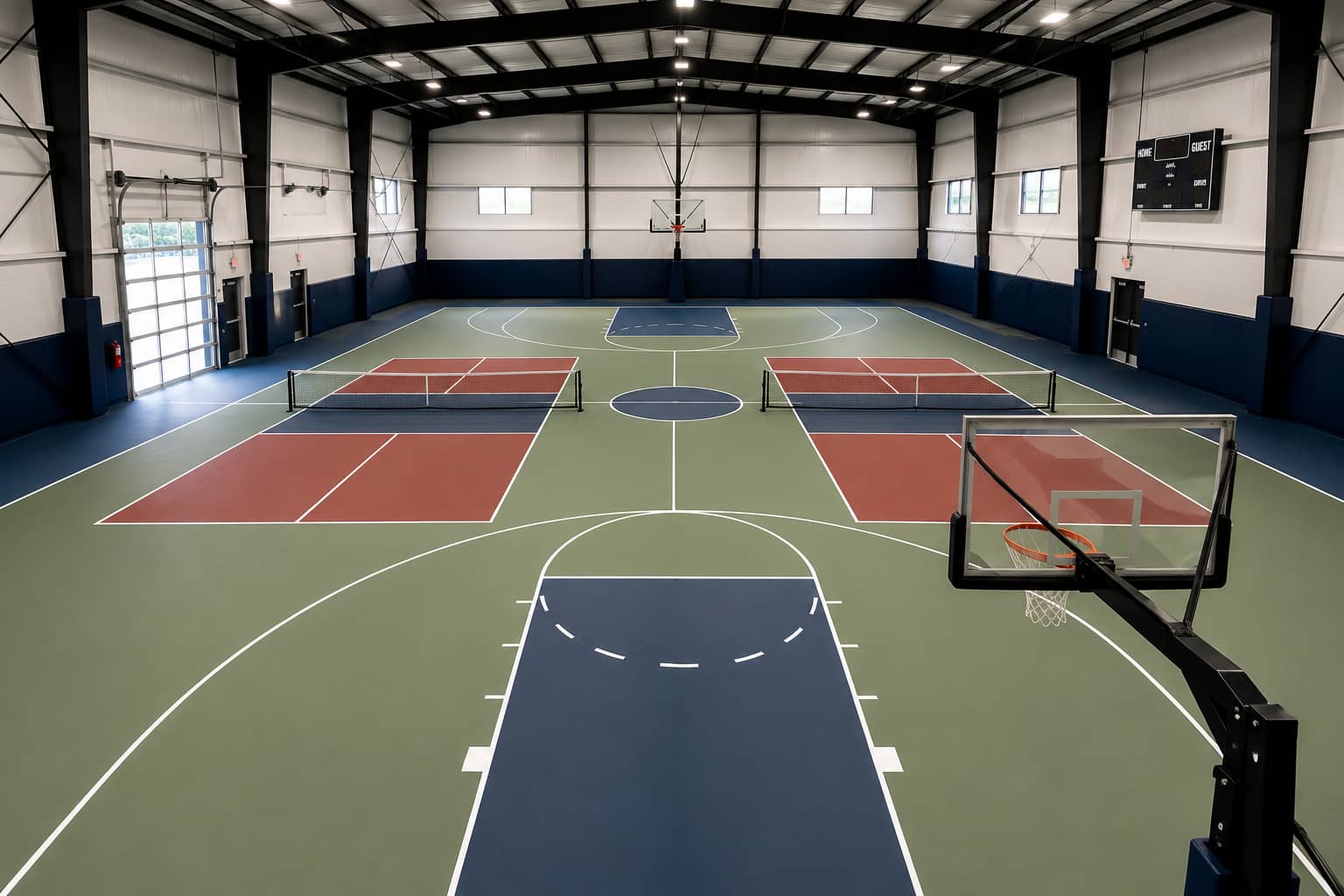
This is why indoor athletic courts have become one of the most sought-after property upgrades in New England. Whether it’s a dedicated pole barn, a converted warehouse, or a massive high-ceiling basement, building a professional-grade court indoors ensures that the game never has to stop.
Pine State Asphalt knows that a "pro-grade" court is about more than just painting lines on a floor. It requires a deep understanding of sub-bases, specialized surfacing, and the unique environmental challenges that come with Maine’s climate. Here is what it takes to bring the stadium experience home.
The Advantages of Playing Indoors in Maine
The most obvious benefit is the weather, but the advantages of an indoor facility go much deeper than escaping the snow. When a court is protected from the elements, it avoids the brutal freeze-thaw cycles that cause asphalt to expand and contract. This means the surface stays flatter longer, and the paint or tiles maintain their "pop" without the fading effects of direct UV rays and acid rain.
Furthermore, an indoor court offers a controlled environment. There is no wind to catch a pickleball, no dampness to make a basketball slippery, and no mosquitoes to cut a night game short. For commercial facilities or serious residential athletes, this consistency is the key to improving performance.
Planning Your Space: The Footprint and the "Air"
Before the first bag of concrete is poured, the most critical step is planning the dimensions. Most people think only about the length and width of the court, but indoors, the "clear height" is just as important.
1. Ceiling Height
A "pro" feel requires room to breathe. For basketball, a minimum of 16 feet is often cited, but 20 to 25 feet is the sweet spot for high-arching shots and competitive play. If the court is intended for volleyball or pickleball, height is even more critical for lobs and serves. Pine State Asphalt recommends checking for "obstructions": things like low-hanging HVAC ducts, lights, or support beams that can quickly ruin a fast break.
2. The Safety Runout
A basketball court that stops exactly at the baseline is a recipe for injury. A professional layout includes a "safety runout" zone of at least 3 to 10 feet around the entire perimeter. This allows players to decelerate after a layup or chase down a loose ball without slamming into a wall.
The Foundation: It All Starts with the Slab
An indoor athletic court is only as good as the foundation beneath it. While outdoor courts often use asphalt, indoor professional courts typically sit on a precision-poured concrete slab. This isn't your standard garage floor; it needs to be engineered for flatness and moisture control.
Pine State Asphalt emphasizes that the "FF" (Floor Flatness) and "FL" (Floor Levelness) numbers are crucial. Even a slight dip in the concrete can cause "dead spots" in a basketball's bounce or uneven wear on modular tiles. Additionally, a high-quality vapor barrier must be installed under the slab. In Maine’s damp coastal environments like Kennebunk or Saco, moisture rising through the concrete can cause wooden floors to warp or adhesive-based surfaces to bubble.
Choosing Your Surface: Maple or Acrylic?
The "feel" of the game depends entirely on what you put over that concrete. There are three primary choices for a professional-grade indoor court:
Maple Hardwood
The gold standard for basketball. It offers the best shock absorption and a classic look. However, hardwood requires strict humidity control and periodic refinishing. It is the choice for those who want the "NBA feel" in their private facility.
Cushioned Acrylic
Similar to the surfaces found on professional tennis courts, this involves layering acrylic resins over the concrete. It provides a consistent, high-traction surface that is perfect for multi-sport use, especially commercial parking areas converted into sports zones or dedicated tennis facilities.

Lighting and Climate: The Comfort Factor
If you’re going to invest in a professional court, the environment needs to match the surface.
Lighting: Standard shop lights won't cut it. Sports-specific LED lighting is designed to provide uniform brightness across the entire court without creating glare or shadows. Properly positioned lights ensure that when you look up for a rebound or a serve, you aren't blinded by a bulb.
Climate Control: Intense physical activity creates heat and moisture. A high-quality HVAC system is essential to keep the air moving and the humidity low. This is especially true if you opt for a wood floor, which can be sensitive to Maine’s summer humidity and dry winters.
The "Pro" Finish: Striping and Accessories
The final details are what take a court from "a room with a hoop" to a "professional facility." This includes:
- Precision Striping: Using specialized paints that won't chip or wear down.
- Wall Padding: Critical for safety in smaller indoor spaces where the walls are close to the action.
- Professional Hoops: In-ground or wall-mounted systems with glass backboards and breakaway rims.
- Multi-Sport Netting: Retractable nets that allow the court to switch from pickleball to volleyball in minutes.
Why Local Expertise Matters
Building an indoor court in Maine is a unique challenge. You need a team that understands local soil conditions for the foundation and the environmental factors that will affect the building over time. Pine State Asphalt has over 10 years of experience serving communities from Gorham to Yarmouth, ensuring that every project is handled with the precision of a 5-star rated professional service.
Whether you are a homeowner looking to create the ultimate training ground for your kids or a business owner building a new sports complex, starting with a solid plan is key. You can see examples of our high-quality finishes and our work across the region to get inspired for your own indoor project.
Your Game, Your Schedule
An indoor athletic court is an investment in health, family, and property value. It removes the "if" from your training schedule: no more wondering "if" the rain will stop or "if" the court is dry enough to play.
By focusing on a rock-solid foundation, the right surface for your sport, and a well-planned environment, you can create a space that rivals any professional facility. If you’re ready to start planning the "Great Indoors," Pine State Asphalt is here to help bring that vision to life with the same quality and dedication we bring to every paving and maintenance project in Southern Maine.
DOWNLOAD OUR FREE GUIDE
Ready to build your dream court?
Download our FREE Basketball Court Construction & Planning Checklist and get the step-by-step roadmap to building a professional-grade court—from budget planning to final touches.
No guesswork, just results.