
A basketball court takes a lot of abuse with players running, jumping, pivoting, and stopping thousands of times on the surface. On top of this, outdoor basketball courts also have to withstand rain, snow, sunlight, and seasonal temperature changes.
With this consistent use and exposure to external elements, even a well-built court develops cracks, faded markings, birdbaths, and wears over time. While some of these problems can be handled with minor repairs, others are signs that your court needs professional resurfacing.
In this guide by Pine State Courts, we’ll talk in detail about basketball court resurfacing and the five warning signs that your court needs it.
Why the Condition of a Basketball Court Matters
A well-maintained basketball court doesn’t just look good but also affects how well the players perform on the court. The condition of your basketball court also matters as it:
Ensures Player Safety on the Court
A properly maintained surface provides predictable traction and gives players a more consistent surface for cutting, jumping and changing direction. The players play confidently on such courts without worrying about slipping or tripping.
Enhances Court Performance and Ball Bounce
A smooth and levelled playing surface creates a more predictable play and allows players to focus on the game rather than adjusting their play with the court’s condition.
Protects Your Investment
Regular maintenance and timely repairs also help to extend the useful life of your court. Addressing problems early also helps to restore the playing surface without the costly replacement of the entire court.
You can also check our guide for a detailed insight into how basketball court resurfacing improves player performance and safety.
What Causes Basketball Court Surface Damage?
Basketball court damage rarely comes from a single thing. Outdoor basketball courts are exposed to a combination of environmental conditions, usage and aging materials. Here’s a list of factors that contribute to the damage of basketball court surface over time:
Weather and UV Exposure
Sunlight can gradually fade the acrylic coatings and colors of your court. Rain and moisture also contribute to surface deterioration, particularly when water remains on the court for longer periods.
Heavy Athletic Use
Frequent games, practices, and recreational use naturally wears down the playing surface over time. Certain high-traffic areas can show signs of wear sooner than other less-used sections.
Poor Drainage
Poor drainage or low areas can create recurring puddles/ birdbaths. This repeated exposure to moisture can accelerate the surface damage and make the court less playable.
Aging Acrylic Coatings
Acrylic surfacing systems are durable but they don’t last indefinitely. Over time, the surface can lose its color, texture, and protective qualities. Once this coating becomes heavily worn, simply cleaning it can not restore its original performance.
Seasonal Freeze-Thaw Damage
Cold climates can be very hard on outdoor courts. As water enters the existing cracks, they freeze, expand, and then contract again as the temperature changes. These repeated freeze-thaw cycles can gradually enlarge these cracks and contribute to further surface deterioration.
These can slowly degrade your court over time necessitating professional basketball court resurfacing. If you’re struggling to get answers from searches like the best basketball court resurfacing near me, you can check our guide for more information on selecting the right specialist.
5 Warning Signs Your Basketball Court Needs Resurfacing
A court generally wears over time but not every imperfection means that you need a completely new court. Here’s a list of the five signs that your court requires immediate attention from professional basketball court designers:
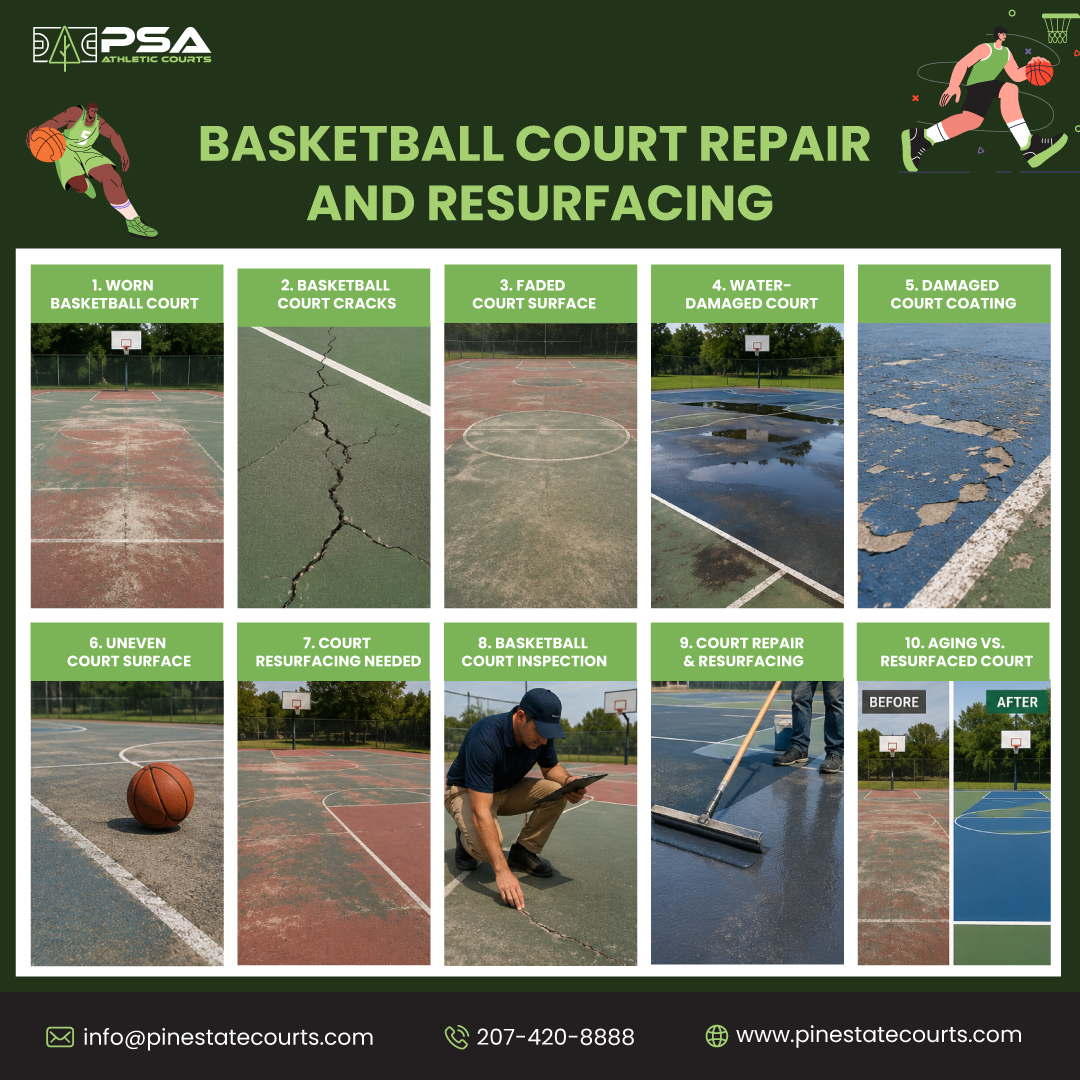
1. Visible Cracks across the Court
Small cracks are easy to dismiss, especially when they don’t appear to affect the gameplay but these cracks can grow over time. If you’re seeing multiple cracks, widening cracks or cracks that return even after patching repeatedly, the problem may extend beyond a simple surface repair.
A professional evaluation can determine whether these cracks can be repaired locally or whether the court would benefit from more extensive outdoor basketball court resurfacing.
2. Faded Court Colors and Game Lines
A faded court is not necessarily unsafe but significant fading is a clear indication that the surface and its coatings have aged. Court lines can also become difficult to see as their color wears down unevenly.
This affects both the aesthetics of your court and your player’s gameplay. Professional resurfacing for your outdoor basketball court can refresh the playing surface and restore its looks and performance.
3. Low Spots Holding Water
If puddles remain on your basketball court after rain, don’t treat this problem as a simple cosmetic issue. Recurring standing water can indicate low spots or drainage problems.
These areas can accelerate surface damage and create slippery playing conditions. Depending on the exact condition of your court, the solution may involve leveling, localized repairs or more extensive resurfacing.
4. Rough, Peeling, or Flaking Surface
Regular inspection of the court is necessary to check if the surface looks rough, worn out, or if sections of the coating are peeling or flaking. These are sure signs that your court’s surface system is deteriorating.
But just applying another layer of coating over the damaged surface won’t fix it unless you address the issues behind it. That’s why proper outdoor basketball court resurfacing begins with preparation and repairs before you install the new surface.
5. Uneven Ball Bounce and Slippery Areas
Pay close attention to how your court plays. Ball bouncing differently in certain areas, unexpected slippery spots, visibly rougher or more worn out sections, indicate that your court surface is no longer providing consistent playing conditions.
A professional assessment from a basketball court builder can help you determine whether the problem is limited to the surface or if it requires underlying leveling or structural work.
You can also check our guide if you’re looking for solutions for indoor basketball court flooring.
Basketball Court Repair or Complete Resurfacing?
This is one of the most important questions for any court owner. Repair is generally appropriate when the damage is localized. For example, a few manageable cracks or a small damaged section can be repaired without resurfacing the entire court.
Resurfacing becomes more important when the wear is widespread. If your court has extensive cracking, faded coatings, multiple damaged areas or widespread surface deterioration, then treating these individual defects may only provide a temporary improvement. You need full basketball court resurfacing to restore the court’s performance.
At Pine State Courts, we restore your basketball court through different service levels - Renew for courts needing a fresh surface, Restore for courts requiring more extensive repair and resurfacing, and Rebuild when your court and its base requires major reconstruction.
We help you select the right solution depending on the condition of your entire court.
The Professional Basketball Court Resurfacing Process
While every project is different, professional resurfacing generally starts with the evaluation of your court surface instead of immediately applying a new coating.
The process of basketball court resurfacing includes the following steps:
- Court inspection and evaluation -The existing surface is assessed for cracks, drainage, and low spots.
- Cleaning and preparation -The court surface is cleaned free of dirt, debris and other contaminants so the new system can adhere properly.
- Crack and surface repairs - The damaged areas are repaired before new surfacing is applied.
- Leveling and drainage corrections - Low spots or birdbaths if present are corrected to improve water management.
- Acrylic surfacing - Appropriate acrylic layers are then applied to create a consistent playing surface.
- Color application - The court receives the color system that you’ve selected.
- Line striping - Basketball markings are measured and applied accurately.
- Final inspection - The completed surface is checked before the court is returned to use.
At Pine State Courts, we offer complete basketball court services - outdoor and indoor court services to take care of your court no matter if it sits inside your facility or in your backyard. You can also explore different color ideas for your basketball court surface through our guide.
How Long Does Basketball Court Resurfacing Last?
You can’t really generalise the lifespan of a resurfaced basketball court as it depends on factors like your court’s usage, the climate in your area, drainage, surface condition, maintenance, and exposure to external elements.
A general maintenance guideline recommends recoating your outdoor basketball court colors and lines as needed, with a typical 3-5 year resurfacing cycle depending on its condition.
But the best approach is to not wait for a fixed number of years. Instead, monitor your court regularly and address any cracks, drainage problems, and coating damage as they appear.
Tips to Extend the Life of Your Basketball Court
Beyond regular resurfacing, maintaining your court is also important to extend its life. Here’s a list of a few simple maintenance habits that can help you protect your resurfaced court
- Sweep/ blow off leaves, dirt, and debris regularly.
- Keep the drainage areas and edges of your courts clear.
- Remove standing water and investigate any recurring puddles.
- Repair small cracks before they become larger.
- Avoid using harsh chemicals that can damage the surface, use only manufacturer recommended cleaning products.
- Protect the court from snowplow blades and other equipment during winter.
- Keep an eye on fading, surface wear, and changes in traction.
- Schedule professional inspections when the damage starts appearing.
Why Hire Professional Basketball Court Contractors?
Resurfacing a basketball court is a crucial procedure to restore your court’s performance. It starts with an evaluation of your court’s existing condition. The role of professional basketball court contractors is important here to determine whether your court needs localized repairs, complete resurfacing or more extensive reconstruction.
This assessment matters because resurfacing a court without addressing underlying problems can leave you with the same issues underneath a brand-new surface.
Why Pine State Courts Is the Trusted Choice
At Pine State Courts, we provide complete basketball court construction, repair, maintenance, and resurfacing solutions for residential, commercial, and institutional courts.
Our basketball court resurfacing services include surface evaluation, crack repair, leveling, acrylic surfacing, color systems, line striping, and finishing. We also offer different restoration approaches based on the condition of your existing court, from surface renewal to more extensive restoration and rebuilding.
Whether your court has a few cracks or needs a complete surface refresh, we can help you choose the right solution and avoid spending money on repairs that will not address the underlying problem.
Frequently Asked Questions
1. How to resurface a basketball court?
Basketball court resurfacing starts with evaluating and preparing your court surface. The court is cleaned free of dirt and debris, cracks, damaged areas, and low spots are repaired next, followed by the application of a new acrylic surfacing system. The process is then completed with color application, line striping and finishing.
2. What is the best orientation for a basketball court?
For an outdoor basketball court,the best orientation is along the North-South axis with singles courts or hoops facing North. This protects the players from the Sun glare during morning and afternoon sessions.
3. What does it cost to resurface a basketball court?
There is no standard price of resurfacing a basketball court as the cost depends on factors like the court's size, existing surface, amount of cracking, leveling requirements, drainage issues, and the materials you choose.
4. What is the best material for a basketball court floor?
The best material for a basketball court floor depends on whether the court is indoors or outdoors and how it will be used. For outdoor basketball courts, acrylic surfacing systems are a common choice for their durable, consistent playing surface. For indoor courts, hardwood maple floor is the first choice of official NBA/NCAA courts.
5. How do I know if my basketball court needs resurfacing instead of repair?
To know whether your basketball court needs resurfacing or repairs, look at the extent and recurrence of the damage. A few isolated cracks or small damaged areas can be repaired but widespread cracking, extensive fading, multiple low spots, and peeling coatings require resurfacing.
6. How long does basketball court resurfacing take?
Basketball court resurfacing usually takes around 3-7 days with extra time for curing. The exact timeline depends on factors like your court's size, surface condition, repairs required, weather, and the resurfacing system you choose.
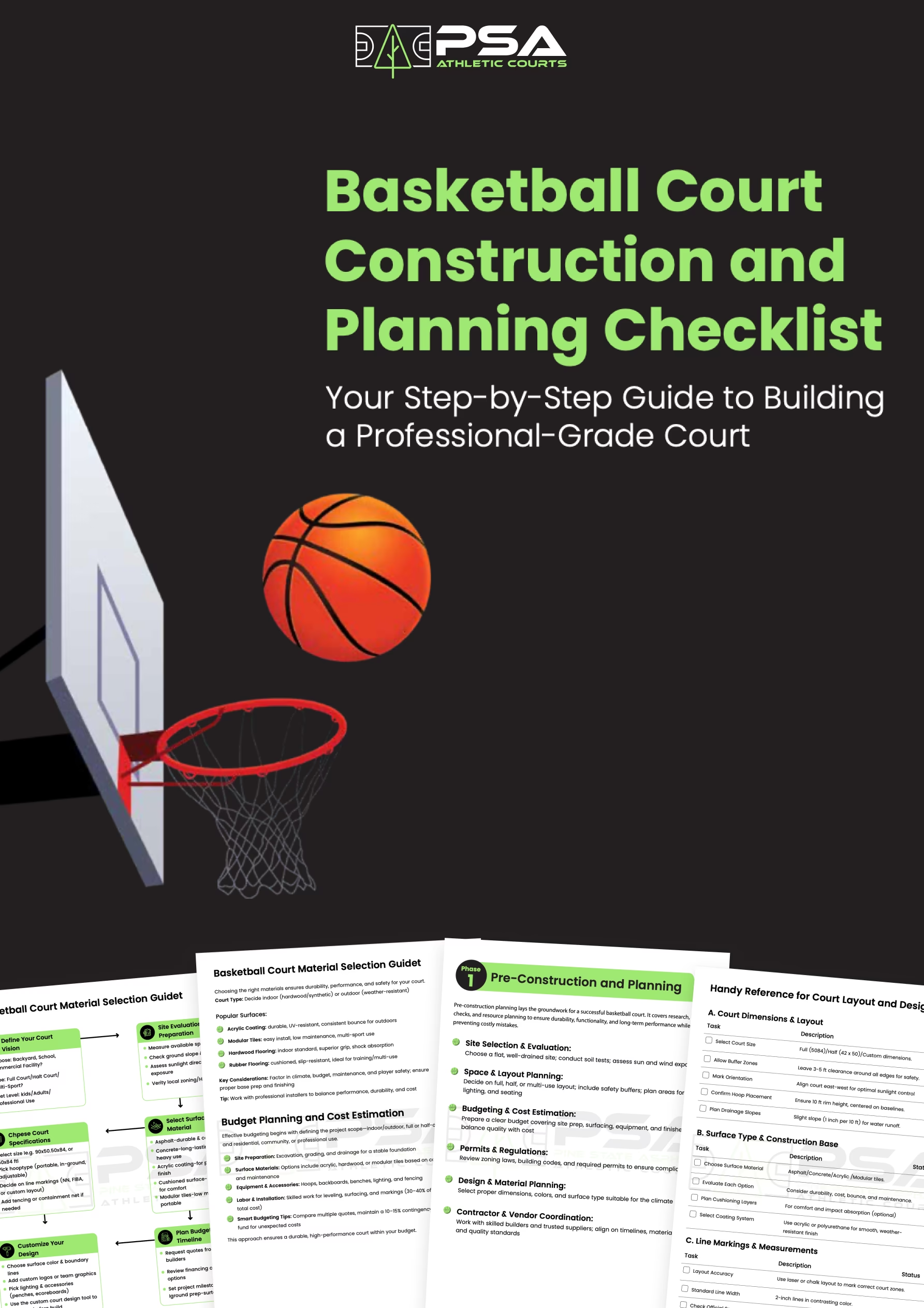
DOWNLOAD OUR FREE GUIDE
Ready to build your dream court?
Download our FREE Basketball Court Construction & Planning Checklist and get the step-by-step roadmap to building a professional-grade court—from budget planning to final touches.
No guesswork, just results.