

Most court owners often overlook an important design factor when building a basketball court or resurfacing an old one. The color of your basketball court surface defines more than just the aesthetics of your court.
It determines the visibility of line markings, heat absorption, and how spacious your court looks, among other things. This choice of color is especially crucial for facility managers as it can affect the overall appeal of your court.
This article by Pine State Courts covers everything from why the court color matters so much to how you can make your basketball court surface look more spacious and inviting to players without changing your court layout.
Why Color Choice Matters for Basketball Court Surfaces
Color plays a major role in both performance and the overall appearance of your court.
Choosing lighter color shades that reflect more sunlight makes your outdoor courts feel cooler and more open. Adding darker borders and contrasting accents to this court creates a visual depth which defines the playing area clearly without your court looking too crowded.
Beyond appearance, the color you select for your basketball court surface impacts:
- Player’s visibility during games.
- Heat retention on outdoor courts.
- Maintenance and visibility of dirt and debris.
- Branding opportunities for schools or sports facilities.
- Overall property value and curb appeal
Take a look at this guide where you will find information on three different basketball court surfaces that can be used in building a basketball court, enabling you to select one that would suit your needs best.
Key Factors to Consider When Choosing a Basketball Court Surface Color
Before selecting the colors for your court, make sure you consider these practical factors:
1. Court Location
Light colors perform better for outdoor basketball courts in areas with intense sunlight, as they don’t absorb much heat. You can go with darker court colors for areas that have less intense sunlight.
2. Usage Type
When building a residential backyard court, you can prioritize style and customization. For schools and athletic facilities visibility, reducing glare in the Sun matters more and colors that make the court look professional are preferred.
3. Climatic conditions
As dark colors absorb heat faster, it can make outdoor playing surfaces uncomfortable during summer months, prefer light colors for such courts and use dark accents for better visibility.
4. Maintenance
Some shades of color hide dust, scuff marks, and debris better than others which is preferable for public and school courts with high footfall. Neutral tones like gray or green are often easier to maintain in such courts than lighter colors.
5. Basketball Court Material
The material you choose to build your court also affects how the colors will appear. For outdoor courts, acrylic coatings on asphalt or concrete surfaces are preferred as they offer good color retention and slip resistance.
Discover Pine State Courts' expert insights on basketball court designs and surface materials to select the best option for the performance and durability of your court.9 Basketball Court Surface Color Ideas.
9 Basketball Court Surface Color Ideas
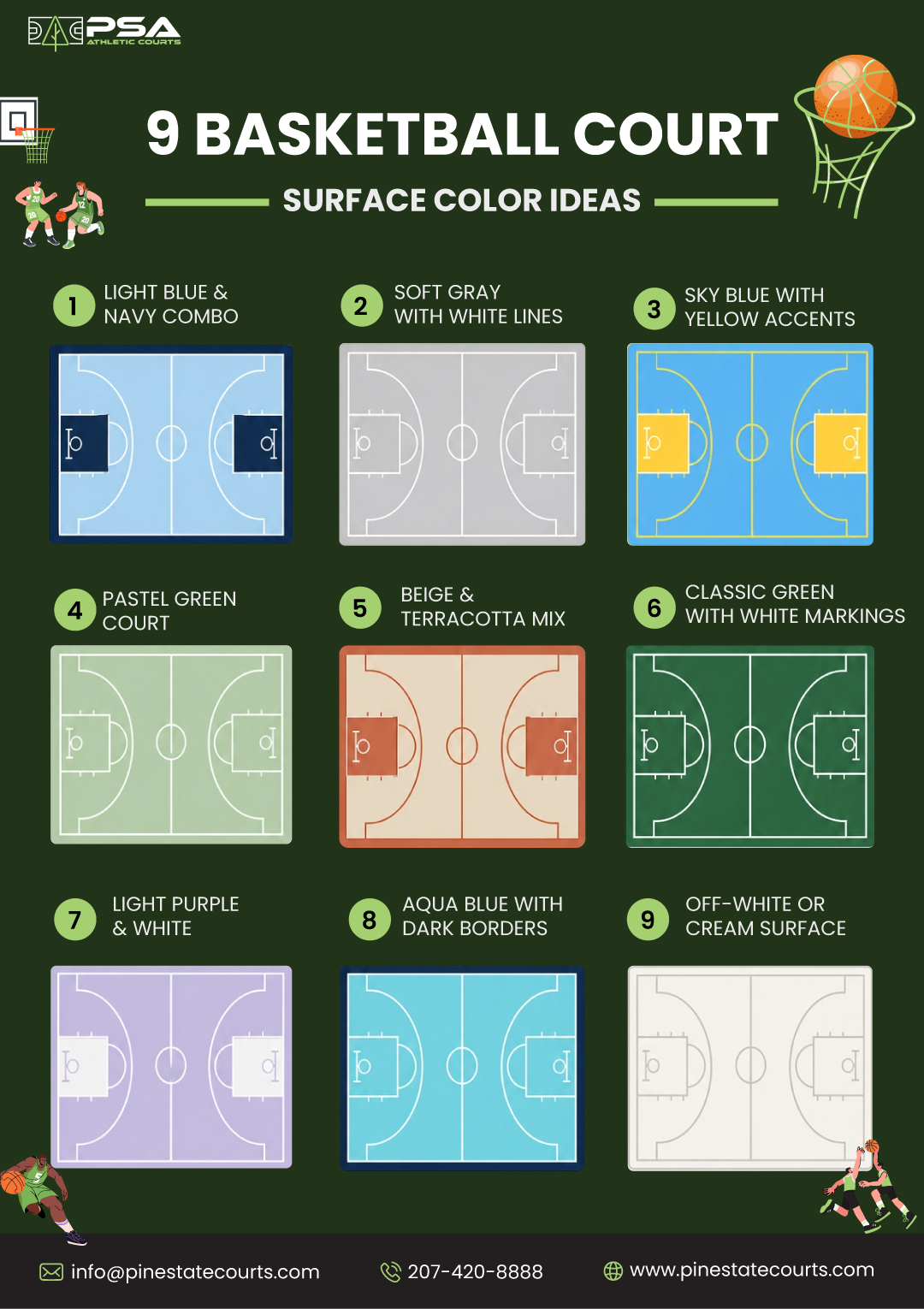
The different combination of colors that you can use for your basketball court surface include:
1. Light Blue & Navy Combo
Many modern basketball courts are embracing a light blue shade for the playing area paired with navy borders. One such example is the famous Pigalle Basketball Court of Paris with layered blue shades that makes the court look more open, vibrant, and visually striking.
This combination also reflects sunlight better than darker colors making it suitable for courts in hotter climates.
2. Soft Gray with White Lines
The iconic gray court of Brooklyn Nets shows how even neutral colored basketball court surfaces can feel bold, modern, and highly professional. Soft gray is also a versatile color which creates a clean, minimalistic look and allows the white court markings to stand out sharply.
It also hides dirt and worn-out surfaces better than bright colors, making it best for schools, community, and multi-athletic courts.
3. Sky Blue with Yellow Accents
Another popular basketball court surface color is sky blue paired with yellow borders which is a part of several FIBA and Olympic-style outdoor courts. This combination creates a bright, energetic atmosphere that feels youthful and inviting.
It’s also a great choice for parks and youth-focused facilities as the yellow accents create high visibility and make even smaller courts feel more open.
4. Pastel Green Court
Pastel green offers a softer alternative to traditional dark green courts. It blends naturally with your outdoor surroundings while reflecting more light.
This color works particularly well for backyard basketball courts surrounded by landscaping. It is often preferred by basketball court builders for its natural and calming appearance that creates less visual glare.
5. Beige & Terracotta Mix
Warm neutral tones create a premium, resort-style appearance. Adding beige colored playing areas with terracotta borders gives a welcoming and sophisticated look to your court.
This combination is increasingly popular among luxury residential properties, HOA recreational spaces, and for multi-sport outdoor courts.
Choose the best basketball court designer near you for durable and high performance court solutions talk to our experts now
6. Classic Green with White Markings
Classic green is one of the most timeless options for schools, parks, and basketball courts converted from tennis. This combination is preferred for its traditional athletic appearance, excellent contrast with white lines, and easy maintenance.
While dark greens were popular once, modern courts often use lighter shades for better brightness.
7. Light Purple & White
For facilities looking for a more unique appearance, light purple offers a modern and creative aesthetic without making the court feel dark.
When paired with white markings, the court remains easy to read during play. It is a great option for schools with custom branding, community art courts, and trend-focused recreational spaces.
8. Aqua Blue with Dark Borders
Aqua blue creates a fresh, open-air feeling that works especially well in sunny climates, adding dark borders frames the court and adds visual depth. This color combination also gives a bright and refreshing appearance that suits modern resort-style and coastal basketball courts.
You’ll see this combination a lot in luxurious resorts with indoor courts across Portland, Maine.
9. Off-White or Cream Surface
Off-white and cream tones are unconventional but highly effective at making courts appear larger. These shades maximize brightness and create a premium look.
However, they do require more maintenance compared to darker basketball court surfaces, making them suitable for indoor basketball courts, decorative residential courts, and courts built in low-debris environments.
Design Tips to Make Your Court Look Bigger
When you’re working with limited space, smart design and color choices can help to visually expand your court surface.
Here’s a few tips from Pine State Courts to help you make your court look more spacious:
- Use light colors for the main playing field, these light shades will make your court surface feel more open.
- A dark colored court perimeter adds depth and defines the playing area.
- Avoid using too many bold colors or graphics as it will create a cluttered look for your court.
- Add bright white or subtle contrasting lines to improve visibility without overwhelming the court.
- Coordinate the court colors with your court surroundings (nearby landscaping, fencing, or buildings) s- your court feels more integrated and spacious naturally.
Check out our comparison guide to get help on choosing the right basketball court surface: acrylic vs asphalt.
Best Color Combinations for Different Court Types
Outdoor Basketball Courts
Outdoor courts benefit most from UV-resistant, light-reflective colors.
Recommended color combinations include:
- Light blue and navy
- Soft gray and white
- Aqua blue with charcoal borders
- Pastel green with white markings
These options help reduce surface heat while maintaining the long-term visual appeal of your basketball court.
Indoor Basketball Courts
IIndoor courts can support richer colors because lighting and temperature are controlled.
Recommended color combinations include:
- Cream and tan
- Gray and black
- Light purple and white
- Beige and terracotta
Because of controlled lighting, indoor basketball court surfaces also allow for more customized branding and decorative finishes.
Maintenance Tips for Colored Basketball Court Surfaces
The appearance and durability of your basketball court depends a lot on how well you maintain it over time. Besides longevity, a well-maintained court also offers great playing conditions and ensures safety of players.
Here’s how you can maintain and protect your courts’ aesthetics and performance:
- Clean your court surface regularly - Removing dirt, leaves, and standing water from the surface to prevent it from staining and surface damage.
- Use good quality coatings - High-quality acrylic coatings may cost high upfront but they protect your basketball court material from UV damage and wear over time.
- Repair any cracks you see early - Small cracks can quickly spread if they are ignored and can lead to structural damage over time, especially for outdoor asphalt courts.
- Reapply surface coatings as needed - Most basketball court surfaces benefit from resurfacing every few years depending on their usage and climatic conditions in your area.
- Avoid using harsh chemicals - Use only safe cleaning products recommended by your court builder to preserve both color and surface quality.
Takeaway
Unlike what most court owners believe, choosing a basketball court surface color isn’t just about style. It can make your court feel larger, brighter, cooler, and more welcoming for both players and visitors.
Court owners today have a lot of options to choose from modern blue tones and clean neutral grays to classic athletic greens. The right combination of basketball court material and color scheme can completely transform your playing surface.
If you’re planning to upgrade your existing court or planning to build a new basketball court, contact Pine State Courts to make thoughtful color and surface selection so your court performs well for years to come.
Frequently Asked Questions
1. What is the best color for an outdoor basketball court?
The best color for an outdoor basketball court is usually a combination of blue, green, and grey surface with white or yellow lines for visibility. Choose a lighter shade if your court’s in a hotter climate and a dark shade if your court has high traffic.
2. What is the best basketball court surface for outdoor use?
For outdoor basketball courts, the best surface is an asphalt or concrete base with an acrylic coating. This surface offers a durable playing field with great traction and ball bounce.
3. How to light up a dark basketball court?
You should add LED lights to light up your dark basketball court. But make sure that you balance the total brightness, pole placement, and glare control so the lighting doesn't blind the players.
4. What type of paint is used for an outdoor basketball court?
Acrylic paints are generally used for outdoor basketball courts as they are durable, UV-resistant, and suitable for both acrylic and asphalt courts.
5. What is the best color for a basketball court surface?
The best color for a basketball court surface depends on whether it’s located indoors or outdoors. For outdoor courts, light colors like blue and green are generally preferred while indoor courts allow flexibility due to controlled lighting inside.
6. How often should court colors be resurfaced?
Hard courts should generally be resurfaced every 4 to 8 years, including re application of acrylic coatings to maintain the structural integrity and performance of the court.
7. Can I customize basketball court surface colors?
Yes, you can customize your basketball court surface colors depending on your preferences. You also have the flexibility to add custom logos and decorative finishes for your branding.
DOWNLOAD OUR FREE GUIDE
Ready to build your dream court?
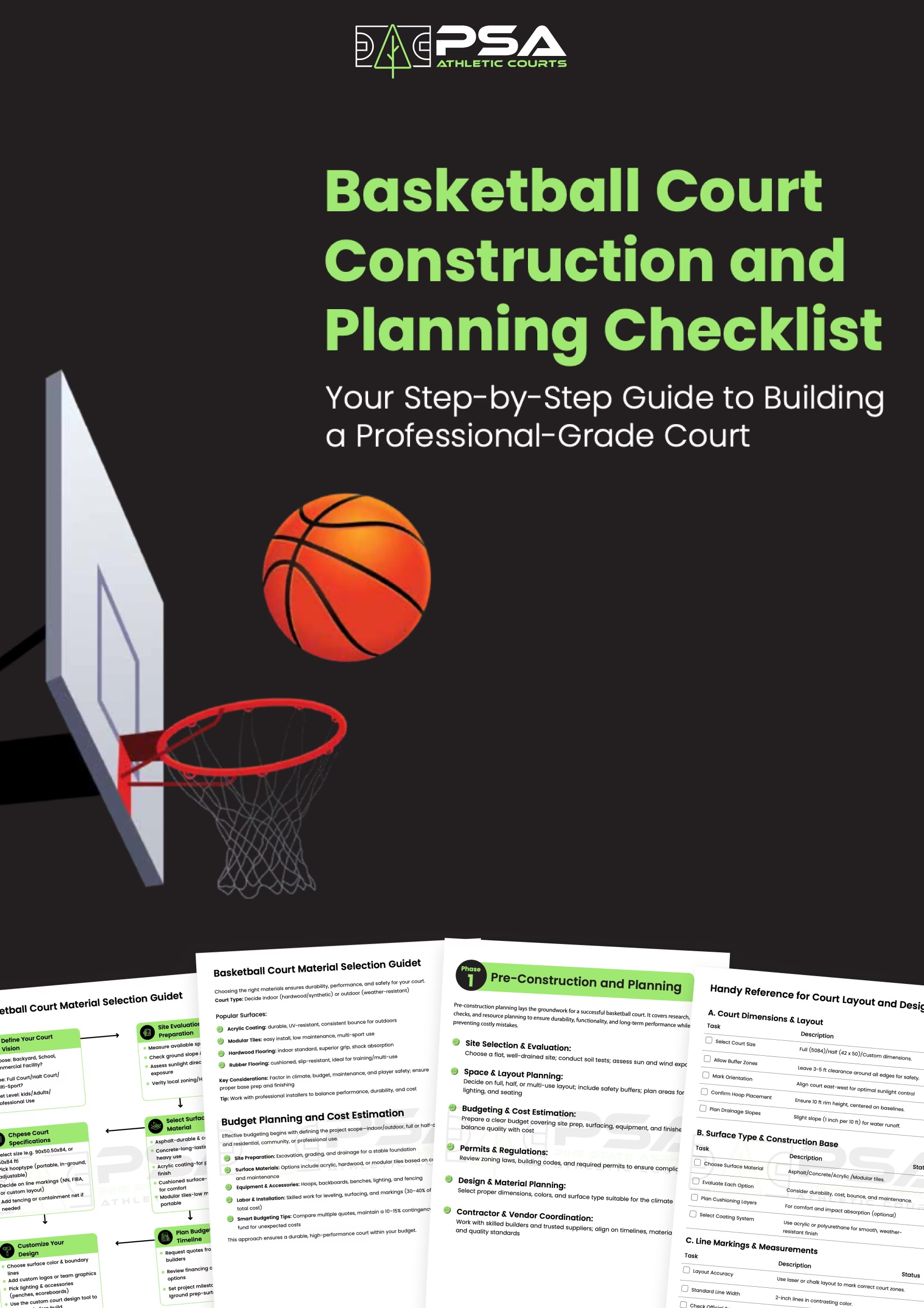
Download our FREE Basketball Court Construction & Planning Checklist and get the step-by-step roadmap to building a professional-grade court—from budget planning to final touches.
No guesswork, just results.