
.jpg)
If you are planning to build an indoor basketball court for your kid, then there is one decision that you should make wisely. It is choosing the right flooring option for this indoor home basketball courts project of yours.
As this space is where your kid will practice regularly to hone his skills, it should be highly resilient, durable, and safe to play on. Not sure where to begin? Well! This complete indoor courts’ material guide by Pine State Courts is here to your rescue.
Through this one we will break down the most popular flooring options you have. We'll dive into the details of how each of these top surfaces perform and help you make a confident and informed choice for your champion.
So, let’s begin with the basics!
Why Flooring Matters for Your Indoor Home Basketball Court
Before we start discussing the different flooring options out there, it is important to understand why selecting the right surface is such a critical part of constructing indoor courts.
For starters, as basketball is a high-impact sport that involves sprinting, sudden stops, pivots, and jumps, a poor flooring choice can lead to a lot of issues. Here’s a list of reasons why selecting the right flooring matters:
Impacts safety of your kids
A court flooring that offers great shock absorption and allows quick stops or swerves contributes to the safety of those playing on it. Choosing the right flooring will ensure your kids are safe at all times during the play.
Determines their performance
The type of flooring you choose will also determine how well the ball bounces and how good the traction of the court is. Both of these will impact how well the players perform, the right option will thus contribute to the quality of performance not just in the practice rounds but in the official leagues too.
Decides the durability of your court
Each court surface has its own specific maintenance needs and a basketball court that sees intense plays requires one that’s durable. Choosing a surface that’s resilient (resists dents and wear) thus ensures it stays in top shape for a long time.
Affects the overall budget of your project
There’s undoubtedly lots of flooring options in the market. Choosing the right one that performs well, is safe for the kids, and easy to maintain might however require a significant investment.
Now that you know why the right flooring matters, let’s take a look at what options you have when it comes to flooring your home indoor basketball court.
Popular Indoor Home Basketball Court Flooring Options
The basketball court surfaces sure have evolved a lot over the years. With various modern sports flooring technology, each surface is designed to meet different performance needs and budgets.
Developing an understanding of how each of these options compare to each other will help you narrow down your search for the best fit for your space. Here’s a list of the top five indoor home court flooring options out there:
.jpg)
1. Hardwood Flooring
Hardwood flooring is generally the most preferred choice for indoor basketball courts for both professional and collegiate arenas. Maple wood, in particular, is a top favorite, for its durability and consistent ball bounce.
Hardwood however requires precise installation, climate control, and routine maintenance. And this along with its moisture sensitivity and higher upfront costs, makes it best suited for dedicated indoor spaces designed specifically for basketball
Best for: Home indoor basketball courts that require an authentic and professional feel with excellent traction and predictable, ideal for professional athletes.
2. Engineered Wood Flooring
Engineered wood flooring is a great affordable option that offers the look and feel of hardwood but with better structural stability. This flooring option consists of multiple layers, with a hardwood top layer bonded to a plywood or composite base.
This construction makes engineered wood more resistant to temperature and humidity changes, which is especially beneficial for residential environments. It delivers a solid performance for basketball while being slightly easier to maintain than traditional hardwood.
Best for: For homeowners who want professional-grade play without the full cost and maintenance demands of solid hardwood.
3. Synthetic Sports Flooring (PVC / Vinyl)
Synthetic sports flooring, commonly made from PVC or vinyl, has become increasingly popular for indoor home courts. These surfaces are engineered specifically for athletic performance and are often used in multi-purpose gyms too.
They offer consistent ball bounce, excellent shock absorption, and reduced strain on joints. It is also easier to clean, moisture-resistant, and better suited for casual and family use.
Best for: Synthetic sports flooring is a versatile option for indoor home courts that will serve multiple functions, such as workouts, kids’ play, or other sports, without sacrificing on the basketball performance.
4. Rubber Sports Flooring
Rubber flooring is best known for its durability and impact absorption. While it is commonly used in weight rooms and training facilities, it is also being rapidly adapted for recreational basketball play.
Its slip-resistance and low-maintenance, makes it a solid option for practice areas or hybrid gym spaces. They however don’t offer the same ball bounce consistency as wood or other synthetic sports floor options.
Best for: Homeowners that prioritize safety, noise reduction, and durability over competitive-level play.
5. Modular Tiles.
Modular sports tiles are interlocking flooring systems that are specially designed for a quick installation and easy customization. They are often used for both indoor and outdoor courts and can be installed over your existing surface too.
These tiles offer good traction, decent shock absorption, and are easily replaced if any of the sections get damaged.
Best for: They are an excellent option if you are thinking of DIY installation and a flexible home setup.
Wondering which is best DIY or expert-led basketball court installation? Here’s our guide on the top 6 reasons to choose an expert for your indoor basketball court installation.
Performance Breakdown for Smarter Flooring Decisions
Now that you are familiar with the available flooring options for your indoor home court, comparing them based on performance factors can help you to make the final choice.
Here’s what you should consider:
- Hardwood and engineered wood offer the most authentic basketball experience, with superior ball response and court feel.
- Synthetic flooring comes with a balance between performance and versatility.
- Rubber and modular tiles are best for their durability and ease of maintenance.
Your ideal flooring choice thus ultimately depends on how often your kids will play, their level of play (beginner vs. pro), and whether the space will be utilized for other purposes.
Looking to customize your indoor basketball court? Here's our interactive basketball court designer tool to get you started.
Expert Tips to Keep Your Indoor Court in Top Shape
Building that indoor basketball court doesn’t just end with flooring installation, it requires proper care and routine maintenance are also essential to ensure its longevity and maintain a consistent performance.
At Pine State Courts, we offer support for not just building a basketball court, but we also extend it to include maintenance and resurfacing your indoor basketball court. Here’s some of our expert-backed practices that will help you extend the life of your court and keep it playable year-round:
Clean your court floor regularly
As dust, dirt, and debris reduce the court’s traction and can impact ball bounce. Include dry mopping or vacuuming the court regularly, and use only manufacturer-approved cleaners for deeper cleaning as and when needed.
Control indoor humidity and temperature
Sudden changes in temperature or moisture can cause warping, expansion, or surface damage to the wood-based floors. They perform best when the indoor humidity levels are maintained between 35%-50%.
Use only basketball-specific footwear on the court
Encourage your kids to wear only clean and non-marking basketball shoes. Outdoor shoes can track in grit that can scratch the court surface and wear down your protective coatings faster.
Inspect your flooring periodically
Check for loose panels, surface cracks, or uneven areas. Catching these minor issues early on helps prevent larger repairs and ensures the safety of your kids.
Contact us and Get Free Consultation Today !
Reapply finishes or coatings when recommended
Hardwood and engineered wood courts require periodic refinishing to maintain their traction and appearance. Synthetic surfaces may also need recoating depending on its usage.
Follow manufacturer maintenance guidelines
Each flooring type has its specific care requirements. Following the recommended cleaning schedules and using only the recommended products ensures optimal performance throughout the court’s life.
By incorporating these maintenance habits into your routine, your indoor basketball court will continue to deliver safe play, consistent performance, and a professional look for years to come.
Conclusion
Building an indoor home basketball court can be the best investment you make for fitness, skill development, and spending quality time with your family and friends. And this thrilling adventure begins with choosing the right flooring.
From the timeless performance of hardwood to the modern versatility of synthetic and modular tiles, each flooring option offers its own unique advantages. Not sure where to start? Contact the expert basketball court designers at Pine State Courts to select the right flooring and build an indoor court that performs well and lasts long too.
Frequently Asked Questions
1. What is the best material for an indoor basketball court?
The best material for an indoor basketball court is hardwood maple. It is preferred for its great ball bounce, traction, and superior shock absorption. There is also a rising popularity of other materials like Polyurethane, interlocking tiles, and synthetic rubber for their versatility and affordability.
2. How much does it cost to resurface an indoor basketball court?
The cost to resurface an indoor basketball court depends on several factors, including the condition of the surface, court size, materials, access, and how the space is used.
Because every court is different, the best way to understand what’s needed is to have a professional take a look. That ensures the scope is accurate and helps avoid surprises down the road.
3. Does a basketball court add value to a home?
Yes, a basketball court adds value to your home or property as it makes it more appealing to buyers who have a keen interest in sports, or those with kids. It also is a luxurious add on that can make you popular if you love to host people.
4. How much does it cost to build an indoor basketball court at home?
The cost to build an indoor basketball court at home can start from $10,000 to build a half-court and it can go up to $80,000 for a full court. This cost depends on the court size, what foundational work it requires, and what your preferred court surface is.
DOWNLOAD OUR FREE GUIDE
Ready to build your dream court?
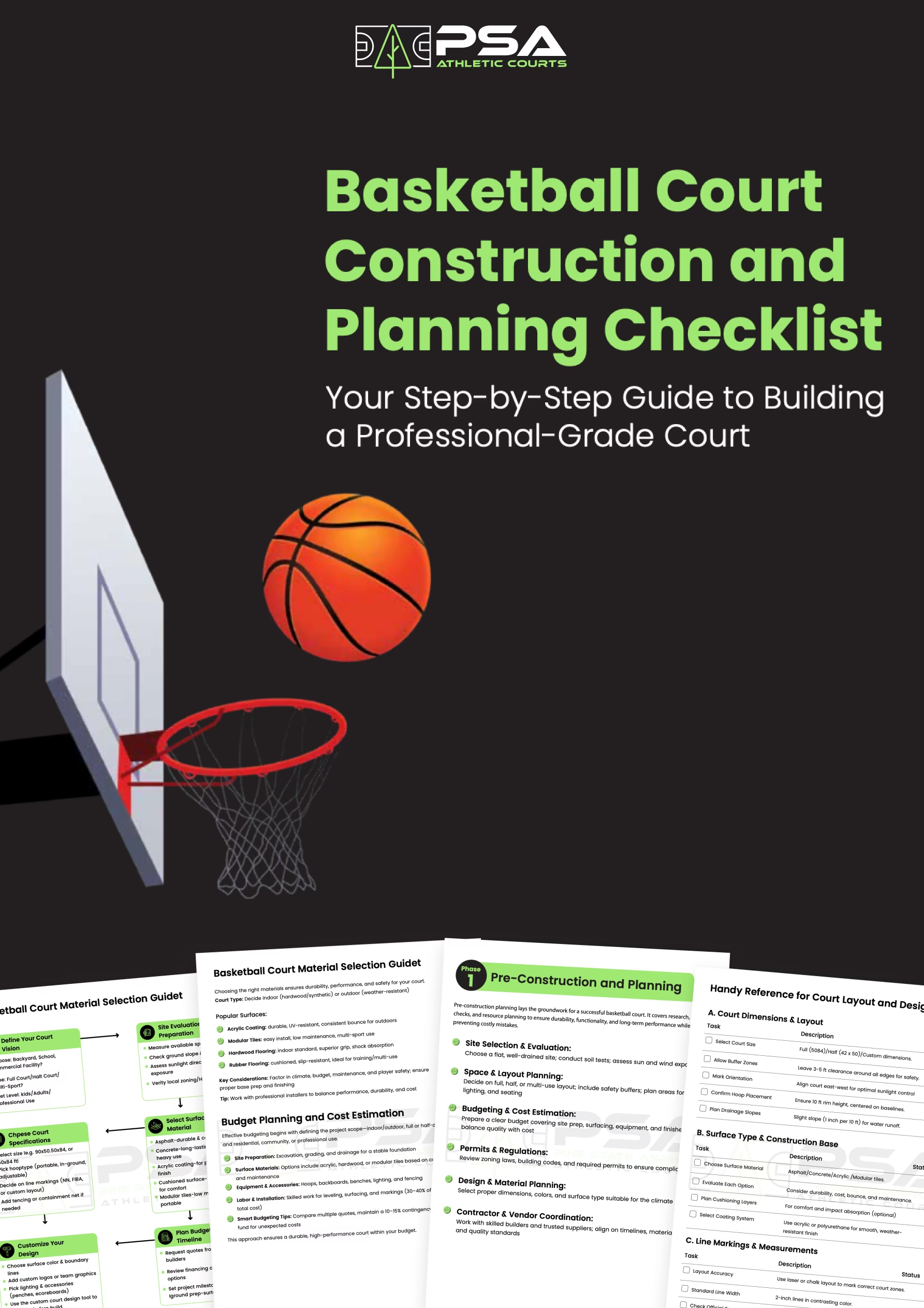
Download our FREE Basketball Court Construction & Planning Checklist and get the step-by-step roadmap to building a professional-grade court—from budget planning to final touches.
No guesswork, just results.