
If you’ve spent any time around sports clubs or scrolled through social media lately, you’ve likely seen a strange-looking tennis court with glass walls and players wielding short, stringless "bats." Welcome to the world of Padel. It’s not just a trend; it’s a global phenomenon that is officially making its way into the backyards and commercial facilities of Southern Maine.
At Pine State Courts, we’ve seen plenty of sports come and go, but the explosion of Padel is different. It’s fast, it’s incredibly social, and it fits perfectly into the active Maine lifestyle. Whether you’re in Portland, Kennebunk, or Scarborough, people are asking the same question: "What is this game, and why is everyone playing it?"
In this post, we’re going to dive into the Padel revolution. We’ll look at why it’s growing so fast, how you actually play it (including the rules and scoring), and a brief look at what it takes to get one of these high-performance courts on your property.
The Global Explosion: Padel by the Numbers
It’s hard to overstate just how quickly Padel has grown. Originating in Mexico in the late 1960s and finding a massive foothold in Spain and Argentina, it has recently conquered Europe and is now the "next big thing" in the United States.
As of 2026, estimates suggest there are between 25 and 35 million active Padel players worldwide. In countries like Spain, it has actually surpassed tennis in popularity. While the U.S. has traditionally been a stronghold for tennis and, more recently, pickleball, Padel is catching up at a breakneck pace. The number of courts in the U.S. doubled between 2022 and 2024, and that momentum hasn't slowed down.
Why is it growing so fast? It’s the "Goldilocks" of racket sports. It’s more physically demanding than pickleball but easier to learn than tennis. Because it is almost exclusively played as a doubles game, it’s inherently social. In an era where people are looking for ways to stay active while connecting with friends, Padel hits the sweet spot.
How to Play: The Basics of Padel
One of the best things about Padel is that you can pick up a racket and be having a competitive rally within twenty minutes. However, it has enough depth that professional players can spend years mastering the geometry of the walls.
The Equipment
First things first: you don’t use a tennis racket. Padel is played with a solid, stringless "bat" (or racket) that has holes drilled through it. It’s shorter than a tennis racket, which makes it much easier to control. The ball looks like a tennis ball but is slightly depressurized, meaning it doesn't bounce quite as high or fly quite as fast: giving you more time to react.
The Serve
If you’ve ever been frustrated by the high-toss overhead serve in tennis, you’ll love Padel. All serves in Padel are underarm. You drop the ball, let it bounce once behind the service line, and hit it into the diagonal service box on the opponent's side. It’s simple, effective, and keeps the focus on the rally rather than the serve itself.
The Walls: Your New Best Friend
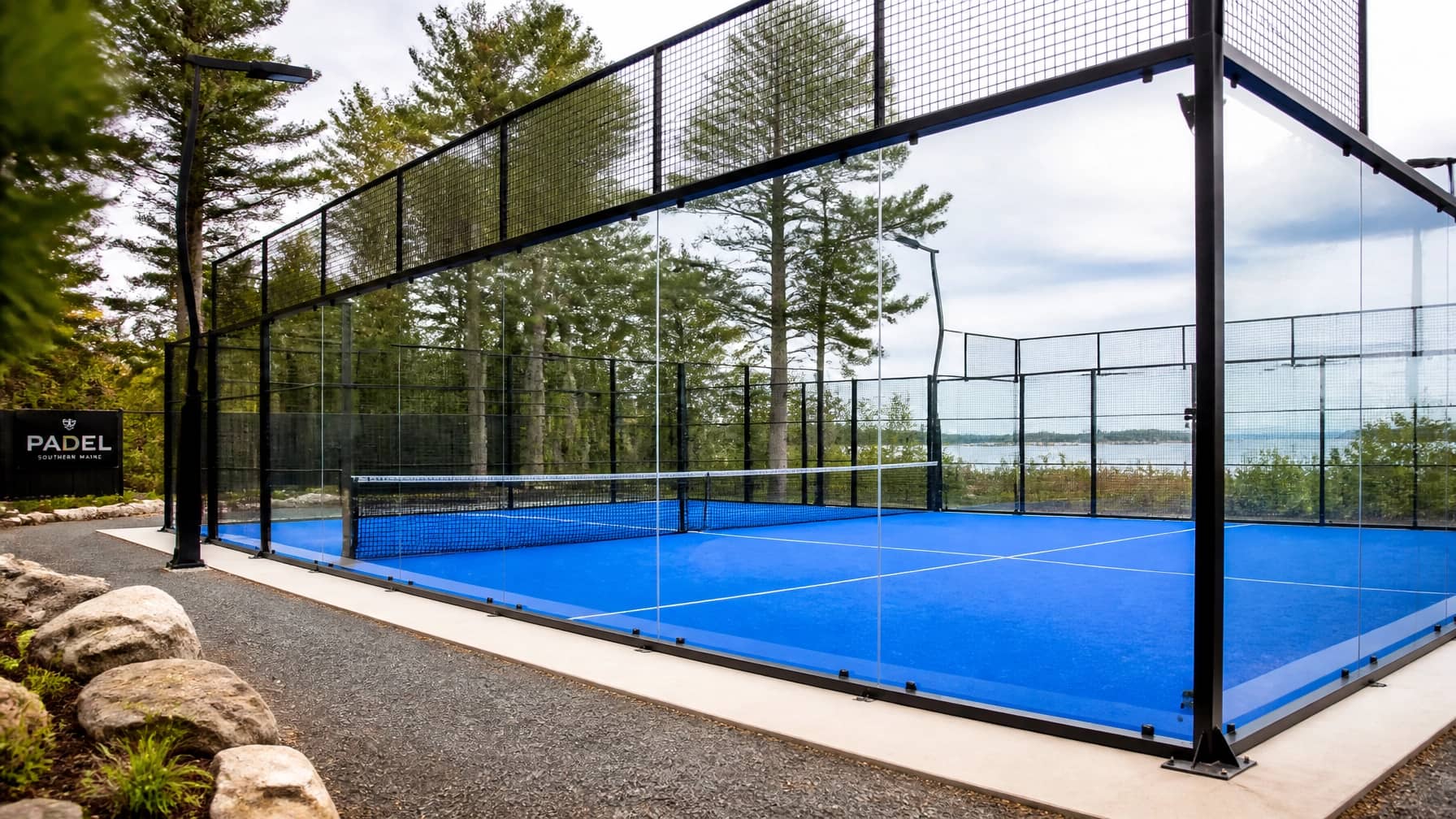
This is what sets Padel apart. The court is enclosed by glass and mesh walls. Just like in squash, the walls are in play. If the ball bounces on the court and then hits the glass wall, it’s still live. You can even hit the ball against your own glass wall to get it back over the net. This adds a layer of strategy that tennis lacks; you aren't just hitting left and right, you're using the entire three-dimensional space of the court.
Understanding Padel Scoring (It’s Familiar!)
If you know how to score a tennis match, you already know how to score Padel. The systems are nearly identical, which makes it very easy for tennis players to transition.
- Point Scoring: The points go 15, 30, 40, and then Game.
- Deuce: If the score reaches 40-40, it’s called "deuce." Just like tennis, you generally need to win two consecutive points (Advantage and then Game) to win the game. Some professional formats use a "Golden Point" (sudden death) at deuce to speed things up, but most recreational play sticks to the traditional format.
- Sets and Matches: A set is won by the first team to reach 6 games (with a two-game lead). If it gets to 6-6, a 7-point tiebreak is played. Most matches are played as the best of three sets.
Padel vs. Pickleball vs. Tennis: Which is for You?
We get asked this a lot at Pine State Courts. Since we specialize in all types of athletic court installations, we see the pros and cons of each.
- Tennis: The classic. It requires the most space and has the steepest learning curve. It’s great for cardio and tradition, but it can be intimidating for beginners.
- Pickleball: The current king of backyard sports in Maine. It’s played on a smaller court with a plastic "wiffle" ball. It’s very accessible, but some players find the "kitchen" rules and the lack of "big" swings a bit limiting.
- Padel: The middle ground. It uses a court that is 20 meters long and 10 meters wide (about 1/3 the size of a tennis court). Because of the walls, the ball stays in play longer, leading to longer, more exciting rallies. It feels more "athletic" than pickleball but is more forgiving than tennis.
For many homeowners in Southern Maine, Padel is becoming the preferred choice because it offers a premium, professional feel that works beautifully in both indoor and outdoor settings.
A Brief Look at Court Specs
While we’ve covered the nitty-gritty of court specifications in a previous post, it’s worth noting what makes a Padel court unique.
A standard court is 20m x 10m. The "ground" is usually made of a specialized artificial turf with a very fine layer of sand brushed into it to allow for controlled sliding. The walls are the most critical part: typically 10mm or 12mm tempered glass.
At Pine State Courts, we focus on the foundation. Just like a good driveway or parking lot, a Padel court is only as good as the earthwork and asphalt beneath it. Proper grading and drainage are essential, especially with Maine’s freeze-thaw cycles. If the base shifts, your glass walls won't line up, and your "Padel Revolution" will turn into a maintenance nightmare. That’s why we bring our decades of paving and earthwork experience to every court project.
Why Padel is Perfect for Southern Maine
You might wonder if a sport born in Mexico and popularized in Spain can work in the Pine Tree State. The answer is a resounding yes.
- Indoor Compatibility: Because Padel courts are smaller than tennis courts, they fit much more easily into indoor facilities. For Maine residents, this means the game doesn't have to stop when the snow starts falling.
- Property Value: As the sport continues to grow, having a professional Padel court is becoming a major selling point for high-end residential properties and luxury developments.
- Community Building: Padel is built for doubles. It’s a great way to meet neighbors in communities like Scarborough or Falmouth. Many clubs are finding that Padel players spend more time socializing after the game than any other athletes.
Bringing the Game Home
Pine State Asphalt has always been about more than just laying down blacktop. We’re about creating spaces where memories are made: whether that’s a perfectly paved driveway for your kids to bike on or a professional-grade Padel court for your Friday night matches.
The Padel revolution is here, and it’s growing faster than anyone expected. If you’re a homeowner looking to upgrade your backyard or a business owner in Southern Maine wanting to add the world's most exciting new sport to your facility, we’re here to help.
Building a Padel court requires precision, from the initial grading to the final glass installation. Our team has the local experience to ensure your court stands up to the Maine elements while providing a world-class playing surface.
Ready to join the revolution? Whether you want to talk specs, layout, or just find out if Padel is right for your property, give us a shout. Pine State Courts is ready to help you bring the fastest-growing sport in the world right to your doorstep.
Contact Pine State Courts today to schedule a consultation and start planning your new court project.
DOWNLOAD OUR FREE GUIDE
Ready to build your dream court?
Download our FREE Basketball Court Construction & Planning Checklist and get the step-by-step roadmap to building a professional-grade court—from budget planning to final touches.
No guesswork, just results.