
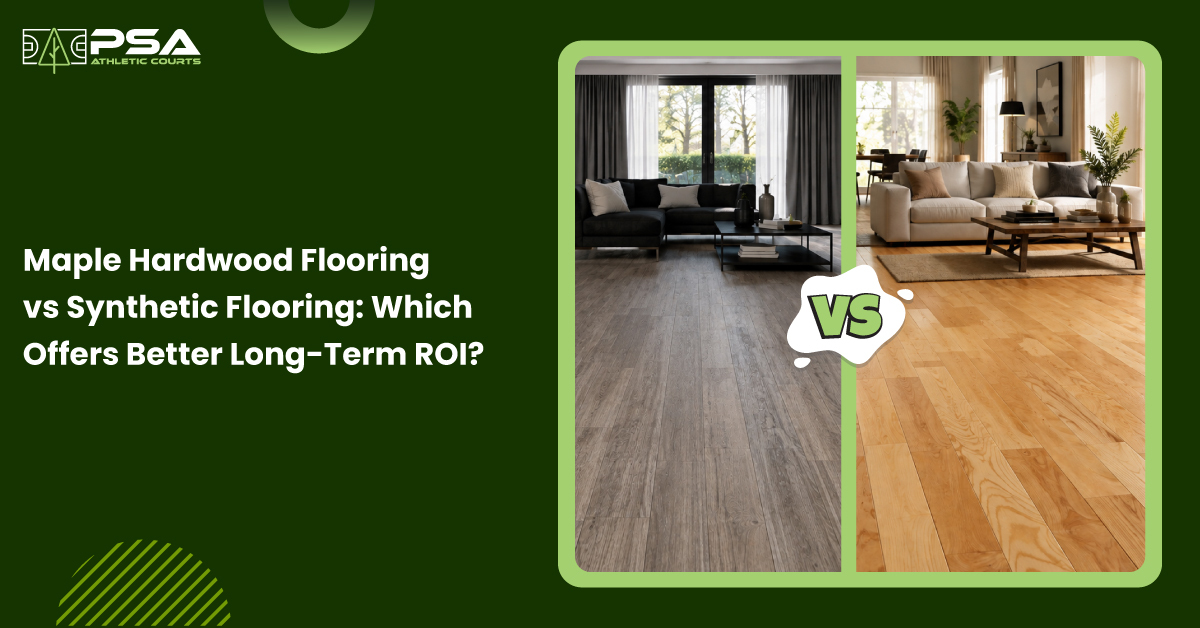
Choosing the right indoor athletic flooring is one of the most important decisions for any sports facility. And two of the most common options that facility managers compare are maple hardwood flooring and synthetic sports flooring.
While maple has always been a preferred choice for its natural appearance, consistent ball bounce, and proven performance, modern synthetic flooring systems are also being used widely. These synthetic flooring options like vinyl, cushioned athletic flooring, and pad-and-pour surfaces are often used by multi-athletic facilities for their reduced maintenance needs and versatility.
In this Pine State Courts’ guide, we'll compare hardwood maple flooring and synthetic sports flooring across different factors. We’ll discuss their costs, durability, maintenance needs, athletic performance, and return on investment to help you make an informed decision.
Understanding Maple Hardwood Flooring
Maple hardwood flooring has been the benchmark for indoor courts for decades. It’s manufactured from hard maple and is known for its durability, uniform grain, and reliable performance.
Its excellent ball response, predictable traction, and a professional appearance makes it the preferred choice for many schools, universities, and competitive sports facilities. Maple flooring also has a long lifespan of several decades when it’s installed and maintained correctly.
However, preserving its performance requires routine cleaning, periodic recoating, and refinishing over its lifetime along with proper climate control as wood responds naturally to changes in temperature and humidity.
What Is Synthetic Sports Flooring?
Synthetic sports flooring refers to the engineered athletic surfaces that are designed to provide consistent performance while reducing maintenance or resurfacing requirements. It includes options like vinyl sports flooring, cushioned athletic flooring, and pad-and-pour Polyurethane systems, all of which offer superior comfort and shock absorption.
But unlike hardwood, these synthetic athletic flooring systems don't require sanding or refinishing and can withstand moisture, heavy foot traffic, and frequent use. Many facilities today are choosing these synthetic surfaces for their versatile use for sports, community events, fitness programs, and recreational activities.
Maple Hardwood Flooring vs Synthetic Sports Flooring: Quick Comparison
Before we dive into the detailed breakdown of the differences between Hardwood maple flooring and synthetic flooring systems, here’s a quick comparison table for your reference.
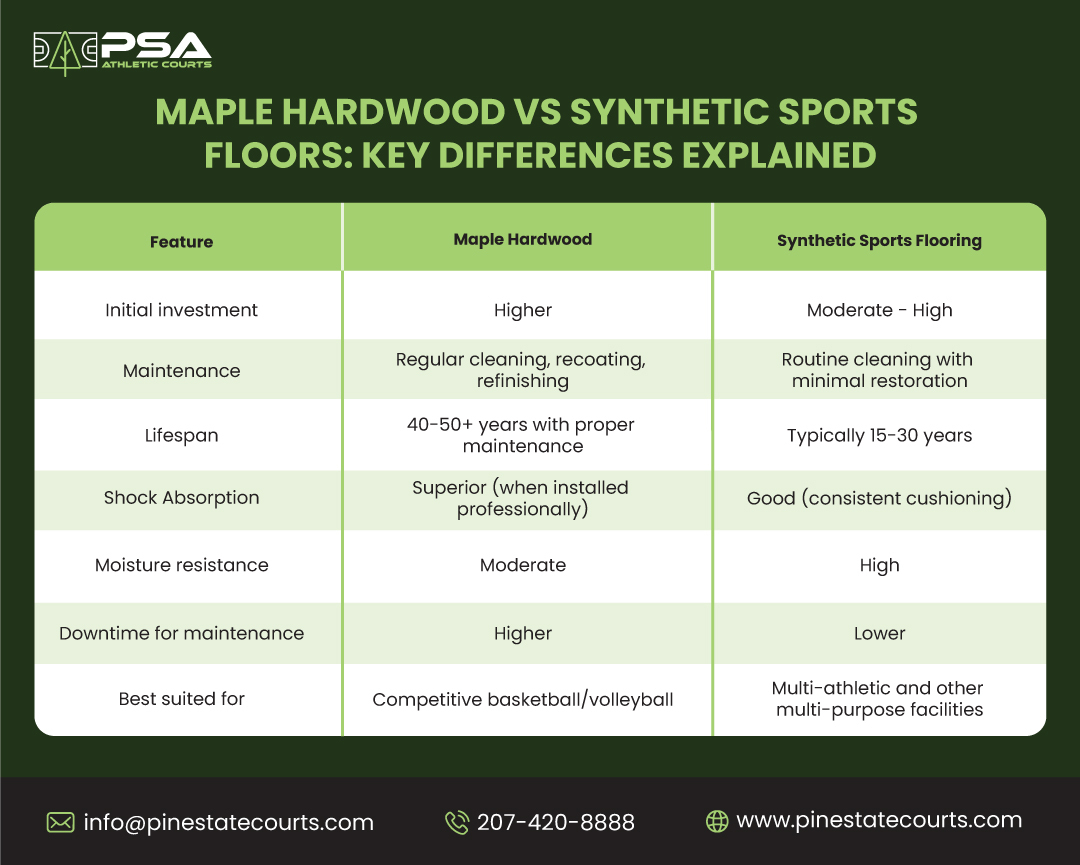
Let’s discuss these factors in detail.
Initial Investment vs Lifetime Cost
When you are budgeting for your indoor court surface, it’s wise to include both the lifetime cost of your flooring and the initial investment it requires.
Upfront Installation Costs
Hardwood Maple flooring typically requires a higher initial investment in terms of the material costs, its specialized installation and subfloor construction. It often takes longer to install and requires a greater precision to achieve the performance standards of competitive play.
Synthetic sports flooring, on the other hand, has a lower installation cost, although the exact pricing varies depending on what product you choose. Cushioned systems and advanced athletic flooring may involve a higher upfront investment than standard vinyl but they still require less installation complexity than hardwood.
Maintenance Costs Over 20 Years
Long-term maintenance can significantly influence your total cost of ownership. Hardwood courts require routine cleaning, annual recoating, and periodic sanding and refinishing to restore the playing surface.
Synthetic flooring typically requires minimal maintenance with regular sweeping, mopping, and periodic inspections. As these systems don’t require sanding or refinishing, their maintenance costs are generally more predictable, making budgeting easier for homeowners and facility managers.
Replacement & Refinishing Timeline
One of the biggest strengths of hardwood is its ability to be refinished several times throughout its lifespan. This allows you to restore the playing surface through sanding and refinishing, instead of replacing the entire floor.
Synthetic flooring cannot usually be refinished in the same way. Once the wear layer reaches the end of its service life or the surface no longer performs as intended, replacement is typically required. But its lower maintenance requirements often compensates for this.
At Pine State Courts, our experienced court designers and builders offer tailored solutions to meet your sporting needs.
Which Flooring Performs Better for Different Sports?
Let’s compare hardwood maple and synthetic flooring for different indoor sports.
Indoor Basketball Courts
Maple hardwood is the preferred surface for competitive basketball courts including NBA, NCAA, and FIBA as it delivers consistent ball bounce, excellent traction, and the performance expected by athletes at higher levels of competition.
Synthetic flooring is also used successfully for basketball, particularly in schools, community centres, and multi-purpose gyms where maintenance efficiency and versatility are equally important.
You can also check our guide on indoor basketball court flooring solutions for detailed insights into your other options.
Indoor Pickleball Courts
Both maple and synthetic flooring can be used for indoor pickleball courts. Maple offers a responsive playing surface while cushioned synthetic systems can reduce player fatigue during extended matches. Facilities hosting multiple activities often prefer to use synthetic flooring as it accommodates changing schedules more easily.
Indoor Tennis Courts
Synthetic sports flooring is generally better suited to indoor tennis courts because it offers consistent ball response, player comfort, and simplified maintenance. You can also choose between different options like vinyl, cushioned, and polyurethane to achieve your preferred pace and play.
Indoor Padel Courts
Indoor padel courts commonly use synthetic sports flooring because it withstands intensive daily use, provides reliable grip, and requires minimal maintenance. Its resilience also makes it well suited to the quick directional movements in padel.
Which Flooring Lasts Longer?
With proper care, maple hardwood flooring can remain playable for more than 50 years, making it one of the longest-lasting indoor sports flooring options. Its ability to be refinished rather than replaced contributes significantly to this longevity.
Synthetic flooring generally offers a service life of 15 to 30 years, depending on the system you choose, its usage levels, and your maintenance schedule. While they require replacement sooner than hardwood flooring, its reduced maintenance requirements make it a practical long-term solution for many facilities.
Athlete Safety and Performance Comparison
Both flooring options are designed to support athletic performance, but they do this in different ways. Maple hardwood is valued for its predictable ball response and stable playing characteristics, making it ideal for competitive sports.
Synthetic flooring systems, on the other hand, prioritize shock absorption and comfort, reducing fatigue during prolonged activity while supporting a broader range of sports. The right choice for you depends on whether your facility hosts competitive play or just friendly, recreational play.
Best Flooring by Facility Type
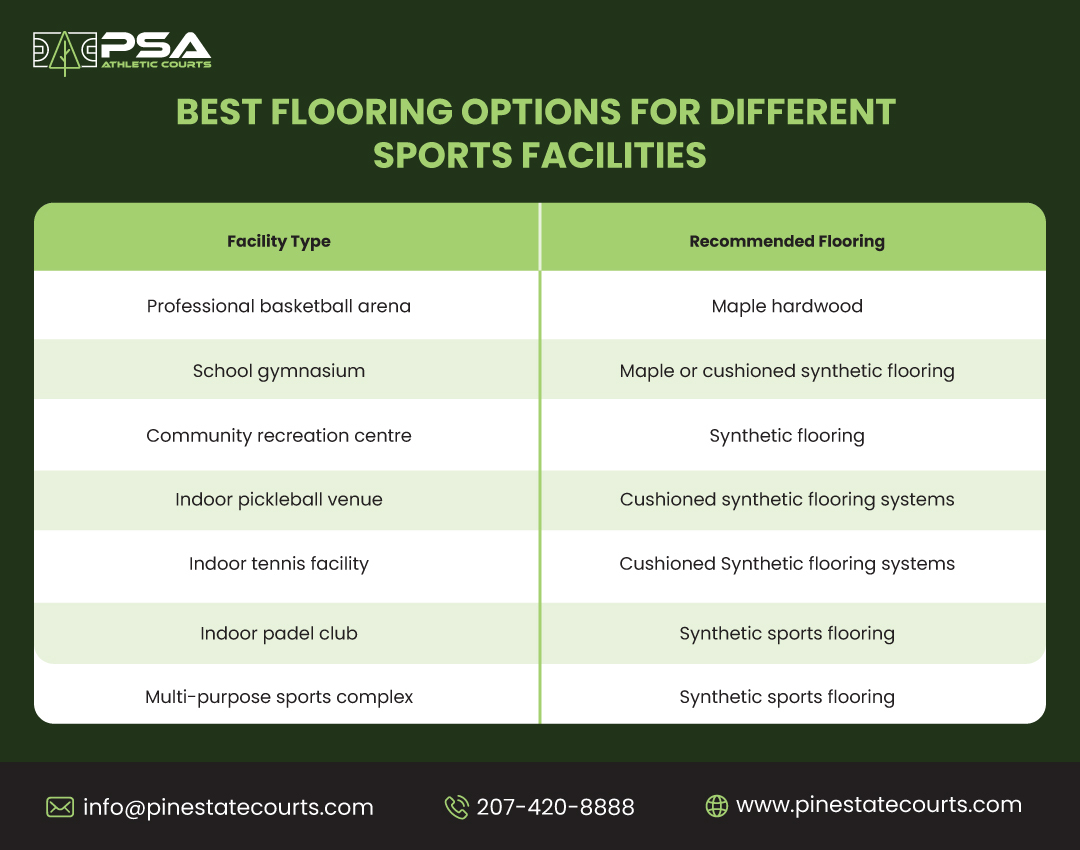
Facilities often have different priorities depending on their typical usage, maintenance expectations, and sporting activities. The table below provides a general guide to selecting the most suitable flooring for different facilities.
Signs It's Time to Upgrade Your Indoor Sports Flooring
Some common signs that facility managers, schools, clubs, and homeowners should be on the lookout for while caring for their indoor courts are:
- Visible signs of wear including faded line markings.
- Reduced traction of the court surface.
- Players complaining of inconsistent ball response.
- Persistent surface damage that doesn’t go away even after repairs.
- Increased maintenance costs.
If you’ve noticed some or all of these signs then your sports flooring is reaching the end of its useful life. You should also consider upgrading your court surface if it no longer meets your current requirements or limits the range of activities that you can host.
Which Flooring Delivers Better Long-Term ROI?
There is no universal winner when it comes to comparing long-term return on investment but depending on your athletic court and playing requirements you can make the right pick.
Facilities that are dedicated primarily to competitive sports like basketball and volleyball, often get the best value from maple hardwood flooring because of its long lifespan, refinishing potential, and premium playing experience.
For schools, recreation centres, community facilities, and venues hosting multiple sports and events, synthetic sports flooring offers a better return with its reduced maintenance costs, downtime, and greater flexibility. Evaluating the lifecycle costs of your flooring alongside your facility's operational goals will give you the best long-term investment.
Make Every Match Better. Discover How Tennis Court Resurfacing Can Transform Your School.
Why Choose Pine State Courts for Indoor Sports Flooring
Selecting the right flooring involves more than just comparing different products. It requires a deep understanding of how your facility will operate over the coming decades.
At Pine State Courts, we design and install both maple hardwood courts and advanced synthetic sports flooring solutions including vinyl athletic flooring, cushioned athletic systems, and pad-and-pour sports flooring. We assess your sports programmes, usage patterns, maintenance capabilities, and budget to help you choose a flooring solution that delivers reliable performance and lasting value.
Whether you're building a new indoor sports facility or upgrading an existing court, we provide tailored flooring solutions designed to meet the needs of schools, recreation centres, sporting clubs, and commercial venues. Get in touch with our team to discuss your project.
Frequently Asked Questions
1. Is maple hardwood better than synthetic flooring for basketball?
Yes, maple hardwood is often preferred over synthetic flooring for basketball. Its consistent ball bounce, good shock absorption, and premium performance makes it the standard choice for professional NBA, collegiate, and high-school courts.
2. Which court flooring has the longest lifespan?
For indoor courts, maple hardwood flooring offers the longest lifespan of over 50 years with consistent maintenance. For outdoor courts, modular interlocking polypropylene tiles offer a great performance for over 20 years.
3. Can one facility support basketball, pickleball, and volleyball on the same floor?
Yes, a single facility can support basketball, pickleball, and volleyball on the same floor. For this, you’ll need to use color-coded line striping, removable nets, and permanent basketball hoops that can fold up or retract.
4. Which flooring, Maple Hardwood Flooring vs Synthetic requires less maintenance?
Synthetic flooring generally requires lesser maintenance than Maple Hardwood Flooring. It can withstand high-foot traffic, moisture, and spills.
5. Which court flooring offers the best return on investment?
Hardwood maple flooring gives the best return on investment for professional indoor courts with its long lifespan of 50+ years and high facility resale value. Synthetic flooring is a great choice for outdoor, multi-purpose, and high-use facilities with its low upfront costs and maintenance needs.
DOWNLOAD OUR FREE GUIDE
Ready to build your dream court?
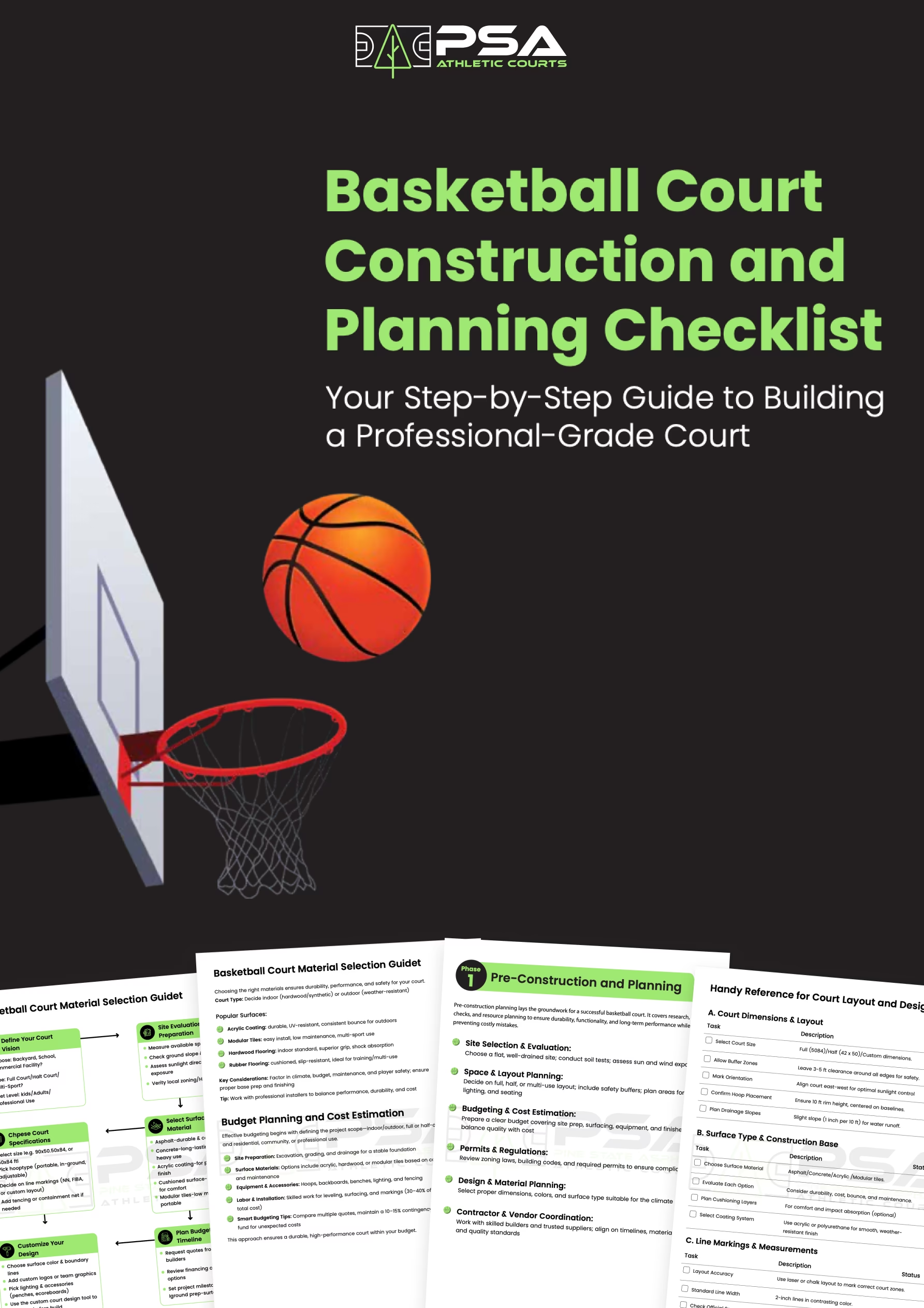
Download our FREE Basketball Court Construction & Planning Checklist and get the step-by-step roadmap to building a professional-grade court—from budget planning to final touches.
No guesswork, just results.