

For any sports facility, school, recreation center, or athletic indoor courts, its hardwood flooring isn’t just a playing surface, it provides athletes with the performance, durability, and safety that they need.
But even the highest-quality maple hardwood flooring starts to wear after years of regular use. And ignoring early signs of damage can affect player safety, your facility's appearance, and lead to more expensive repairs down the road. That’s why routine refinishing of your gymnasium flooring is crucial.
In this guide by Pine State Courts, we'll discuss some common signs that indicate your maple hardwood gymnasium floor needs refinishing and how acting early can save you time and money.
Why Maple Hardwood Gymnasium Floors Require Regular Refinishing
Maple has always been preferred for gymnasium flooring because of its strength, shock absorption, and consistent playing performance. But the protective finish of wood wears over time due to foot traffic, athletic activity, equipment movement, and routine cleaning.
And as it begins to deteriorate, your hardwood flooring becomes more vulnerable to scratches, moisture, stains, and everyday wear. That’s why regular inspections and maintenance are vital to preserve both the appearance and performance of your maple flooring.
Refinishing is a maintenance procedure that removes the worn-out coating, repairs minor damage, and adds a new protective finish that extends the life of your flooring and restores its original appearance.
7 Signs Your Maple Hardwood Gymnasium Floor Needs Refinishing
Let’s cover some common signs that indicate that your maple hardwood gymnasium floor is due for refinishing:
1. The Protective Finish Has Worn Away
The finish of your flooring is the first line of defense against daily wear. As your court ages, the flooring begins to wear away, it starts appearing dull, absorbs moisture more easily, and becomes more prone to scratches and stains.
If the high-traffic areas on your court have lost their consistent sheen or water no longer beads on the gym surface, it's a sign that your protective floor coating needs replacement.
2. Game Lines are Fading
Game lines play an important role in ensuring fair play and meeting competition standards.
Over time, repeated foot traffic, cleaning, and surface wear can cause painted lines to fade which creates confusion during practices and games.
During refinishing, these game lines are repainted with crisp, accurate markings and a fresh protective finish is applied on top of it.
3. Deep Scratches, Dents, and Surface Damage
Constant movement of equipment, players, rolling bleachers, and heavy carts can damage your maple wood flooring over time. While minor scuffs are expected on any athletic floor, you shouldn’t ignore deep scratches and dents on the surface.
If they are left ignored, they can trap dirt, collect moisture, and gradually worsen the surface damage. Professional refinishing is essential here to address these issues and restore your gymnasium’s smooth, even playing surface.
4. Slippery or Uneven Playing Surface
Player safety should always be a top priority for any facility manager. A gym floor that feels unusually slippery or uneven may indicate that its finishing has worn inconsistently or there’s sweat or cleaner build up on the surface.
This can reduce the traction of your gymnasium flooring and increase the risk of slipping and falling. Refinishing restores its finish and provides a balanced grip and glide for high performance.
5. Discoloration and Water Stains
Leaks or spills on the gym flooring, humidity fluctuations, or improper cleaning methods can leave dark stains or cause uneven discoloration of the flooring.
While staining only affects the finish of your surface, prolonged exposure to moisture can eventually damage the wood itself. Refinishing helps to address these issues and protect the floor before you need more expensive repairs.
6. Splinters or Raised Wood Grain
As the protective finish of your flooring wears away, the wooden surface becomes more exposed to moisture and everyday wear. This can cause raised wood fibers, rough spots, or small splinters that affect performance, comfort and safety of players.
Players who frequently slide, pivot, or make direct contact with the floor are particularly vulnerable to these imperfections. If you notice rough areas during your inspections, it's a strong sign that you should seek help from a professional court builder to evaluate your flooring.
7. The Floor Looks Older than It Should
The appearance of your athletic flooring matters as much as its performance. A dull, worn-out gym floor can make your well-maintained facility feel neglected.
This affects your first impression for visiting teams, parents, prospective students, and community members. By refinishing, you can restore the natural appearance of your maple hardwood gymnasium floor and give your facility a clean, and professional look.
Benefits of Refinishing Hardwood Gymnasium Flooring
Refinishing offers more than just cosmetic improvements. It preserves the long-term performance and value of your athletic flooring.
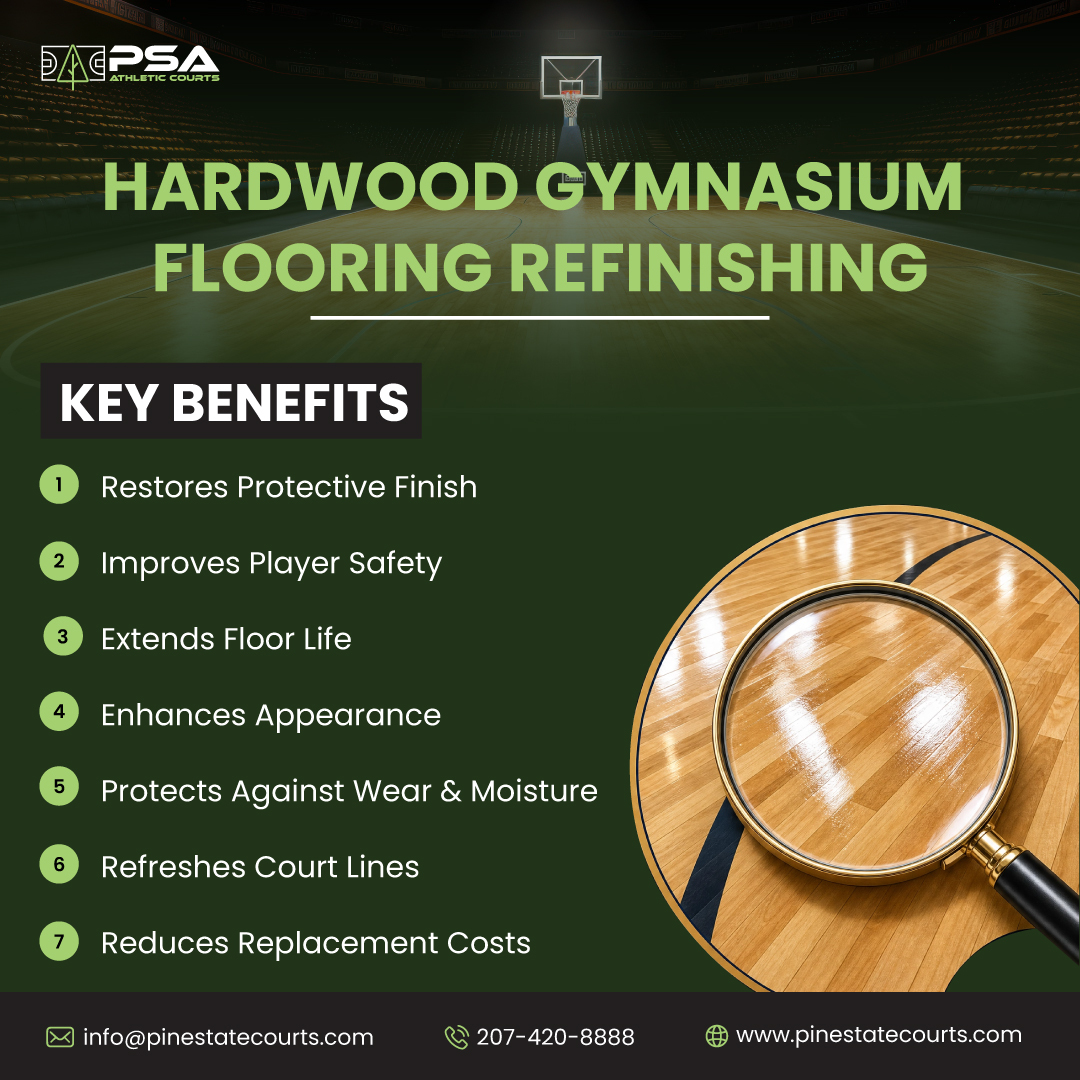
Some of the key benefits of refinishing includes:
- Restores the floor's protective finish
- Improves traction and player safety
- Extends the lifespan of the hardwood floor
- Enhances the appearance of your facility
- Protects against moisture and everyday wear
- Refreshes game lines and court markings
- Delays the need for expensive full floor replacement
Routine refinishing is typically far more cost-effective than replacing an entire gymnasium floor. And with the help of an experienced court builder, you can restore your facility’s performance and value.
Refinishing vs Replacing Gymnasium Hardwood Flooring
Many facility managers wonder whether refinishing or replacement is the better option.
Refinishing is usually recommended when the hardwood remains structurally sound but the finish has worn, minor scratches have accumulated on the surface, and game lines need updating.
Replacement of the gymnasium flooring is quite expensive and involves tearing down of the maple floor and the subfloor system. It is only necessary when your athletic flooring has severe structural damage, warped planks, or repeated repairs have compromised its integrity.
So, the choice between refinishing and replacing the gymnasium flooring depends on the extent of damage to the court surface, your budget, and how much time you have on your hand.
Check our guide on the “6 cost-effective indoor court resurfacing solutions” to get additional insights into maintaining your indoor sports surfaces.
How to Extend the Life of Your Gymnasium Floors
Besides refinishing, it is also important to maintain your gym flooring to keep it in shape and to extend the time between refinishing projects.
Some best practices that court designers at Pine State Courts recommend are:
- Sweep or dust mop the floor daily.
- Clean using manufacturer-approved products.
- Control indoor humidity levels throughout the year.
- Use entrance mats to reduce dirt and debris.
- Place protective pads under equipment.
- Avoid using excessive water during cleaning.
- Schedule regular professional inspections.
While these practices are quite simple and easy to follow, they are effective at preserving both the finish and the underlying hardwood.
Why Choose Pine State Courts for Gymnasium Hardwood Flooring Refinishing
At Pine State Courts, we understand that every gymnasium serving athletes, students, and communities depends on a safe and high-performing playing surface. That’s why besides indoor and outdoor court construction, we also offer our expertise in professional refinishing of hardwood gymnasium floors and restoring indoor maple courts.
Our precision and strong attention to detail is what sets us apart as we complete every stage of the project from surface preparation and sanding to game line painting and finish application with quality. We serve clients throughout the New England area including Boston, Massachusetts and offer customized solutions for building indoor and outdoor courts, athletic flooring, its sanding and refinishing.
If you've noticed any of the signs we discussed above on your gym flooring, contact us to schedule a professional assessment and discuss the best solution for your facility.
Conclusion
When it comes to maintaining maple hardwood gymnasium flooring, regular inspections are important to check the flooring for early warning signs.
As a court wears over time, game lines fade, surface develops deep scratches, becomes slippery surfaces, and bears raised wood grain, the damage should be addressed quickly before it becomes costly to repair.
A simple solution is regular refinishing of your gym flooring to improve player safety and ensure your facility continues to provide exceptional performance for years to come.
Get in touch with Pine State Courts to bring your gymnasium flooring back to its high-performance with our full gym floor sanding and refinishing services.
Frequently Asked Questions
1. How often should gymnasium hardwood flooring be refinished?
Maple hardwood gymnasium floors require refinishing every 8 to 12 years, depending on their usage, maintenance, and the condition of the finish. While high-traffic facilities require refinishing sooner, an annual recoating is helpful to extend the time between full refinishing projects.
2. Can deep scratches be repaired without replacing the floor?
Yes, many deep scratches and surface imperfections can be repaired during the refinishing process using wood fillers and touch sealants.
3. How long does hardwood gymnasium flooring refinishing take?
Refinishing of most hardwood gymnasium usually takes 4 to 7 days but it can extend to 3-4 weeks depending on the size of your facility, the extent of repairs needed, drying times, and environmental conditions.
4. How can I maintain gymnasium floors after refinishing?
To maintain your floor after refinishing, you should:
- Sweep the flooring daily.
- Use only approved cleaning products.
- Control indoor humidity.
- Clean any spills promptly.
- Schedule regular inspections to identify wear.
5. What is the difference between recoating and refinishing a gym floor?
Recoating is a routine maintenance procedure that involves applying a new protective finish over the existing surface with minor wear. Refinishing is a heavy restoration process that includes sanding the floor down to bare wood before applying new finishes and repainting game lines.
DOWNLOAD OUR FREE GUIDE
Ready to build your dream court?
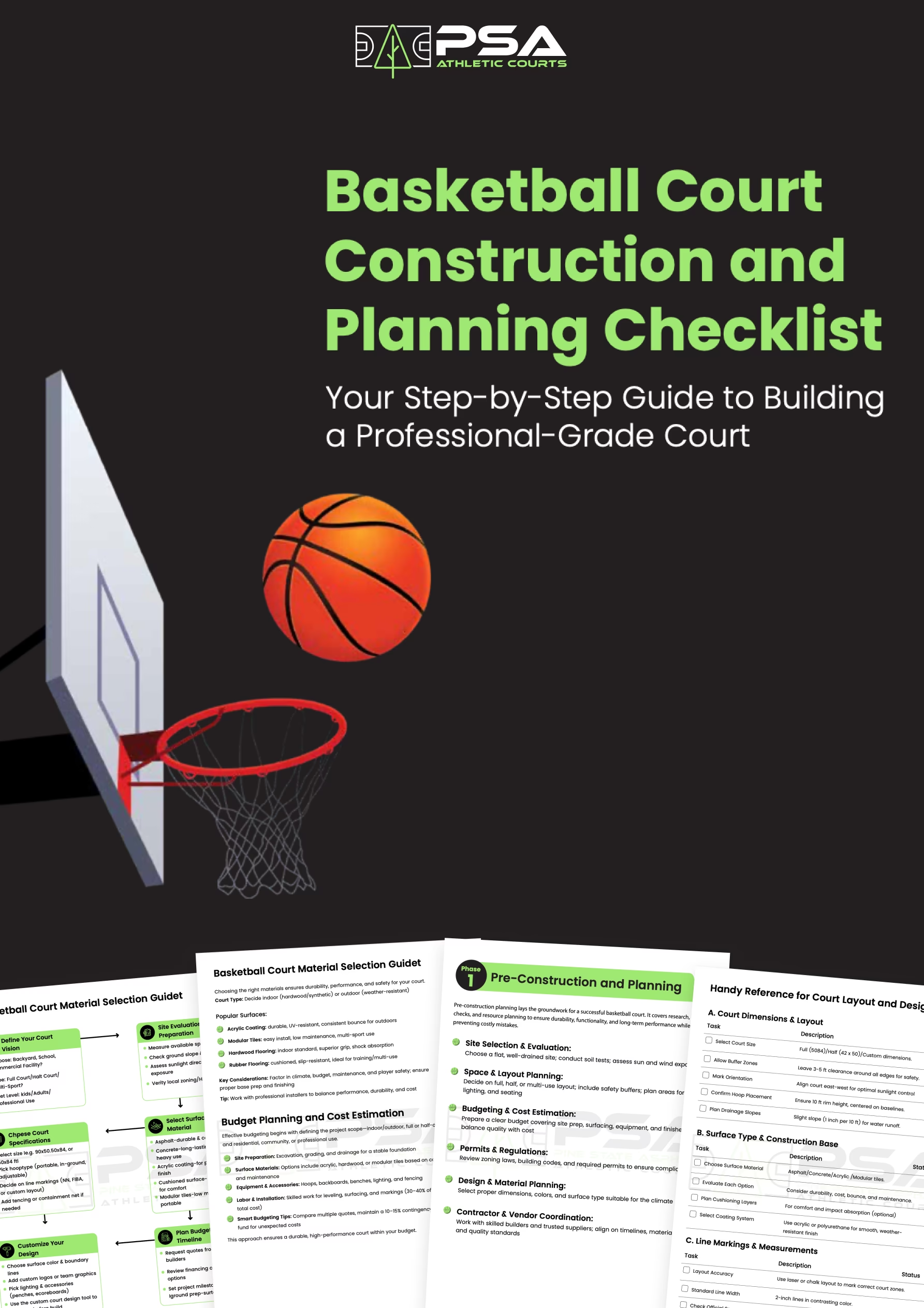
Download our FREE Basketball Court Construction & Planning Checklist and get the step-by-step roadmap to building a professional-grade court—from budget planning to final touches.
No guesswork, just results.