
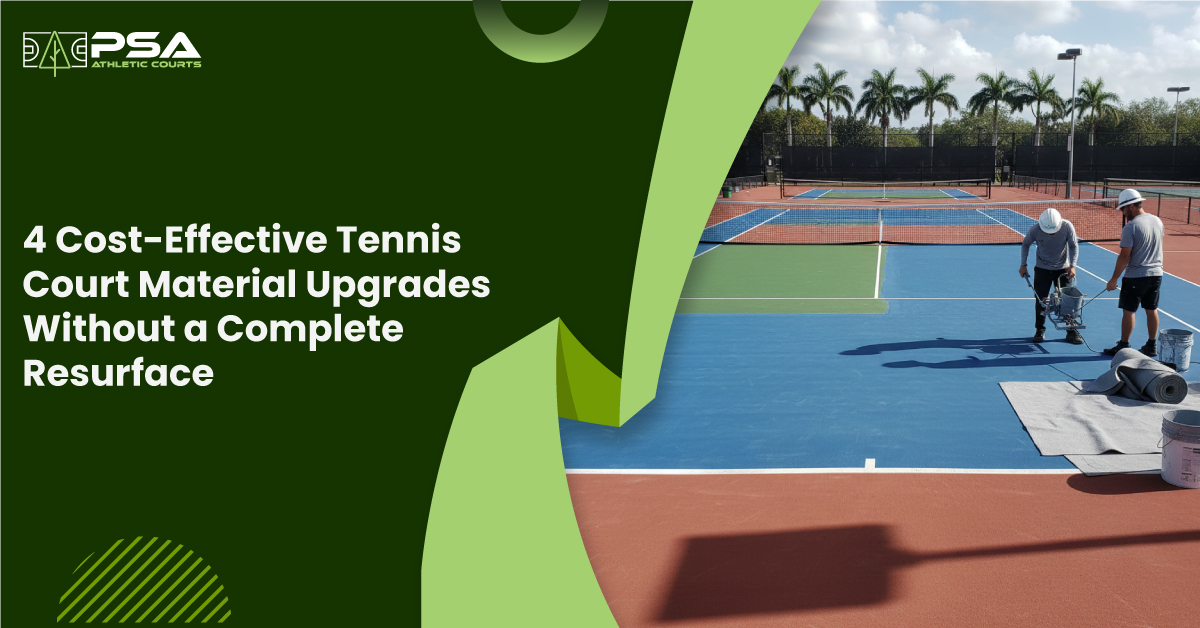
Keeping a tennis court in top shape shouldn’t require you to shut your facility for months on end or burn a hole in your pocket. There is another sure method to regain the performance, safety, and visual appeal of your court. We are talking about upgrading the surface material of your tennis court instead of resurfacing it.
Wondering where to begin or if this is even the better option? Don’t worry! This Pine State Courts guide on the four cost-effective tennis court material upgrades will cover everything. From acrylic top-coats to modular overlays, these upgrades can restore your court and save you a ton of money.
Why Choose a Tennis Court Material Upgrade over Complete Resurfacing
Although most tennis court designers stress on tennis court resurfacing to address wear and tear of the court, this is a time-consuming and expensive affair. Which is why surface material upgrade is your best friend!
Still not convinced? Here’s a list of pointers that emphasize why upgrading your tennis court surface material is better than undertaking full resurfacing:
Saves Money:
With minor cracks, surface wear, fading issues, a simple upgrade (patching, recoating, line repaint, or overlay) is much cheaper than a full tennis court resurfacing or rebuild.
Less Downtime :
Since upgrades or repairs can be done in days rather than weeks, it helps you save more on downtime as compared to a full reconstruction or resurfacing.
Preserves the Existing Base:
If your court doesn’t have any major cracks or drainage issues, i.e. its foundation is structurally sound, a surface upgrade preserves what already works fine without restructuring the whole court.
Cost-Effective Extension of Court Life:
Undertaking regular maintenance and patch repairs helps postpone the need for full resurfacing and extend the life of the court. This fixes any minor damage before they become major structural issues.
Allows Customized Upgrades
The surface material upgrade for a tennis court allows you to make selective improvements and customizations to the court. This repairs the target areas without any expensive or time consuming full court projects.
Top 4 Cost-Effective Tennis Court Material Upgrades
Now that you have a clear idea of how upgrading tennis court surface material can benefit you instead of undertaking the more expensive and time consuming full court resurfacing.
1. Acrylic Magic: Refresh Your Tennis Court Surface
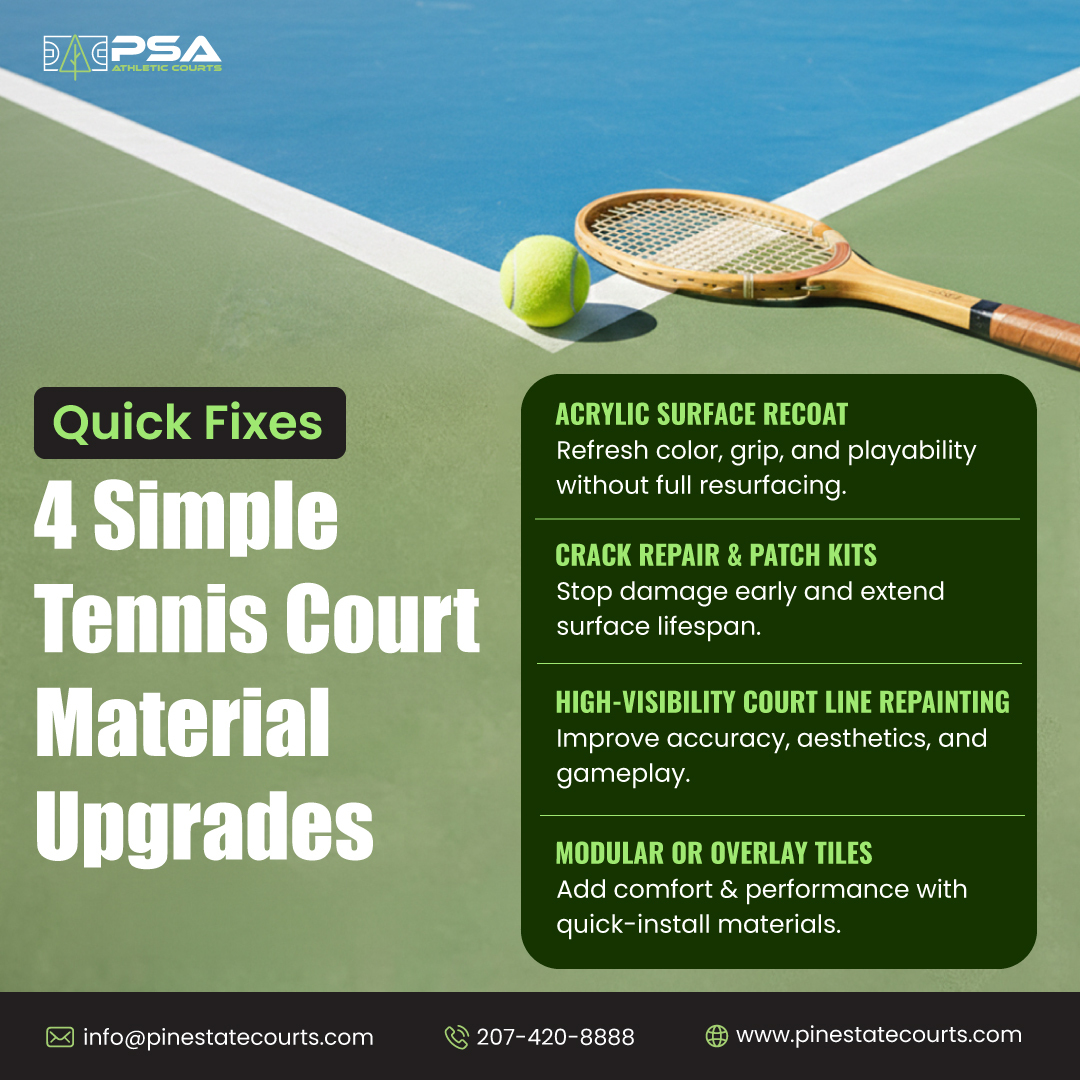
One of the easiest and most popular surface material upgrades is simply applying a fresh top coat of acrylic over your existing court surface (asphalt or concrete). These acrylic coatings work by restoring your court’s color, providing better traction, and gives the court a renewed professional look.
What’s more is that this court make-over can add years of life to your court, making games more consistent, improving player safety and court aesthetics.
Best for: This upgrade is useful if the underlying base of the court is still good and you are mainly dealing with faded or worn-out surfaces due to regular court usage.
2. Extend Court Life with Easy Patch Repairs
If your court is a victim to small cracks, minor wears, and shallow depressions, you don’t necessarily need a full court resurfacing. Instead, use patch fillers or acrylic-based repairs to fix these issues.
This partial resurfacing helps to stop further deterioration of the court by sealing potential entry points for water. This prevents the cracks from expanding, and stabilizes the uneven areas.
Best for: This approach is suited to tennis courts that get moderate use but haven’t degraded too badly.
3. Revamp Court Lines for Better Visibility and Style
Over the course of a court’s life its line markings fades due to regular play, extreme weather, and vigorous cleaning. This affects the visibility of the court lines which can slow down the players and affect their accuracy. Doing a fresh coat of line-striping can make a huge difference here.
This upgrade brings a relatively low-cost but high-impact change that is especially useful during competitive games or training sessions. It’s also a hidden opportunity to clean up any previous misalignments or undertake minor repairs.
Best for: This upgrade is useful for slightly older courts with low footfall, ones that haven’t lost their traction and just need a repaint to look as good as new.
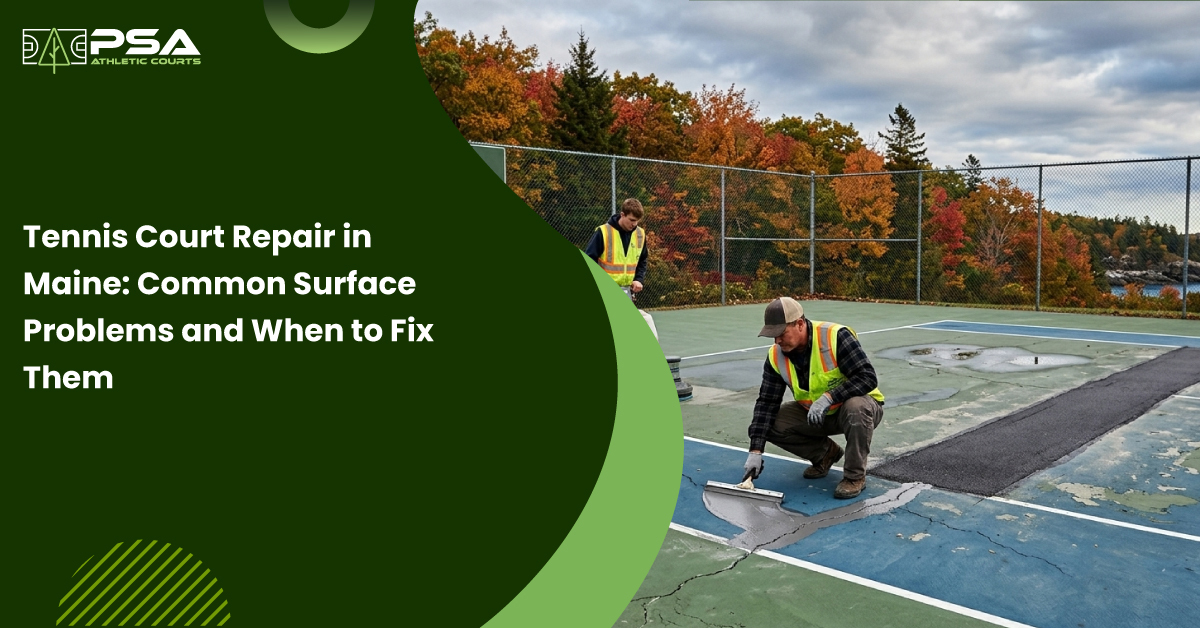
Read the complete guide to understand effective tennis court resurfacing and crack repair solutions.
4. Add Overlay or Modular Court Surface
If your court has issues that go beyond the surface-level wear but the base is still good despite the repairs not working anymore, an overlay or modular surface can be a great upgrade.
This involves laying interlocking tiles or a modular surface on top of the existing court base (asphalt or concrete). This option doesn’t just uplift the court’s looks but provides good traction, drainage, durability, and improves player comfort.
Best for: This option is great for older courts, it upgrades the surface when the foundation still works fine.
Bonus Tips for Cost-Effective Tennis Court Upgrades
Besides the four surface material upgrades for the tennis court mentioned above, there are many other ways you can save on the cost of tennis court repair. If you are looking for a guide on tennis court flooring maintenance, here is one from us.
Here are a few bonus tips for cost-effective tennis court upgrades by Pine State Courts:
Upgrade or Build Your Court — Get a Quote!
Prioritize regular maintenance:
The most crucial and often overlooked cost-saving tip is a proactive maintenance plan. Yes, it’s that simple! Just regularly sweep or blow the court to remove the accumulated debris and prevent your court from any surface damage.
Patch any minor cracks early on:
Without waiting for them to turn into structural issues, just go and fix those small cracks immediately. Use acrylic crack fillers and prevent the water from seeping into the base layers.
Resurface your court wisely:
Instead of rebuilding the court when the surface is completely worn out, opt for basic acrylic resurfacing in between. This offers a good balance of cost and quality.
Ensure proper drainage:
Clear the drain outlets and fix any water pooling issues before the storm hits. This helps prevent more extensive damage repairs and a court shutdown later on.
Choose repairs over replacement:
Repairing damaged fencing or patching potholes is definitely much more economical than a full replacement project.
Schedule repairs during off-peak seasons:
Contact your contractors during the off-season as they may offer better discounts when the demand is lower.
Conclusion
Upgrading your tennis court shouldn’t mean diving into a full-blown expensive resurfacing project. With the right approach and an early maintenance schedule, you can add life to your court. The four budget-friendly methods mentioned in this blog will also help to improve safety and performance without burning a hole in your pocket.
At Pine State Courts, we understand a well-maintained tennis court is more than an aesthetic surface. That’s why we offer tennis court resurfacing and maintenance solutions along with its installation. Contact us for a site visit today!
Frequently Asked Questions
1. Which is the best material for a tennis court?
The best material for a tennis court depends on your needs, the level of play, frequency of court usage, and whether the court is indoors or outdoors. For indoor courts, resin-bound acrylic coating is a preferred option; for outdoor ones, asphalt and concrete provide great durability and player comfort with an acrylic top coat.
2. What is not a popular tennis court surface?
Wood is not a popular surface for a tennis court. Although it was used earlier, it is rarely used these days as it lacks durability and doesn’t offer consistent play.
3. Which surface is hardest to play tennis on?
The surface hardest to play on is clay due to its slowness, high bounce, and demanding sliding movements. It is unsuitable for players accustomed to fast courts, grass is another difficult court surface.
4. Which is the best surfacing material for a tennis court?
The best surfacing material for a tennis court is dependent on the factors like the type of court (indoor vs. outdoor), the level of players, and how much footfall the court receives.
For outdoor courts, asphalt or concrete surface with an acrylic top coat is the best surface material as it offers good durability and traction. For indoor courts, wood was used earlier but resin-bound acrylic coatings and modular tiles are preferred these days.
5. Which surface is the fastest in tennis?
The fastest surface in tennis is grass. Its low, fast and unpredictable bounce is difficult for most players to navigate.
DOWNLOAD OUR FREE GUIDE
Ready to build your dream court?
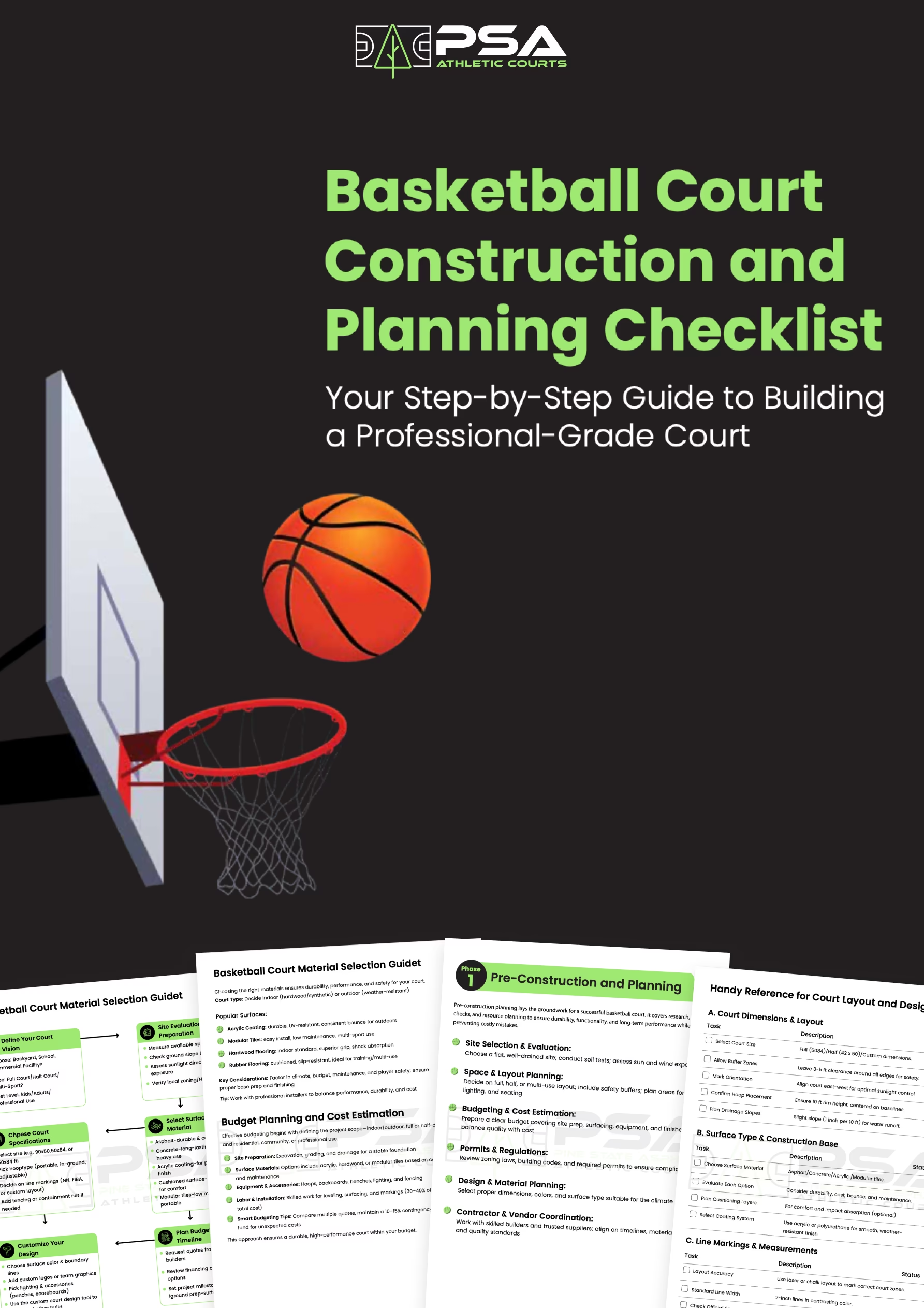
Download our FREE Basketball Court Construction & Planning Checklist and get the step-by-step roadmap to building a professional-grade court—from budget planning to final touches.
No guesswork, just results.